THE CLASSIC COLLECTION✦A dead man’s diaryCLASSIC FREE BOOKS
A dead man’s diary
Coulson Kernahan
THE CLASSIC COLLECTION · 1902
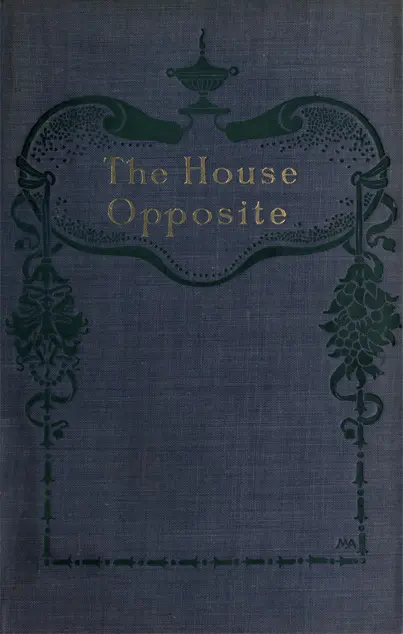
"The House Opposite: A Mystery" by Elizabeth Kent is a mystery novel written in the early 20th century. The story revolves around Dr. Charles Fortescue, who becomes embroiled in a perplexing murder investigation after witnessing peculiar events from his rooftop. The narrative captures a sense of intrigue and suspense as Dr. Fortescue grapples with his observations and connects them to the unfolding crime. At the start of the novel, the protagonist, Dr. Fortescue, seeks relief from the oppressive heat of New York City's summer by moving to his rooftop. There, he witnesses a commotion in the neighboring Rosemere apartment building, which leads him to suspect something sinister is occurring. As he observes various characters such as a mysterious woman and a distressed man, his curiosity intensifies. Soon after, he is drawn into the investigation of a murder when he is called to the scene, revealing that the victim is a man found dead in the building under suspicious circumstances. As the story expands, Dr. Fortescue uncovers connections between the dead man and residents of the Rosemere, particularly Mrs. Atkins and the enigmatic Miss May Derwent, heightening the intrigue surrounding the case.
Introduction adapted from the source catalogue; source summaries may be automatically generated.
Free to read · English · 62,803 words · No account needed
MAKE TIME FOR A GOOD BOOK
On by default. Untick to stop anonymous reading totals. Each page counts after 10 seconds in view. How this works.
Anonymous counting is on unless you have switched it off.
"Humph," grunted the Coroner, and I was aware that every one in the room eyed me with suspicion. "Well," he continued, still looking at me severely, "can you tell us what the man died of?" "Yes," I answered; "he met his death by being stabbed to the heart by a very small weapon, possibly a stiletto, but a sharp knitting-needle, or even a hat pin, could have caused the wound. The crime was committed while he was unconscious, or at least semi-conscious, either from some drug or alcohol; or he may have been asleep. He made no resistance, and in all probability never knew he had been hurt."
There was profound silence.
"It is, then, impossible that this wound was self-inflicted," inquired
the Coroner.
"Quite impossible," I rejoined.
"So that he was presumably murdered the night before last and smuggled into this apartment some time between six o'clock last evening and seven o'clock this morning?" continued the Coroner. Then, turning to the little red-headed manager, he asked:
"Now, Mr. McGorry, how is it possible for this corpse to have been brought here? The foreman testifies that he himself locked the door in the presence of several workmen; you tell me that the key remained in your safe all night. Now, please explain how this body got here?"
"Lord-a-mercy, sor, you don't think as I did it!" shrieked McGorry. "Why, sor, I never saw the man before in my life; besides, I have got a alibi, sor; yes, sor, a alibi."
"Stop, Mr. McGorry; don't get so excited; nobody is accusing you of anything. But if this place was locked up last night, how came the body here this morning? The lock has not been tampered with. Was there a duplicate key?"
"Yis, sor; but the other key was also in my safe," replied McGorry.
"Have either of these keys ever been missing?"
"Shure and they haven't been out of my keeping since the apartment was vacated last May, until three days ago when the painters begun work here. Since then they have had one of the keys during the day, but have always returned it before leaving."
"Now, tell me," continued the Coroner, turning to the foreman, "has the key been missing since you had it?"
"Not that I know of; we leave it sticking in the door all day, and only take it out when we leave."
"So that it is possible that a person might have come to the door, taken the key, and kept it for some hours without your noticing it?"
"Yes, sir, it's possible, but it aint likely; I haven't seen anyone pass since I've been working here."
Your reading position is saved on this browser. Take it to another device with a library code. Reading pages adapt to text, rather than matching a printed edition.
BEHIND THE BOOK
This eBook is for the use of anyone anywhere in the United States and most other parts of the world at no cost and with almost no restrictions whatsoever. You may copy it, give it away or re-use it under the terms of the Project Gutenberg License included with this eBook or online at www.gutenberg.org. If you are not located in the United States, you will have to check the laws of the country where you are located before using this eBook. Read the source licence.
The original source file, including credits and licence, is retained by this library. Request an original-format copy at no charge. Please include the book title and Project Gutenberg identifier #41525.
KEEP YOUR CURIOSITY GOING
Coulson Kernahan

Maurice Baring
Frances Wright
Cécile Tormay

Frederic Jesup Stimson

W. H. P. (William Henry Pope) Jarvis