THE CLASSIC COLLECTION✦A dead man’s diaryCLASSIC FREE BOOKS
A dead man’s diary
Coulson Kernahan
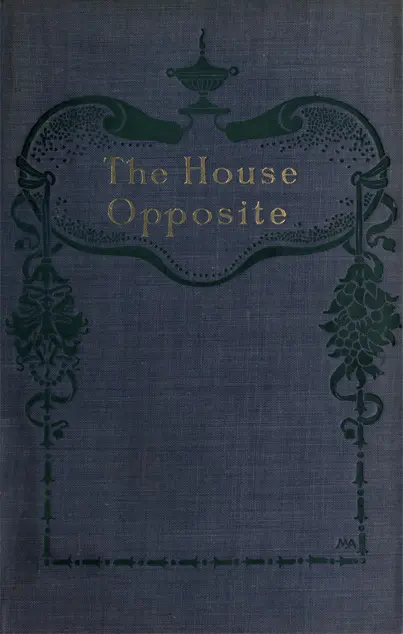
THE CLASSIC COLLECTION · 1902
"The House Opposite: A Mystery" by Elizabeth Kent is a mystery novel written in the early 20th century. The story revolves around Dr. Charles Fortescue, who becomes embroiled in a perplexing murder investigation after witnessing peculiar events from his rooftop. The narrative captures a sense of intrigue and suspense as Dr. Fortescue grapples with his observations and connects them to the unfolding crime. At the start of the novel, the protagonist, Dr. Fortescue, seeks relief from the oppressive heat of New York City's summer by moving to his rooftop. There, he witnesses a commotion in the neighboring Rosemere apartment building, which leads him to suspect something sinister is occurring. As he observes various characters such as a mysterious woman and a distressed man, his curiosity intensifies. Soon after, he is drawn into the investigation of a murder when he is called to the scene, revealing that the victim is a man found dead in the building under suspicious circumstances. As the story expands, Dr. Fortescue uncovers connections between the dead man and residents of the Rosemere, particularly Mrs. Atkins and the enigmatic Miss May Derwent, heightening the intrigue surrounding the case.
Introduction adapted from the source catalogue; source summaries may be automatically generated.
Free to read · English · 62,803 words · No account needed
MAKE TIME FOR A GOOD BOOK
On by default. Untick to stop anonymous reading totals. Each page counts after 10 seconds in view. How this works.
Anonymous counting is on unless you have switched it off.
He paused almost imperceptibly. "No, sar," he answered. But I was now convinced that he was holding something back.
"Very well; you can go," said the Coroner. The fellow bowed himself out with a good deal of quiet dignity.
"I kinder fancy that man knows something he won't tell," said the Coroner. "Now, we've seen every one but the workmen," he continued, wearily, mopping his forehead. "I don't believe one of them knows a thing; still, I've got to go through with it, I suppose," and going to the door he beckoned them all in.
There were five of them, including the foreman, and they appeared to be quiet, respectable young men. After looking at the dead man intently for some minutes, they all asserted that they had never laid eyes on him before.
"Now have any of you noticed during the three days you have been working here anybody who might have taken the key, kept it for some hours, and returned it without your noticing it?" inquired the Coroner.
"We've seen no strangers," the foreman replied, cautiously.
"Who have you seen?" The foreman was evidently prepared for this
question.
"Well, sir, we've seen altogether six people: Jim, and Joe, and Tony, Mr. McGorry, Miss Derwent, and the Frinchman," he replied, checking them off on his fingers.
"When did the Frenchman come up here?"
"Yistidy morning, sir; he said he come to see the decorations, and he come again about three; but he didn't stay long. I warn't a-going to have him hanging round here interfering!"
"Did any of his actions at the time strike you as suspicious?"
"No, sir," acknowledged the foreman.
"And Miss Derwent; when did you see her?"
"I didn't see her myself in the morning, but he"--with a nod towards one of the men,--"he saw her look in as she was waiting for the elevator, and in the afternoon she come right in."
"Did she say anything?"
"Yes, sir; she said the paint and papers were mighty pretty."
"When you saw Miss Derwent," said the Coroner, addressing the man whom the foreman had pointed out, "what was she doing?"
"She was standing just inside the hall."
"Was her hand on the door knob?"
"I didn't notice, sir."
"Did the young lady say anything?"
"When she saw me a-looking at her, she just said: 'How pretty!' and went
away."
"Have any of you seen Mr. or Mrs. Atkins, or either of their girls, since you have been working here?" They all replied in the negative.
Your reading position is saved on this browser. Take it to another device with a library code. Reading pages adapt to text, rather than matching a printed edition.
BEHIND THE BOOK
This eBook is for the use of anyone anywhere in the United States and most other parts of the world at no cost and with almost no restrictions whatsoever. You may copy it, give it away or re-use it under the terms of the Project Gutenberg License included with this eBook or online at www.gutenberg.org. If you are not located in the United States, you will have to check the laws of the country where you are located before using this eBook. Read the source licence.
The original source file, including credits and licence, is retained by this library. Request an original-format copy at no charge. Please include the book title and Project Gutenberg identifier #41525.
KEEP YOUR CURIOSITY GOING
Coulson Kernahan

Maurice Baring
Frances Wright
Cécile Tormay

Frederic Jesup Stimson

W. H. P. (William Henry Pope) Jarvis