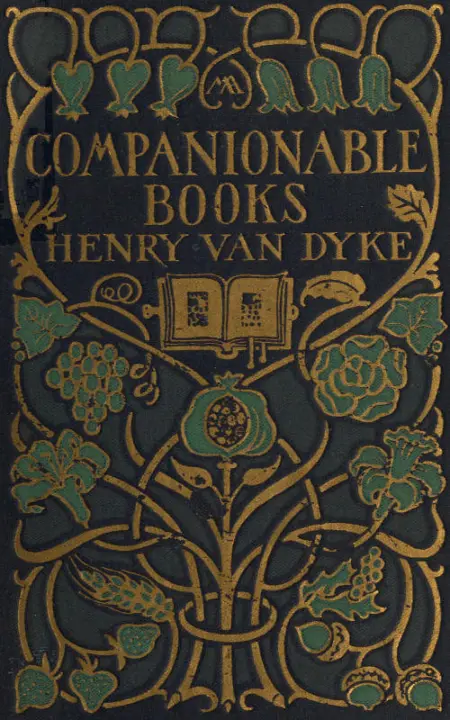
Companionable Books
Henry Van Dyke
THE CLASSIC COLLECTION · 1908
"The House of Rimmon: A Drama in Four Acts" by Henry Van Dyke is a dramatic play written in the early 20th century. This work explores themes of loyalty, love, and the conflict between personal integrity and the demands of society, set against the backdrop of ancient Damascus in the 9th century BC. The play delves into the spiritual and moral dilemmas faced by its characters, particularly focusing on Naaman, a military commander caught between the oppressive forces of a priesthood devoted to the god Rimmon and the promise of freedom and love represented by the captive maid Ruahmah. The storyline centers on Naaman, who is initially a respected captain of the army but becomes cursed with leprosy after refusing to engage with the corrupt practices within the House of Rimmon. Driven to despair, he ultimately seeks healing through the prophet Elisha in Israel, guided by Ruahmah, the maid who has developed a deep bond with him. As Naaman confronts the false gods of oppression, he must also navigate through betrayal and the conflict of loyalties within his own household, particularly regarding his wife, Tsarpi. In a gripping climax, the play culminates in a struggle between faith and authority, culminating in a powerful resolution centered on the triumph of love over tyranny. The narrative weaves together themes of sacrifice, redemption, and the true essence of worship against a backdrop of divine justice.
Introduction adapted from the source catalogue; source summaries may be automatically generated.
Free to read · English · 13,958 words · No account needed
MAKE TIME FOR A GOOD BOOK
On by default. Untick to stop anonymous reading totals. Each page counts after 10 seconds in view. How this works.
Anonymous counting is on unless you have switched it off.
NAAMAN:
Silence! What drunken rout is this? Begone,
Ye barking dogs and mewing cats! Out, all!
Poor child, what have they done to thee?
[Exeunt all except RUAHMAH, who stands with her face covered by her hands. NAAMAN comes to her, laying his hand on her shoulder.]
RUAHMAH: [Looking up in his face.]
Nothing,
My lord and master! They have harmed me not.
NAAMAN: [Touching her arm.]
Dost call this nothing?
RUAHMAH:
Since my lord is come.
NAAMAN:
I do not know thy face,--who art thou, child?
RUAHMAH:
The handmaid of thy wife. These three years past
I have attended her.
NAAMAN:
Whence comest thou?
Thy voice is like thy mistress, but thy looks
Have something foreign. Tell thy name, thy land.
RUAHMAH:
Ruahmah is my name, a captive maid,
The daughter of a prince in Israel,--
Where once, in olden days, I saw my lord
Ride through our highlands, when Samaria
Was allied with Damascus to defeat
Asshur, our common foe.
NAAMAN:
O glorious days,
Crowded with life! And thou rememberest them?
RUAHMAH:
As clear as yesterday! Master, I saw
Thee riding on a snow-white horse beside
Our king; and all we joyful little maids
Strewed boughs of palm along the victors' way;
For you had driven out the enemy,
Broken; and both our lands were friends and free.
NAAMAN: [Sadly.]
Well, they are past, those noble days! The friends
That fought for freedom stand apart, rivals
For Asshur's favour, like two jealous dogs
That snarl and bite each other, while they wait
The master's whip, enforcing peace. The days
When nations would imperil all to keep
Their liberties, are only memories now.
The common cause is lost,--and thou art brought,
The captive of some mercenary raid,
Some profitable, honourless foray,
To serve within my house. Dost thou fare well?
RUAHMAH:
Master, thou seest.
NAAMAN:
Yes, I see! My child,
Why do they hate thee so?
RUAHMAH:
I do not know,
Unless because I will not bow to Rimmon.
NAAMAN:
Thou needest not. I fear he is a god
Who pities not his people, will not save.
My heart is sick with doubt of him. But thou
Shalt hold thy faith,--I care not what it is,--
Worship thy god; but keep thy spirit free.
Here, take this chain and wear it with my seal,
None shall molest the maid who carries this.
Thou hast found favour in thy master's eyes;
Hast thou no other gift to ask of me?
RUAHMAH: [Earnestly.]
My lord, I do entreat thee not to go
To-morrow to the council. Seek the King
And speak with him in secret; but avoid
The audience-hall.
Your reading position is saved on this browser. Take it to another device with a library code. Reading pages adapt to text, rather than matching a printed edition.
Henry Van Dyke
Henry Van Dyke
Henry Van Dyke
Henry Van Dyke
BEHIND THE BOOK
This eBook is for the use of anyone anywhere in the United States and most other parts of the world at no cost and with almost no restrictions whatsoever. You may copy it, give it away or re-use it under the terms of the Project Gutenberg License included with this eBook or online at www.gutenberg.org. If you are not located in the United States, you will have to check the laws of the country where you are located before using this eBook. Read the source licence.
The original source file, including credits and licence, is retained by this library. Request an original-format copy at no charge. Please include the book title and Project Gutenberg identifier #17944.
KEEP YOUR CURIOSITY GOING
Maurice Baring
W. B. (William Butler) Yeats
Edward Martyn

John Brougham & Charlotte Brontë
Marguerite Merington
Leonid Andreyev