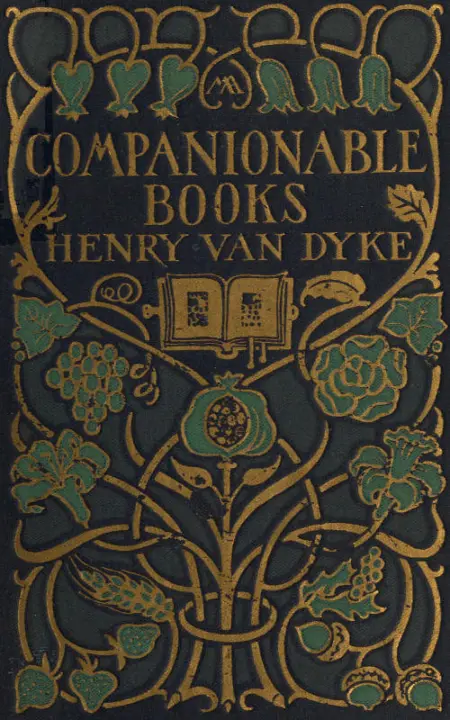
Companionable Books
Henry Van Dyke
THE CLASSIC COLLECTION · 1908
"The House of Rimmon: A Drama in Four Acts" by Henry Van Dyke is a dramatic play written in the early 20th century. This work explores themes of loyalty, love, and the conflict between personal integrity and the demands of society, set against the backdrop of ancient Damascus in the 9th century BC. The play delves into the spiritual and moral dilemmas faced by its characters, particularly focusing on Naaman, a military commander caught between the oppressive forces of a priesthood devoted to the god Rimmon and the promise of freedom and love represented by the captive maid Ruahmah. The storyline centers on Naaman, who is initially a respected captain of the army but becomes cursed with leprosy after refusing to engage with the corrupt practices within the House of Rimmon. Driven to despair, he ultimately seeks healing through the prophet Elisha in Israel, guided by Ruahmah, the maid who has developed a deep bond with him. As Naaman confronts the false gods of oppression, he must also navigate through betrayal and the conflict of loyalties within his own household, particularly regarding his wife, Tsarpi. In a gripping climax, the play culminates in a struggle between faith and authority, culminating in a powerful resolution centered on the triumph of love over tyranny. The narrative weaves together themes of sacrifice, redemption, and the true essence of worship against a backdrop of divine justice.
Introduction adapted from the source catalogue; source summaries may be automatically generated.
Free to read · English · 13,958 words · No account needed
MAKE TIME FOR A GOOD BOOK
On by default. Untick to stop anonymous reading totals. Each page counts after 10 seconds in view. How this works.
Anonymous counting is on unless you have switched it off.
The interior of NAAMAN'S tent, at night. RUAHMAH alone, sleeping on the ground. A vision appears to her through the curtains of the font: ELISHA standing on the hillside at Dothan: NAAMAN, restored to sight, comes in and kneels before him. ELISHA blesses him, and he goes out rejoicing. The vision of the prophet turns to RUAHMAH and lifts his hand in warning.
ELISHA:
Daughter of Israel, what dost thou here?
Thy prayer is granted. Naaman is healed:
Mar not true service with a selfish thought.
Nothing remains for thee to do, except
Give thanks, and go whither the Lord commands.
Obey,--obey! Ere Naaman returns
Thou must depart to thine own house in Shechem.
[The vision vanishes.]
RUAHMAH: [Waking and rising slowly.]
A dream, a dream, a messenger of God!
O dear and dreadful vision, art thou true?
Then am I glad with all my broken heart.
Nothing remains,--nothing remains but this,--
Give thanks, obey, depart,--and so I do.
Farewell, my master's sword! Farewell to you,
My amulet! I lay you on the hilt
His hand shall clasp again: bid him farewell
For me, since I must look upon his face
No more for ever!--Hark, what sound was that?
[Enter soldier hurriedly.]
SOLDIER:
Mistress, an armed troop, footmen and horse,
Mounting the hill!
RUAHMAH:
My lord returns in triumph.
SOLDIER:
Not so, for these are enemies; they march
In haste and silence, answering not our cries.
RUAHMAH:
Our enemies? Then hold your ground,--on guard!
Fight! fight! Defend the pass, and drive them down.
[Exit soldier. RUAHMAH draws NAAMAN'S sword from the scabbard and hurries out of the tent. Confused noise of fighting outside. Three or four soldiers are driven in by a troop of men in disguise. RUAHMAH follows: she is beaten to her knees, and her sword is broken.]
REZON: [Throwing aside the cloth which covers his face.]
Hold her! So, tiger-maid, we've found your lair
And trapped you. Where is Naaman,
Your master?
RUAHMAH: [Rising, her arms held by two of REZON'S followers.] He is far beyond your reach.
REZON:
Brave captain! He has saved himself, the leper,
And left you here?
RUAHMAH:
The leper is no more.
REZON:
What mean you?
RUAHMAH:
He has gone to meet his God.
REZON:
Dead? Dead? Behold how Rimmon's wrath is swift!
Damascus shall be mine: I'll terrify
The King with this, and make my terms. But no!
False maid, you sweet-faced harlot, you have lied
To save him,--speak.
RUAHMAH:
I am not what you say,
Nor have I lied, nor will I ever speak
A word to you, vile servant of a traitor-god.
Your reading position is saved on this browser. Take it to another device with a library code. Reading pages adapt to text, rather than matching a printed edition.
Henry Van Dyke
Henry Van Dyke
Henry Van Dyke
Henry Van Dyke
BEHIND THE BOOK
This eBook is for the use of anyone anywhere in the United States and most other parts of the world at no cost and with almost no restrictions whatsoever. You may copy it, give it away or re-use it under the terms of the Project Gutenberg License included with this eBook or online at www.gutenberg.org. If you are not located in the United States, you will have to check the laws of the country where you are located before using this eBook. Read the source licence.
The original source file, including credits and licence, is retained by this library. Request an original-format copy at no charge. Please include the book title and Project Gutenberg identifier #17944.
KEEP YOUR CURIOSITY GOING
Maurice Baring
W. B. (William Butler) Yeats
Edward Martyn

John Brougham & Charlotte Brontë
Marguerite Merington
Leonid Andreyev