THE CLASSIC COLLECTION✦An outlaw’s diary: the CommuneCLASSIC FREE BOOKS
An outlaw’s diary: the Commune
Cécile Tormay
THE CLASSIC COLLECTION · 1923
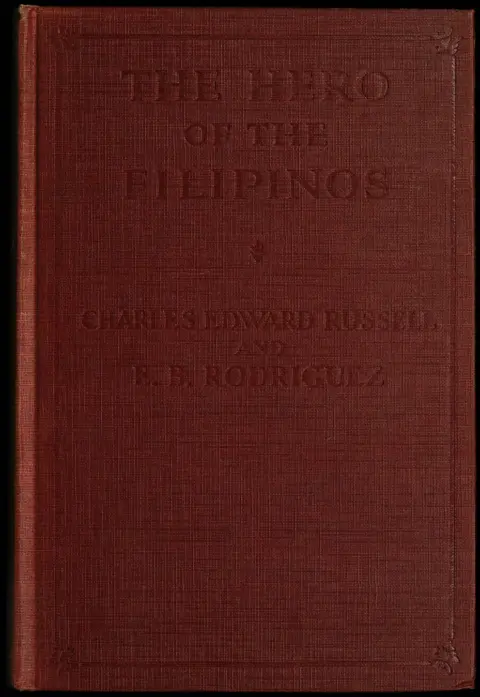
"The Hero of the Filipinos: The Story of José Rizal, Poet, Patriot and Martyr" by Charles Edward Russell and E. B. Rodriguez is a historical account written in the early 20th century. The work centers on José Rizal, a significant figure in Philippine history known for his poetry, patriotism, and tragic martyrdom. The authors aim to shed light on his life and the broader context of the struggles of the Filipino people against colonial oppression, particularly during the Spanish rule. The opening of the book sets the stage by detailing the oppressive conditions of the Philippines under Spanish tyranny, vividly illustrating the injustices faced by ordinary Filipinos. It introduces readers to Francisco Rizal Mercado, José Rizal's father, and describes his unfortunate encounters with the corrupt Spanish authorities. As the narrative unfolds, it highlights the prevailing climate of brutality, prejudice, and systematic injustice that formed Rizal’s formative experiences as a youth, ultimately portraying how these heavy burdens laid the groundwork for his awakening to a sense of national identity and the fight for reform. Thus, the beginning provides crucial context for understanding Rizal’s character, motivations, and the historic turbulence that pervaded his life and work.
Introduction adapted from the source catalogue; source summaries may be automatically generated.
Free to read · English · 108,207 words · No account needed
MAKE TIME FOR A GOOD BOOK
On by default. Untick to stop anonymous reading totals. Each page counts after 10 seconds in view. How this works.
Anonymous counting is on unless you have switched it off.
“Aha! Placido Penitente, although you look more like Placido the Prompter—or the Prompted. But, Penitent, I’m going to impose some penance on you for your promptings.”
Pleased with his play on words, he ordered the youth to recite the lesson; and the latter, in the state of mind to which he was reduced, made more than three mistakes. Shaking his head up and down, the professor slowly opened the register and slowly scanned it while he called off the names in a low voice.
“Palencia—Paloma—Panganiban—Pedraza—Pelado—Pelaez—Penitente, aha! Placido Penitente, fifteen unexcused absences——”
Placido started up. “Fifteen absences, Padre?”
“Fifteen unexcused absences,” continued the professor, “so that you only lack one to be dropped from the roll.”
“Fifteen absences, fifteen absences,” repeated Placido in amazement. “I have never been absent more than four times, and, with to-day, perhaps five.”
“Jesso, jesso, monseer,” [40] replied the professor, examining the youth over his gold eye-glasses. “You confess that you have missed five times, and God knows if you have missed oftener. Atqui, as I rarely call the roll, every time I catch any one I put five marks against him; ergo, how many are five times five? Have you forgotten the multiplication-table? Five times five?”
“Twenty-five.”
“Correct, correct! Thus you have still got away with ten, because I have caught you only three times. Huh, if I had caught you every time—Now how many are three times five?”
“Fifteen.”
“Fifteen, right you are!” concluded the professor, closing the register. “If you miss once more—out of doors with you, get out! Ha, now a mark for the failure in the daily lesson.”
He again opened the register, sought out the name, and entered the mark. “Come, only one mark,” he said, “since you hadn’t any before.”
“But, Padre,” exclaimed Placido, restraining himself, “if your Reverence puts a mark against me for failing in the lesson, your Reverence owes it to me to erase the one for absence that you have put against me for to-day.”
His Reverence made no answer. First, he slowly entered the mark, then contemplated it with his head on one side—the mark must be artistic—closed the register, and asked with great sarcasm, “Abá, and why so, sir?”
“Because I can’t conceive, Padre, how one can be absent from the class and at the same time recite the lesson in it. Your Reverence is saying that to be is not to be.”
Your reading position is saved on this browser. Take it to another device with a library code. Reading pages adapt to text, rather than matching a printed edition.
BEHIND THE BOOK
This eBook is for the use of anyone anywhere in the United States and most other parts of the world at no cost and with almost no restrictions whatsoever. You may copy it, give it away or re-use it under the terms of the Project Gutenberg License included with this eBook or online at www.gutenberg.org. If you are not located in the United States, you will have to check the laws of the country where you are located before using this eBook. Read the source licence.
The original source file, including credits and licence, is retained by this library. Request an original-format copy at no charge. Please include the book title and Project Gutenberg identifier #73848.
KEEP YOUR CURIOSITY GOING
Cécile Tormay

Moritz Busch
John L. Ransom
Frances Wright
Cécile Tormay

Mabel Potter Daggett