THE CLASSIC COLLECTION✦An outlaw’s diary: the CommuneCLASSIC FREE BOOKS
An outlaw’s diary: the Commune
Cécile Tormay
THE CLASSIC COLLECTION · 1923
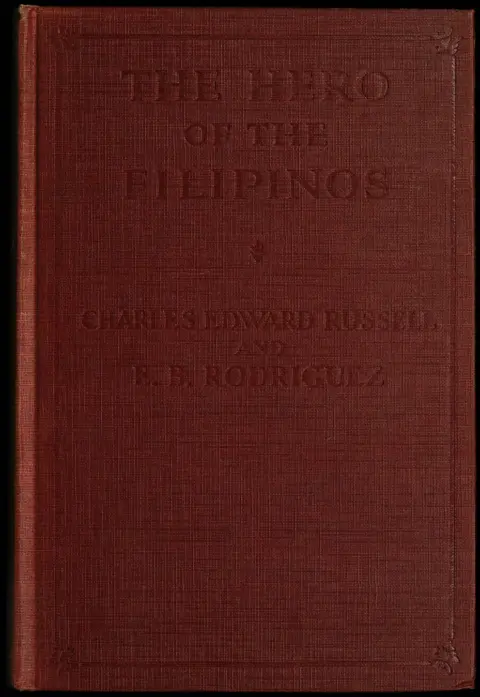
"The Hero of the Filipinos: The Story of José Rizal, Poet, Patriot and Martyr" by Charles Edward Russell and E. B. Rodriguez is a historical account written in the early 20th century. The work centers on José Rizal, a significant figure in Philippine history known for his poetry, patriotism, and tragic martyrdom. The authors aim to shed light on his life and the broader context of the struggles of the Filipino people against colonial oppression, particularly during the Spanish rule. The opening of the book sets the stage by detailing the oppressive conditions of the Philippines under Spanish tyranny, vividly illustrating the injustices faced by ordinary Filipinos. It introduces readers to Francisco Rizal Mercado, José Rizal's father, and describes his unfortunate encounters with the corrupt Spanish authorities. As the narrative unfolds, it highlights the prevailing climate of brutality, prejudice, and systematic injustice that formed Rizal’s formative experiences as a youth, ultimately portraying how these heavy burdens laid the groundwork for his awakening to a sense of national identity and the fight for reform. Thus, the beginning provides crucial context for understanding Rizal’s character, motivations, and the historic turbulence that pervaded his life and work.
Introduction adapted from the source catalogue; source summaries may be automatically generated.
Free to read · English · 108,207 words · No account needed
MAKE TIME FOR A GOOD BOOK
On by default. Untick to stop anonymous reading totals. Each page counts after 10 seconds in view. How this works.
Anonymous counting is on unless you have switched it off.
[147] Craig, p. 165. On Retana’s return from the Philippines he became connected with “La Politica de España en Filipinas,” an organ of reaction and most furiously opposed by “La Solidaridad.” From 1895 to 1898 he was the chief editor of this virulent sheet, which was undoubtedly maintained by the friars as their mouthpiece in the capital. Compare Blair and Robertson, Vol. LII, p. 164.
[148] Retana, p. 195.
[149] For a collection of astounding facts bearing upon the disregard of this part of the oath reference may be had to Foreman, “The Philippine Islands,” pp. 202–204.
[150] Chap. IV and X.
[151] As will appear later, this was either prevision or a knowledge of governor-generals so accurate it is almost phenomenal.
[152] Chap. XI.
[153] Chap. XVIII.
[154] Convento: priest’s house.
[155] Chap. XXX.
[156] Chap. XXVII.
[157] Chap. XXXIII–XXXV.
[158] Chap. XXXIX.
[159] Retana, pp. 194–195. He dwells with sympathy upon Rizal’s unselfish devotion to his family.
[160] Craig, pp. 172–174; Retana, pp. 231–233.
[161] Craig, p. 182; Retana, p. 235.
[162] They bear the same date, June 20, 1892. Retana, p. 243.
[163] Retana prints the Spanish original at p. 243.
[164] Dr. Craig’s translation, pp. 176–179.
[165] Craig, p. 179.
[166] Craig, p. 182.
[167] The Economic Society of Friends of the Country was established by Governor-General Basco in 1780. It was about as radical, revolutionary, and dangerous as Despujol himself.
[168] It appears that the first members he enrolled were friends of his in the masonic lodge, which probably gave rise to the story that La Liga Filipina was a masonic organization. Rizal had been warmly welcomed by his brother masons at Manila and was pleasantly astonished to find the lodge so large and flourishing.
The Constitution of the Liga declared these to be its Ends:
1. To unite the whole archipelago into one compact, vigorous, and homogeneous body. 2. Mutual protection in every want and necessity. 3. Defense against all violence and injustice. 4. Encouragement of industry, agriculture, and commerce. 5. The study and application of reforms.
The motto was “Unus instar omnium.” (One like all.)
[169] The idea of such a society originated with José Maria Basa, one of the remarkable Filipinos then refugees in Hong-Kong. He mentioned it to Rizal and suggested a constitution, which Rizal, with his trained intellect, quickly formulated.
[170] Retana, pp. 252–253, says it had spread into the provinces before the Spanish Government was well aware of what was going on.
[171] “Rizal’s Own Story,” p. 53.
[172] Craig, p. 190; Derbyshire, p. xxxvii. Mr. Derbyshire calls the decree of banishment “a marvel of sophistry.” Retana’s version, pp. 254–255, justifies this verdict.
[173] Petates: bed-mats. Mattresses were little used in the
Philippines.
[174] Once more, justice à la espagnole in the Philippines. Dr. Craig
has the full story.
[175] Practicante: practitioner in surgery and medicine.
[176] Craig, p. 196.
[177] Craig, p. 198.
[178] Dr. Craig, p. 223, has photographic reproductions of some of
these.
Your reading position is saved on this browser. Take it to another device with a library code. Reading pages adapt to text, rather than matching a printed edition.
BEHIND THE BOOK
This eBook is for the use of anyone anywhere in the United States and most other parts of the world at no cost and with almost no restrictions whatsoever. You may copy it, give it away or re-use it under the terms of the Project Gutenberg License included with this eBook or online at www.gutenberg.org. If you are not located in the United States, you will have to check the laws of the country where you are located before using this eBook. Read the source licence.
The original source file, including credits and licence, is retained by this library. Request an original-format copy at no charge. Please include the book title and Project Gutenberg identifier #73848.
KEEP YOUR CURIOSITY GOING
Cécile Tormay

Moritz Busch
John L. Ransom
Frances Wright
Cécile Tormay

Mabel Potter Daggett