THE CLASSIC COLLECTION✦An outlaw’s diary: the CommuneCLASSIC FREE BOOKS
An outlaw’s diary: the Commune
Cécile Tormay
THE CLASSIC COLLECTION · 1923
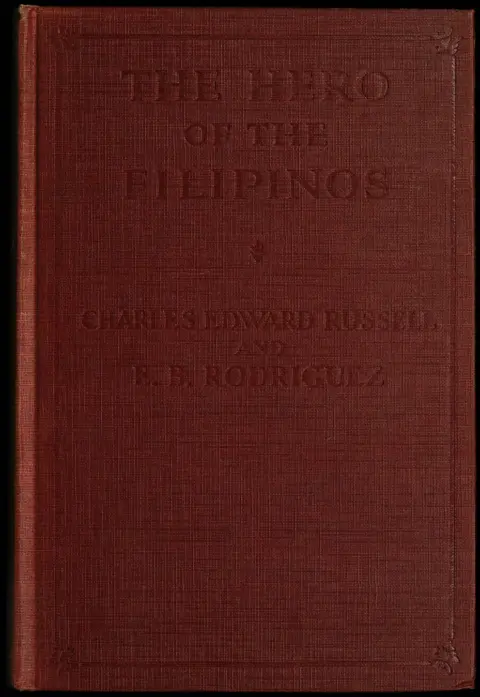
"The Hero of the Filipinos: The Story of José Rizal, Poet, Patriot and Martyr" by Charles Edward Russell and E. B. Rodriguez is a historical account written in the early 20th century. The work centers on José Rizal, a significant figure in Philippine history known for his poetry, patriotism, and tragic martyrdom. The authors aim to shed light on his life and the broader context of the struggles of the Filipino people against colonial oppression, particularly during the Spanish rule. The opening of the book sets the stage by detailing the oppressive conditions of the Philippines under Spanish tyranny, vividly illustrating the injustices faced by ordinary Filipinos. It introduces readers to Francisco Rizal Mercado, José Rizal's father, and describes his unfortunate encounters with the corrupt Spanish authorities. As the narrative unfolds, it highlights the prevailing climate of brutality, prejudice, and systematic injustice that formed Rizal’s formative experiences as a youth, ultimately portraying how these heavy burdens laid the groundwork for his awakening to a sense of national identity and the fight for reform. Thus, the beginning provides crucial context for understanding Rizal’s character, motivations, and the historic turbulence that pervaded his life and work.
Introduction adapted from the source catalogue; source summaries may be automatically generated.
Free to read · English · 108,207 words · No account needed
MAKE TIME FOR A GOOD BOOK
On by default. Untick to stop anonymous reading totals. Each page counts after 10 seconds in view. How this works.
Anonymous counting is on unless you have switched it off.
Addressing a university audience, I have selected three points in the life and writing of Dr. Rizal for your consideration. First is his patriotism. This university must devote its best efforts to teaching the students of to-day and those of coming generations that form of pure and unselfish patriotism that we find in the writings and sayings of Dr. Rizal. We have been gratified to follow the course in debate and in action of the students of this university in devoting their attention in a purely non-partizan way to the consideration of public questions of the day, but I address myself to the faculty as well as to the students for consideration of the form which that patriotism should take. In the days of my grandfather young men in America went to Germany to study at the universities. That was the golden age when the teachings and memory of Goethe, Schiller, Lessing, and Heine inspired the youth of the land and brought about a political movement that was crushed and ended in 1848 in the death of liberalism and the beginning of modern autocracy. Those of us that were educated in German literature can scarcely understand the Germany of the last three decades, and yet, in my opinion, their devotion to the religion of brutality and force is to be found in the teachings of their modern university professors—an example that has terrified all mankind and threatened the liberties of the world. So I say the teaching of pure patriotism must always be dedicated to the promotion of liberties, the liberty of thought, of the individual, to the care of the welfare of the common people, and for the progress and advancement in modern science of learning of the people of the Philippine Islands.
The literary aspect of Rizal’s works should commend itself to each of you as an inspiration to do your own duty. I think no man can read Rizal’s novels without feeling his powerful impulse of sympathy for and understanding of the people of this country. We can be moved not only by his profound reading of human nature, but we can also be inspired to emulate, if we may, the high level of talent for which his name will ever be famous in the history of literature. Here in the Philippines I would, if I could, arouse you to more earnest devotion to a literary career. You have natural advantages second to no country in the world. Your history is replete with incidents and romance and your present latter-day development is a true inspiration to the youth of the world in all countries. Last winter when I returned to New York for my first vacation home I remember one particularly dark and gloomy day when the people on the streets, which are nothing more than cañons between high buildings of stone and glass, were jostling one another without a spark of human sympathy or appreciation, conscious competitors in the struggle for the survival of the fittest; and my mind went back to those scenes of every-day life in the Philippines, to this land of lofty mountains, of clear water running to the sea, the sunsets across Mariveles Mountain, the dawn over Mount Arayat, the blue haze upon the rice-fields in the evening—all the familiar scenes and sounds of a life animate by the sun and made happy by the richness of nature. As I remembered the deep and tender lights of the coconut groves and the busy industry of your daily life, I said to myself, “There is a country which could inspire any man to literary efforts with all its wealth of romance.” When I recall the history of the Philippine Islands, the coming of the Christians with the sword and flaming cross, the coming of the Mohammedans, with the crescent and the crooked creese and their cry in many a hard-fought battle, the enterprise of the Spaniard in spiritual teachings as well as in material investments, the shouts of Legaspi’s sailors across Manila Bay, the guns of Dewey so many generations later, the efforts of our country to establish here our principles of democracy, it seems to me that any young man or woman born upon this soil and inspired by these ideas has an opportunity to take a place in the very foremost ranks of literature and history and show to the world not only what has been done here in education but what the world may expect of the Filipino people when they take their rank as an independent member of the brotherhood of nations.
Your reading position is saved on this browser. Take it to another device with a library code. Reading pages adapt to text, rather than matching a printed edition.
BEHIND THE BOOK
This eBook is for the use of anyone anywhere in the United States and most other parts of the world at no cost and with almost no restrictions whatsoever. You may copy it, give it away or re-use it under the terms of the Project Gutenberg License included with this eBook or online at www.gutenberg.org. If you are not located in the United States, you will have to check the laws of the country where you are located before using this eBook. Read the source licence.
The original source file, including credits and licence, is retained by this library. Request an original-format copy at no charge. Please include the book title and Project Gutenberg identifier #73848.
KEEP YOUR CURIOSITY GOING
Cécile Tormay

Moritz Busch
John L. Ransom
Frances Wright
Cécile Tormay

Mabel Potter Daggett