
Last letters from the living dead man
David Patterson (Spirit) Hatch
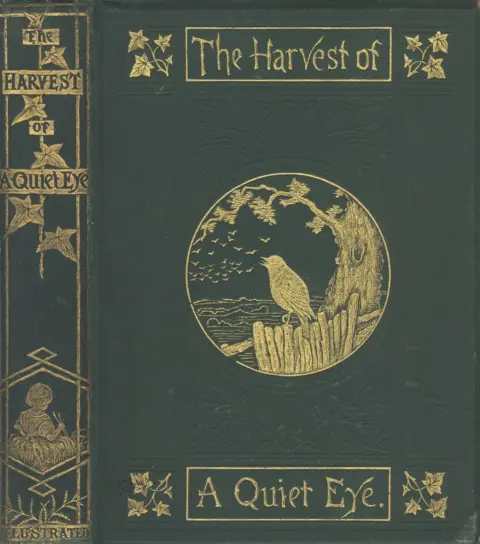
THE CLASSIC COLLECTION · 1867
"The Harvest of a Quiet Eye: Leisure Thoughts for Busy Lives" by John Richard Vernon is a reflective collection of essays written in the late 19th century. This work comprises contemplative meditations aimed at providing spiritual encouragement and moral insights amidst the chaos of daily life. Vernon's writings offer readers a gentle reminder of the beauty in ordinary experiences and the importance of introspection and quietude. The opening of the book serves as a heartfelt preface, where the author expresses his gratitude for the opportunity to share his reflections, which were originally published in periodicals. He muses on the transition from the Old Year to the New, engaging with themes of nostalgia, regret, and anticipation. The narrative tends to evoke a sense of melancholy and joy intertwined, as he cherishes the memories of the past while embracing the promise of a new beginning. The author invites readers to reflect on their spiritual journey, emphasizing the importance of quiet moments in one's life, as he sets the tone for a volume that seeks to comfort and inspire amidst the busyness of the modern world.
Introduction adapted from the source catalogue; source summaries may be automatically generated.
Free to read · English · 64,584 words · No account needed
MAKE TIME FOR A GOOD BOOK
On by default. Untick to stop anonymous reading totals. Each page counts after 10 seconds in view. How this works.
Anonymous counting is on unless you have switched it off.
For in neither case is the songster seen: with true art the minstrel is left to the imagination to supply, and this subtler artist can furnish voice, form, motion; only one of which three could be given by the painter.
These pictures were in the Winter Exhibition; hence, no doubt, their suggestion of the absent bird-songs was the more valued. For perhaps these, like other delights, are the sweetest when they are not possessed, but only remembered and longed-for.
That remembrance, however, of Winter, will serve, by contrast, to freshen our enjoyment, as we start, on this warm March day, for Bramley Wood, to descry and collect the old familiar bird-songs as they come back to us in the Spring. To collect these and the flowers, I say, in the heart’s cases and herbarium, for use when Winter comes, and woods are dead, and bird-songs gone. This is a better way than to crowd the staircase and hall with stuffed, silent birds, or to encumber your shelves with dried, brittle, brown specimens; which can never suggest the fresh, juicy, sweet-breathed blossoms, or the quick, never-still, bright-glancing inhabitants of the bushes. For the heart keeps these collections all fresh and full of life, and if a picture or a poem or a strain of music does but summon them up, why, there they are in a minute. Though they may have seemed laid by and forgotten, yet, at the magic call, lo! the heart is a lane of primroses, or a copse of bluebells; the lark is high in the heaven, and the thrush answering the blackbird out of great white sheets of the may.
We soon settle down to the bird-songs when once they have really all come back; and we plod on our preoccupied way, hearing them without hearing, unless, indeed, one day-note of a nightingale should electrify our heart. But there is no doubt that, at first returning, the silver minstrelsy of the woods is welcomed by most. And we never grow too old to feel a heart-kindling and a brightening of the eye, on that mild November day, when we start, and listen, and--yes, it is, the first Thrush-song breaking the meditative misty hush of the landscape. Autumn is stringing the woods with tears, and the first gripe of Winter has ere now pinched to death the more delicate garden flowers; but, even before his reign has begun in earnest, here is a voice which prophesies of his overthrow. Then the frosts come in defiance, and the last leaves spin down, and the snow-sheet falls, and the thrush is silent as though dead, and resistance seems overcome, and Winter’s reign established. An observant eye will, however, still detect a speckled clean breast, flitting into alternate concealment and sight behind the bushes in the shrubbery, and rustling the counterpane of dry leaves, under which those many little dull-green points are crowding out of the frost-held ground. But his song is kept in reserve for a time. And it seems that Spring is close at hand, and that the year is indeed turned, when next you hear him, high on the boughs of that tulip tree, large against the pale blue sky, singing out loud and clear from early morning to dusk of a bright February day. And the dry leaves have huddled away from the searching wind, and left the brown moist beds, over which trembles a surprise of delicate white cups, where the blunt dull-green points had been.
Your reading position is saved on this browser. Take it to another device with a library code. Reading pages adapt to text, rather than matching a printed edition.
BEHIND THE BOOK
This eBook is for the use of anyone anywhere in the United States and most other parts of the world at no cost and with almost no restrictions whatsoever. You may copy it, give it away or re-use it under the terms of the Project Gutenberg License included with this eBook or online at www.gutenberg.org. If you are not located in the United States, you will have to check the laws of the country where you are located before using this eBook. Read the source licence.
The original source file, including credits and licence, is retained by this library. Request an original-format copy at no charge. Please include the book title and Project Gutenberg identifier #54261.
KEEP YOUR CURIOSITY GOING
David Patterson (Spirit) Hatch

David Patterson (Spirit) Hatch

David Patterson (Spirit) Hatch

Ralph Waldo Emerson

Maurice Baring

Oscar Wilde & James McNeill Whistler