
Last letters from the living dead man
David Patterson (Spirit) Hatch
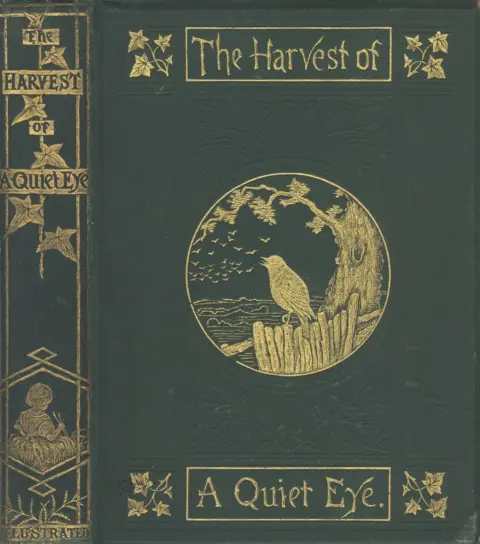
THE CLASSIC COLLECTION · 1867
"The Harvest of a Quiet Eye: Leisure Thoughts for Busy Lives" by John Richard Vernon is a reflective collection of essays written in the late 19th century. This work comprises contemplative meditations aimed at providing spiritual encouragement and moral insights amidst the chaos of daily life. Vernon's writings offer readers a gentle reminder of the beauty in ordinary experiences and the importance of introspection and quietude. The opening of the book serves as a heartfelt preface, where the author expresses his gratitude for the opportunity to share his reflections, which were originally published in periodicals. He muses on the transition from the Old Year to the New, engaging with themes of nostalgia, regret, and anticipation. The narrative tends to evoke a sense of melancholy and joy intertwined, as he cherishes the memories of the past while embracing the promise of a new beginning. The author invites readers to reflect on their spiritual journey, emphasizing the importance of quiet moments in one's life, as he sets the tone for a volume that seeks to comfort and inspire amidst the busyness of the modern world.
Introduction adapted from the source catalogue; source summaries may be automatically generated.
Free to read · English · 64,584 words · No account needed
MAKE TIME FOR A GOOD BOOK
On by default. Untick to stop anonymous reading totals. Each page counts after 10 seconds in view. How this works.
Anonymous counting is on unless you have switched it off.
“Is it warm in that green valley,
Vale of childhood, where you dwell?
Is it calm in that green valley
Round whose bournes such great hills swell?
Are there giants in the valley,--
Giants leaving footprints yet?
Are there angels in the valley?
Tell me----I forget.”
But nothing that is beautiful to remember will be forgotten there. And the poet will no more lament a light gone out, a glory faded; our worn-out feelings, and spirits, and appreciations, and hopes, and beliefs, and wonders, and admirations, will be restored to us new. So altogether new, so quite different in nature, as well as in degree, from the old, that they will keep new, and not fade and perish in the using. That world will not pass away, nor the enjoyment thereof. For all there will be in perfect harmony with the will of God, which abideth for ever.
Everlasting Spring days! Think of that! I mean an everlasting Spring season and freshness in the heart. Oh the sadness which is an undercurrent of all earth’s poetry, from the nightingale’s, upward, will have left our songs then!
“We look before and after,
And pine for what is not;
Our sincerest laughter
With some pain is fraught;
Our sweetest songs are those that tell of saddest thought.”
But this will then and there be no longer the case, for life will no longer be “A thing wherein we feel there is some hidden want.” Season after season, joy after joy, will indeed dance into light, but will not, after a little brief while of enjoyment, die into the shade. Heaven’s everlasting flowers will not grow dry, and dusty, and colourless; but for ever retain and increase the freshness, and the abundance, and the light, and the exquisite glory of those unimagined SPRING DAYS.
Two sweet little pictures, entitled, “The Lark,” and “The Nightingale,” have greatly charmed me. In one, there was a blue-flecked sky, a Spring morning landscape, and a glad-eyed girl, with a lapful of daisies, lying back and looking up with shaded gaze and listening eyes, into those blue depths, wherein
“The lark became a sightless song.”
In the other, there was an evening glow: warm, orange-grey sky, cooling into steel-blue; a bower of rose-leaves; an earnest face, with darker hair, and pensive brow, flushed into warmth by the setting sun. And you would know, even had you not been told, that the child, old enough just to enjoy that young melancholy which is pleasant,--is listening to that
“Wild bird, whose warble, liquid sweet,
Rings Eden through the budded quicks.”
Your reading position is saved on this browser. Take it to another device with a library code. Reading pages adapt to text, rather than matching a printed edition.
BEHIND THE BOOK
This eBook is for the use of anyone anywhere in the United States and most other parts of the world at no cost and with almost no restrictions whatsoever. You may copy it, give it away or re-use it under the terms of the Project Gutenberg License included with this eBook or online at www.gutenberg.org. If you are not located in the United States, you will have to check the laws of the country where you are located before using this eBook. Read the source licence.
The original source file, including credits and licence, is retained by this library. Request an original-format copy at no charge. Please include the book title and Project Gutenberg identifier #54261.
KEEP YOUR CURIOSITY GOING
David Patterson (Spirit) Hatch

David Patterson (Spirit) Hatch

David Patterson (Spirit) Hatch

Ralph Waldo Emerson

Maurice Baring

Oscar Wilde & James McNeill Whistler