THE CLASSIC COLLECTION✦An outlaw’s diary: the CommuneCLASSIC FREE BOOKS
An outlaw’s diary: the Commune
Cécile Tormay
THE CLASSIC COLLECTION · 1856
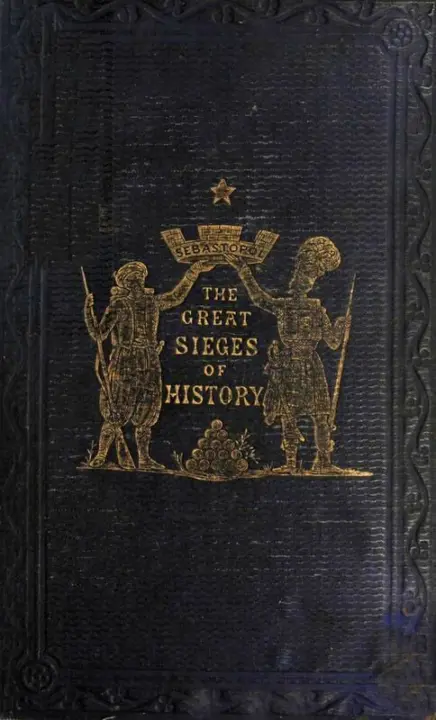
"The Great Sieges of History" by William Robson is a historical account written in the mid-19th century. This work explores significant sieges throughout history, delving into the circumstances, strategies, and human experiences associated with these protracted conflicts. The author appears to aim at illustrating the lessons of military conduct and the human spirit in times of siege and hardship. The opening portion introduces the book's thesis, stating that sieges present a unique context wherein human virtues such as courage, endurance, and fidelity are tested to their limits. Robson reflects on historical conflicts, emphasizing the drama of desperation experienced by both the besieged and the attackers. His discussion highlights that while technology and strategy have evolved, the core essence of human struggle during sieges remains constant. The early examples presented set the stage for a journey through notable sieges, demonstrating how these events serve as key moments in the broader narrative of human history.
Introduction adapted from the source catalogue; source summaries may be automatically generated.
Free to read · English · 241,016 words · No account needed
MAKE TIME FOR A GOOD BOOK
On by default. Untick to stop anonymous reading totals. Each page counts after 10 seconds in view. How this works.
Anonymous counting is on unless you have switched it off.
The existence of Carthage constantly reminded the Romans of the fatal days of Cannæ and Thrasymenus; Rome dreaded to see her rival rise again from the state of humiliation to which her arms had reduced her. To free themselves from all apprehension for the future, the senate determined to annihilate Carthage, and sent thither a formidable army, under the command of the two consuls. In this circumstance, we find one of the most striking instances of political expediency overpowering the sense of justice in a great mind. Cato the Censor, a wise, good, and just man, was the principal promoter of this infamous infraction of the rights of nations and humanity. To judge of Cato by all the other parts of his character, we might as well expect to see Fénelon presiding over an auto-da-fè, as to find the great censor constantly urging the necessity for the destruction of Carthage.
At the approach of the Romans, the Carthaginians sent out deputies to offer to give up to the great republic, themselves and all that belonged to them. Hannibal, it is true, had long been dead; but one would think his very remembrance would have stimulated such a populous nation to some show of resistance to the tyranny of a people they had more than once beaten. Hostages and all their arms were demanded as proofs of their submission. This severe order was complied with: a long train of chariots arrived at the Roman camp, bearing an immense quantity of arms and machines of war. The most respectable old men of the senate of Carthage, with the most venerable priests, followed this melancholy cortège, to endeavour to excite compassion. “I praise your promptitude,” said Censorinus, one of the consuls; “and the senate now commands you to leave Carthage, which it is determined to destroy, and to remove your abode whithersoever it may please you, provided it be four leagues from the sea-shore.” This was a clap of thunder for the deputies. In vain they endeavoured to soften the Romans by their prayers and tears; they were forced to carry this terrible reply back to Carthage. At this news, despair and rage possessed the citizens, and it was resolved to sacrifice everything for the defence of their country. Asdrubal had the command of the troops, and every expedition was employed to fabricate new arms and machines. Temples, palaces, and all public places became so many workshops; men, women, children, and the aged worked in them day and night. Grave historians say that hemp for the manufacture of ropes being deficient, the women cut off their hair and supplied a substitute in abundance. But we consider this to be one of the pleasing “lies” of history. If we calculate how many of our fair damsels must be shorn of this their principal ornament to make one cable, we may judge of the probability of the story. During two years, the Romans made but little progress; they even experienced several checks and losses. It seemed to require another Scipio to terminate the wars in which the heroes of his family had been so successful. No name is more honoured in Roman history than that of Scipio; and our young readers must be particularly careful not to confound the various persons who bore it with one another; for there were many Romans, and most of them of superior character, who were honoured with it. The real family name was Cornelius, and the addition Scipio was what we should now call a sobriquet, or nickname, given to the first so called for serving as a staff to his blind father; Scipio being the Latin for a walking-stick. Many boasted names and titles have a less honourable source. This Scipio was, of course, not the conqueror of Hannibal; he is therefore termed Scipio Africanus the younger. He was the son of the great Paulus Æmilius, the conqueror of Perseus, and was adopted by the son of the first Scipio Africanus, and called Scipio Æmilianus, according to the laws of adoption. The two families, by marriages and adoptions, were almost one. Scipio Africanus the younger is one of the finest characters of antiquity; and if the reputation of Polybius the historian were not fully established for its truthfulness, we might almost suspect the picture we have of it to be too favourable. But really great historical characters escape from the charge of partiality in their biographers by means of their actions; history tells us how they affected the periods at which they lived, and either bears out or contradicts the record of the individuals. Where there are several persons in remote history of one name, their conspicuous actions are not unfrequently all given to one. There were many Hercules, but all their labours are laid upon the broad shoulders of one of them: so with the Scipios: the younger Africanus is such a favourite with ancient writers, that modern readers sometimes confound him with his senior of that name. We shall only observe, that though quite capable of such an action, it was not he who restored Allucius his beautiful bride.
Your reading position is saved on this browser. Take it to another device with a library code. Reading pages adapt to text, rather than matching a printed edition.
BEHIND THE BOOK
This eBook is for the use of anyone anywhere in the United States and most other parts of the world at no cost and with almost no restrictions whatsoever. You may copy it, give it away or re-use it under the terms of the Project Gutenberg License included with this eBook or online at www.gutenberg.org. If you are not located in the United States, you will have to check the laws of the country where you are located before using this eBook. Read the source licence.
The original source file, including credits and licence, is retained by this library. Request an original-format copy at no charge. Please include the book title and Project Gutenberg identifier #59093.
KEEP YOUR CURIOSITY GOING
Cécile Tormay

Moritz Busch
John L. Ransom
Frances Wright
Cécile Tormay

Mabel Potter Daggett