THE CLASSIC COLLECTION✦An outlaw’s diary: the CommuneCLASSIC FREE BOOKS
An outlaw’s diary: the Commune
Cécile Tormay
THE CLASSIC COLLECTION · 1856
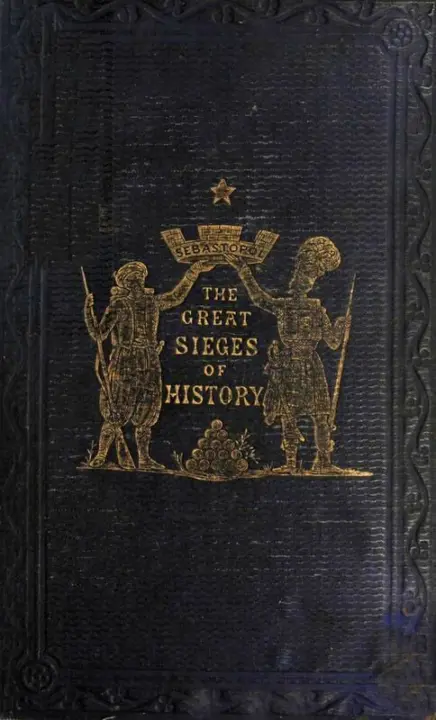
"The Great Sieges of History" by William Robson is a historical account written in the mid-19th century. This work explores significant sieges throughout history, delving into the circumstances, strategies, and human experiences associated with these protracted conflicts. The author appears to aim at illustrating the lessons of military conduct and the human spirit in times of siege and hardship. The opening portion introduces the book's thesis, stating that sieges present a unique context wherein human virtues such as courage, endurance, and fidelity are tested to their limits. Robson reflects on historical conflicts, emphasizing the drama of desperation experienced by both the besieged and the attackers. His discussion highlights that while technology and strategy have evolved, the core essence of human struggle during sieges remains constant. The early examples presented set the stage for a journey through notable sieges, demonstrating how these events serve as key moments in the broader narrative of human history.
Introduction adapted from the source catalogue; source summaries may be automatically generated.
Free to read · English · 241,016 words · No account needed
MAKE TIME FOR A GOOD BOOK
On by default. Untick to stop anonymous reading totals. Each page counts after 10 seconds in view. How this works.
Anonymous counting is on unless you have switched it off.
In the revolutionary war, Cremona was three times an object of attack and defence, but had no siege sufficiently interesting to claim a place in our pages.
The siege of Carthage seemed to seal the fate of that great and ambitious republic. Whilst we have had to record so many sieges of Rome, we have only one to describe of her great rival, and that closed the career of that rival. Proud, wealthy, and, as the Romans would add, false Carthage, was never annoyed by the invasion of her capital, till Rome had so risen in the ascendant that Carthage must necessarily sink: and then she did sink, like a tropical sun, without twilight. Whether it is with the great captain, Hannibal, or with the powerful nation to which he did so much honour, that our sympathies are attached, we cannot say, but we acknowledge to feeling a greater interest for the Carthaginians throughout all the Punic wars than we do for the Romans. Besides, Carthage has no native historians, it was blotted from the map of nations, and we have reason to receive with suspicion much that the Latin, or even the Greek writers--for Carthage was generally at variance with Greece--may say on the subject of “Punica fides.”
Before we commence this memorable siege, it will be well to give our readers a short account of what Carthage was at this period. At the beginning of the war, Carthage contained seven hundred thousand inhabitants. It stood at the bottom of a gulf, surrounded by the sea, and in the form of a peninsula, whose neck,--that is, the isthmus which joined it to the continent,--was twenty-five stadia, or a league and a quarter, in breadth. The peninsula was three hundred and sixty stadia, or eighteen leagues round. On the west side there projected from it a long strip of land, half a stadium, or twelve fathoms, broad, which, advancing into the sea, divided it from a morass, and was fenced on all sides with rocks and a single wall. On the south side, towards the continent, where stood the citadel called Byrsa, the city was surrounded with a triple wall thirty cubits high, exclusive of the parapets and towers, with which it was flanked all round at equal distances, each interval being fourscore fathoms. Every tower was four stories high, and the stalls but two; they were arched, and in the lower part were stalls to hold three hundred elephants, with their fodder; and over these were stables for four thousand horses, and lofts for their food. There likewise was room enough to lodge twenty thousand foot and four thousand horse. All these were contained within the walls alone. In one place only the walls were weak and low, and that was a neglected angle, which began at the neck of land above mentioned, and extended as far as the harbours, which were on the west side. Of these there were two, which communicated with each other, but had only one entrance, seventy feet broad, shut up with chains: the first was appropriated to the merchants, and had several distinct habitations for the seamen; the second, or inner harbour, was for ships of war, in the midst of which stood an island, called Cothon, lined, as the harbours were, with large quays, in which were distinct receptacles for sheltering from the weather two hundred and twenty ships. Over these were magazines or storehouses, wherein was lodged everything necessary for arming and equipping fleets. The entrance to each of these receptacles was adorned with two marble pillars of the Ionic order; so that both the harbour and the island represented on each side two magnificent galleries. In the island was the admiral’s palace; and as it stood opposite to the mouth of the harbour, he could thence discover whatever was doing at sea, though no one could see what was being transacted in the inward parts of the harbour. The merchants, in like manner, had no prospect of the men-of-war, the two ports being separated by a double wall, each having a particular gate that led to the city, without passing through the other harbour. So that Carthage may be divided into three parts: the harbour, which was double, and was called Cothon, from the little island of that name; the citadel, named Byrsa; and the city properly so called, where the inhabitants dwelt, which lay round the citadel, and was called Megara.
Your reading position is saved on this browser. Take it to another device with a library code. Reading pages adapt to text, rather than matching a printed edition.
BEHIND THE BOOK
This eBook is for the use of anyone anywhere in the United States and most other parts of the world at no cost and with almost no restrictions whatsoever. You may copy it, give it away or re-use it under the terms of the Project Gutenberg License included with this eBook or online at www.gutenberg.org. If you are not located in the United States, you will have to check the laws of the country where you are located before using this eBook. Read the source licence.
The original source file, including credits and licence, is retained by this library. Request an original-format copy at no charge. Please include the book title and Project Gutenberg identifier #59093.
KEEP YOUR CURIOSITY GOING
Cécile Tormay

Moritz Busch
John L. Ransom
Frances Wright
Cécile Tormay

Mabel Potter Daggett