THE CLASSIC COLLECTION✦An outlaw’s diary: the CommuneCLASSIC FREE BOOKS
An outlaw’s diary: the Commune
Cécile Tormay
THE CLASSIC COLLECTION · 1856
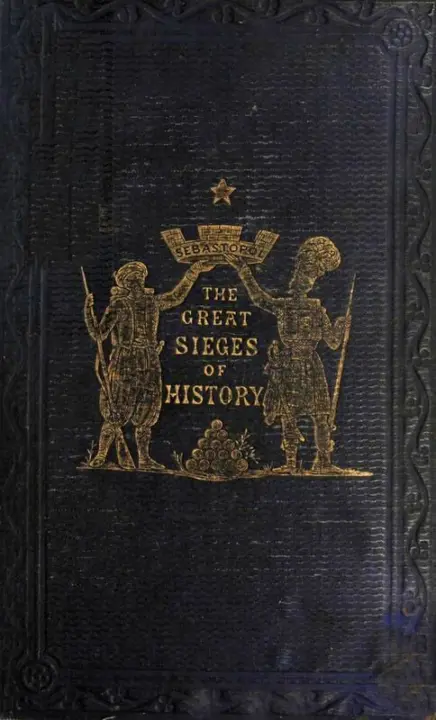
"The Great Sieges of History" by William Robson is a historical account written in the mid-19th century. This work explores significant sieges throughout history, delving into the circumstances, strategies, and human experiences associated with these protracted conflicts. The author appears to aim at illustrating the lessons of military conduct and the human spirit in times of siege and hardship. The opening portion introduces the book's thesis, stating that sieges present a unique context wherein human virtues such as courage, endurance, and fidelity are tested to their limits. Robson reflects on historical conflicts, emphasizing the drama of desperation experienced by both the besieged and the attackers. His discussion highlights that while technology and strategy have evolved, the core essence of human struggle during sieges remains constant. The early examples presented set the stage for a journey through notable sieges, demonstrating how these events serve as key moments in the broader narrative of human history.
Introduction adapted from the source catalogue; source summaries may be automatically generated.
Free to read · English · 241,016 words · No account needed
MAKE TIME FOR A GOOD BOOK
On by default. Untick to stop anonymous reading totals. Each page counts after 10 seconds in view. How this works.
Anonymous counting is on unless you have switched it off.
The grand master, at the moment of the explosion of this volcano, was in a neighbouring church, imploring, at the foot of the altar, the aid of God. He judged, by the horrible noise he heard, that the explosion of the mine would be followed by an assault. He arose at the very moment the priests, to commence the office, were chanting this preliminary prayer--Deus, in adjutorium meum intende! (Lord, come to my help!) “I accept the augury,” cried the pious general; and turning towards some knights who accompanied him, “Come, my brothers,” said he, “let us change the sacrifice of our praises into that of our lives, and let us die, if it be necessary, in defence of our holy faith.” As he spoke, pike in hand, he advanced with a menacing air. He mounted the bastion, met the Turks, and struck down and killed all who came in his way or resisted him. He tore down the enemy’s ensigns, and regained the bastion in a moment. Mustapha, Soliman’s general, rallied the fugitives and led them back towards the enemy, by dint of blows as well as menaces. He marched forward himself with the greatest audacity. The combat was renewed, and the mêlée became bloody. Steel and fire were equally employed on both parts; they slaughtered each other hand to hand, or at a distance, by musket-shots or sword-cuts. They even proceeded to struggle body to body, and the stronger or more adroit killed his enemy with dagger-thrusts. The Turks, at once exposed to arquebusses, stones, grenades, and fire-pots, at length abandoned the breach and turned their backs. In vain their chiefs, by menaces and promises, endeavour to reanimate their valour. They do not listen to him. All fly, all disperse, and Mustapha himself turns unwillingly from the foe, after having lost more than three thousand men. It was with such inveteracy that the superiority was contested up to the 24th of September, when Soliman issued the order for a general assault. At daybreak the Mahometans, divided into four bodies, or rather four armies, advanced on four sides boldly towards the breach, in spite of the thunders which poured from the place, in spite of a deluge of balls, arrows, darts, and stones. Nothing could stop them. The knights crowded to the point of conflict; they repulsed the assailants; they precipitated them from the walls; they overthrew the ladders. The infidels returned to the charge with more impetuosity than ever, but all their efforts were useless: the knights were invincible. The priests, monks, old men, and even the children, all insist upon taking their share of the peril, and at length repulse the enemy. The women do not yield in exertions to the pioneers, or in courage to the soldiers. Many lost their lives in defending their husbands. A Greek woman, exceedingly handsome, the mistress of an officer who commanded in a bastion, and who was just killed, frantic at the death of her lover, and resolved not to outlive him, after having tenderly embraced two young children she had had by him, and imprinted the sign of the cross upon their brow--“It is better, my children,” said she, with the tears streaming from her eyes, “it is better for you to die by my hands than by those of our pitiless enemies, or that you should be reserved for infamous pleasures, more cruel than death.” Frantic with grief and rage, she seized a knife, slaughtered them, and threw their bodies into the fire; then clothing herself in the garments of her lover, stained with his blood, with his sabre in her hand, she rushed to the breach, killed the first Turk who opposed her, wounded several others, and died fighting with the bravery of a hero. The ill success of so many assaults rendered Soliman furious. He ordered Mustapha to be shot with arrows, and several other captains would have undergone the same fate if they had not persuaded him that he might still succeed in his undertaking. Incessant combats and attacks were carried on up to the middle of winter. At length the Ottomans triumphed; Rhodes, almost entirely destroyed, had no means of resistance left. Most of the knights had been killed defending the fortifications. The grand master, Villiers de l’Isle-Adam, seeing with the deepest grief that all his resources were exhausted, felt that it would be madness to resist longer. He resolved to surrender; but his persuasion that he who makes the first proposals loses an advantage, made him positively determine to wait till the Turks should propose capitulation. His project succeeded. Deceived by the continued brave defence, the Turks were ignorant of the real state of the place, and offered the besiegers more honourable conditions than they might have expected. This famous isle, which had been for nearly three centuries the bulwark of Christianity, was wrested from the hands of its few surviving defenders, the wreck of a society of heroes. As soon as the capitulation was signed, Soliman entered the city for the purpose of expressing to l’Isle-Adam his admiration of his noble defence. After a long conversation the conqueror retired, saying, “Although I came here alone, do not imagine I was without an escort; I had the parole of the grand master and the faith of his knights, a security stronger than a whole army.” Soliman did not abuse his victory. He treated the grand master generously; he visited him, pitied him, and consoled him as that last of a race of heroes deserved.
Your reading position is saved on this browser. Take it to another device with a library code. Reading pages adapt to text, rather than matching a printed edition.
BEHIND THE BOOK
This eBook is for the use of anyone anywhere in the United States and most other parts of the world at no cost and with almost no restrictions whatsoever. You may copy it, give it away or re-use it under the terms of the Project Gutenberg License included with this eBook or online at www.gutenberg.org. If you are not located in the United States, you will have to check the laws of the country where you are located before using this eBook. Read the source licence.
The original source file, including credits and licence, is retained by this library. Request an original-format copy at no charge. Please include the book title and Project Gutenberg identifier #59093.
KEEP YOUR CURIOSITY GOING
Cécile Tormay

Moritz Busch
John L. Ransom
Frances Wright
Cécile Tormay

Mabel Potter Daggett