THE CLASSIC COLLECTION✦An outlaw’s diary: the CommuneCLASSIC FREE BOOKS
An outlaw’s diary: the Commune
Cécile Tormay
THE CLASSIC COLLECTION · 1856
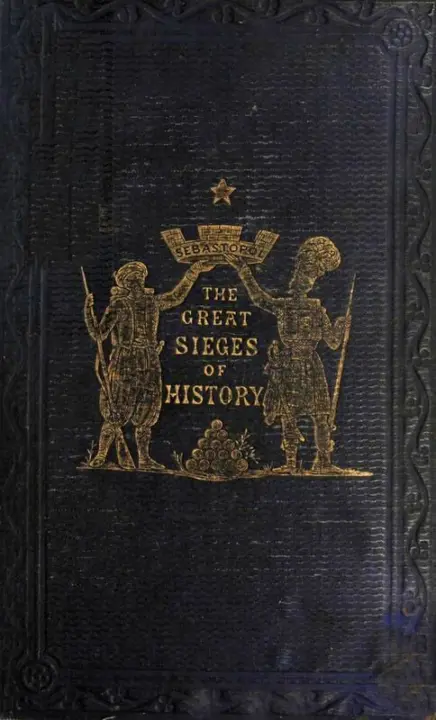
"The Great Sieges of History" by William Robson is a historical account written in the mid-19th century. This work explores significant sieges throughout history, delving into the circumstances, strategies, and human experiences associated with these protracted conflicts. The author appears to aim at illustrating the lessons of military conduct and the human spirit in times of siege and hardship. The opening portion introduces the book's thesis, stating that sieges present a unique context wherein human virtues such as courage, endurance, and fidelity are tested to their limits. Robson reflects on historical conflicts, emphasizing the drama of desperation experienced by both the besieged and the attackers. His discussion highlights that while technology and strategy have evolved, the core essence of human struggle during sieges remains constant. The early examples presented set the stage for a journey through notable sieges, demonstrating how these events serve as key moments in the broader narrative of human history.
Introduction adapted from the source catalogue; source summaries may be automatically generated.
Free to read · English · 241,016 words · No account needed
MAKE TIME FOR A GOOD BOOK
On by default. Untick to stop anonymous reading totals. Each page counts after 10 seconds in view. How this works.
Anonymous counting is on unless you have switched it off.
What had been written to him of the ill-behaviour of his soldiers, and what he learnt of their cowardice on his arrival, determined him to make them appear before him disarmed, and to surround them by the troops he had brought with him. “If I had,” said he, in a haughty, contemptuous tone, and casting terrible glances on all around him, “if I had to address soldiers, I would have permitted you to appear before me with your arms; but as I am reduced to the necessity of speaking to wretched slaves, more weak and more timid than women, it is not just that men so base should dishonour the marks of valour. I should like to know if, when you landed in the isle, you flattered yourselves that these crusaders would be still more cowardly than yourselves, and that they would servilely hold out their hands for the irons with which it would please you to load them? To undeceive you, please to learn that in the persons of these knights, we have to fight with the most intrepid among the Christians, and most thirsting for Mussulman blood. It is their courage which has excited ours; in attacking them, I have thought I had met with an enterprise and perils worthy of my valour. Is it to you, then, base and effeminate troops, that I am to look for a conquest; you who fly from an enemy before you have seen him, and who would already have deserted, if the sea which surrounds you had not presented an insurmountable obstacle? Before experiencing such a disgrace, I will inflict such severe justice upon all cowards, that their punishment shall restrain within their duty such as might be tempted to imitate them.” Scarcely had Soliman ceased to speak, than the soldiers drew their swords, as if to massacre those of their comrades who had excited the indignation of the Sultan. These unfortunate wretches, who saw death suspended over their heads, implored with loud cries the mercy of their sultan. Their commander, as agreed upon with him, supported their prayers. “Well,” said Soliman to Peri, the general, “I suspend, to your prayers, the punishment of the guilty; it remains for them to find pardon on the bastions and bulwarks of the enemy.” This mixture of severity and clemency affected all hearts; the greatest perils appeared to be beneath the valour of the soldiers who had been the most discouraged. Officers and soldiers, to efface the least traces of their murmurs, hastened to signalize themselves under the eye of their master; and that armed multitude, till that time to be little dreaded, became at length most formidable. The soldiers and pioneers pushed on the trenches without relaxation; they worked day and night; the grand master, finding them supported by large detachments, did not think it prudent to continue the sorties, in which he lost more by the death of one knight, than Soliman did by that of fifty janissaries. Thus the infidels, having nothing to fear but from the fire of the place, behaved with so much spirit that they carried their works up to the counterscarp; and, to render their lines more solid, they covered them without with posts and planks, bound well together. The batteries were then increased, and continued incessantly playing against the city, but without success, for their balls scarcely grazed the parapets of the walls. They were warned of this by a Jew, who served them as a spy in Rhodes. They immediately changed their batteries, which from that time fired more effectively. Seeing that the place might be said to be covered and buried under its fortifications, the Turks resolved to build two cavaliers of a greater height than its works, which should command the city and its boulevards. Soldiers and pioneers, by order of the general, brought, during several days, earth and stones, which they placed between the gates of Spain and Auvergne, opposite to the bastion of Italy. These two points lay open to the cannon of the place: thousands of men perished here; but such losses were deemed nothing. At length two seeming hills appeared to rise up, higher by twelve feet than the walls, and which completely commanded them. The German post was the first attacked. The Turks pointed their cannon towards the walls, and it was thought impossible they could stand against these destructive machines. The grand master went to the spot, and ordered the wall to be supported within by earth, beams, posts, and fascines; and, as the artillery placed over the gate of his palace, on an elevated spot, bore directly upon the infidels, the Christian cannoniers poured their shot upon them, and knocked to pieces their bastions and their parapets. New ones were obliged to be constructed; the cannon of the city battered them down immediately, whilst the Turkish artillery, on the contrary, badly served and pointed, fired over the walls, without doing any injury. Disheartened by the little effect produced by their batteries, the Sultan’s officers transported them against the tower of St. Nicholas. They played upon it with twelve guns; but they had the mortification to see their cannon dismounted and their batteries ruined by those of the tower. To guard against this effect of the skill of the Christian cannoniers, they resolved to fire only by night, and during the day they buried their cannon under the gabions in the sand: on the approach of darkness, they were placed upon the platform. More than five hundred balls were fired against the point of the wall looking towards the west, and brought it down into the ditch. The Turks congratulated themselves upon the success of this nocturnal battery, and felt certain of carrying the fort at the first assault; they were astonished, however, to see behind the ruins a new wall, terraced with its parapets, and bristling with artillery which prevented all approach to it. Soliman caused all the principal bastions of the place to be attacked, and the Ottoman cannon, which battered them day and night during a whole month, did them considerable damage. The numbers of knights and citizens in Rhodes began to diminish fast. They were in want of powder; the grand master caused some to be made, and hopes were entertained that this feeble succour would enable them to hold out for a long time against the Mahometan emperor. Up to this time, the war had only been carried on by artillery; and although that of the Turks, in the multitude of fiery mouths and abundance of powder, was very superior, they were not yet masters of an inch of ground in the bastions or advanced works of the place. The retirades and intrenchments dug by the knights, supplied the places of the battered-down walls. These new works could only be taken by assault; and to mount to it, it was necessary to attempt the descent of the ditch, or to fill it up. Soliman having an immense number of pioneers in his army, formed several detachments of them, with orders to throw earth and stones into the ditch. But the knights, by means of casemates, removed, by night, all the rubbish the Turks had brought during the day. Other Turkish pioneers were employed in digging mines in five different places, each one of which led to the bastion opposite to it. Some of these were detected by the vigilance of the famous De Martinengere, to whom is due the invaluable invention of discovering, by means of stretched skins, where mining is being carried on. The Turks had worked with so much address, that the different branches of these mines went from one to another, and all, to produce the greater effect, ended at the same place. Two of these mines sprang, one after the other, under the English bastion. Their explosion was so violent, that they threw down more than six toises of the wall, the ruins of which filled up the ditch. The breach was so large and so easy, that several battalions flew to the assault, with loud cries, sabre in hand. They at once gained the top of the bastion, and planted seven flags, and would have rendered themselves masters of it, if they had not met with a traverse behind it, which stopped them. The knights, recovered from the astonishment caused by the fearful noise of the exploded mine, rushed to the bastion, and charged the Turks with muskets, grenades, and stones.
Your reading position is saved on this browser. Take it to another device with a library code. Reading pages adapt to text, rather than matching a printed edition.
BEHIND THE BOOK
This eBook is for the use of anyone anywhere in the United States and most other parts of the world at no cost and with almost no restrictions whatsoever. You may copy it, give it away or re-use it under the terms of the Project Gutenberg License included with this eBook or online at www.gutenberg.org. If you are not located in the United States, you will have to check the laws of the country where you are located before using this eBook. Read the source licence.
The original source file, including credits and licence, is retained by this library. Request an original-format copy at no charge. Please include the book title and Project Gutenberg identifier #59093.
KEEP YOUR CURIOSITY GOING
Cécile Tormay

Moritz Busch
John L. Ransom
Frances Wright
Cécile Tormay

Mabel Potter Daggett