THE CLASSIC COLLECTION✦The Story of Francis CluddeCLASSIC FREE BOOKS
The Story of Francis Cludde
Stanley John Weyman
THE CLASSIC COLLECTION · 1919
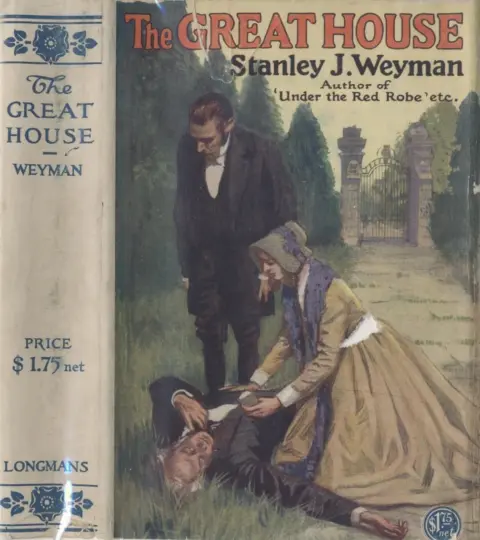
"The Great House" by Stanley John Weyman is a historical novel likely written in the early 20th century. Set primarily in 19th-century France and England, the story begins with Mary Audley, a young woman navigating her precarious situation as the daughter of an artist and a dependent figure in a Polish household. The narrative sheds light on themes of social class, identity, and belonging through her experiences and interactions with the other characters, particularly as she starts to encounter her estranged English relatives. At the start of the narrative, we meet Mary Audley, who spends her 20th birthday in a poverty-stricken dormitory, reflecting on her isolation and yearning for a more fulfilling life. After learning about a potential connection to her uncle in England, she faces a whirlwind of emotions as she prepares to leave France for her new life. During her journey, she receives unexpected kindness from her English cousin, Lord Audley, which influences her perspective on family and belonging. Meanwhile, the backdrop of social and political turmoil sets the stage for further developments in Mary’s interactions with her relatives and her quest for a sense of purpose.
Introduction adapted from the source catalogue; source summaries may be automatically generated.
Free to read · English · 127,315 words · No account needed
MAKE TIME FOR A GOOD BOOK
On by default. Untick to stop anonymous reading totals. Each page counts after 10 seconds in view. How this works.
Anonymous counting is on unless you have switched it off.
He looked at Etruria, and Mary explained who she was.
“I am afraid that she is hurt.”
The girl’s temple was bruised and there was blood on her cheek; more than one of the blows aimed at her lover had fallen on her. But she said eagerly that it was “Nothing! Nothing!”
“Are you sure, Etruria?” Mary asked with concern.
“It is nothing, indeed, Miss,” the girl repeated. She was trying with shaking fingers to put up her hair.
“Then the sooner,” Audley rejoined, “we get this—this gentleman to my dogcart, the better. Take his other arm, Petch. Miss Audley, can you carry my gun?—it is not loaded. And you,” he continued to Etruria, “if you are able, take Petch’s.”
They took the guns, and the little procession wound down the path to the road, where they found a dogcart awaiting them, and, peering from the cart, two setters, whining and fretting. The dogs were driven under the seat, and the clergyman, still muttering that he was all right, was lifted in. “Steady him, Petch,” Audley said; “and do you drive slowly,” he added, to the other man. “You will be at the surgeon’s at Brown Heath in twenty minutes. Stay with him, Petch, and send the cart back for me.”
“But are you not going?” Mary cried.
“I am not going to leave you in the dark with only your maid,” he answered with severity. “One adventure a night is enough, Miss Audley.”
She murmured a word or two, but submitted. The struggle had shaken her; she could still see the men’s savage faces, still hear the thud of their blows. And she and Etruria had nearly a mile to go before they reached the park.
When they were fairly started, “How did it happen?” he asked.
Mary told the story, but said no word of Etruria’s romance.
“Then you were not with him when they set on him?”
“No, we had parted.”
“And you went back?”
“Of course we did!”
“It was imprudent,” he said, “very imprudent. If we had not come up at that moment you might have been murdered.”
“And if we had not gone back, Mr. Colet might have been murdered!” she answered. “What he had done to offend them——”
“I think I can tell you that. He’s the curate at Riddsley, isn’t he? Who’s been preaching up cheap bread and preaching down the farmers?”
“Perhaps so,” Mary answered. “He may be. But is he to be murdered for that? From your tone one might think so.”
Your reading position is saved on this browser. Take it to another device with a library code. Reading pages adapt to text, rather than matching a printed edition.
Stanley John Weyman
Stanley John Weyman
Stanley John Weyman
Stanley John Weyman
BEHIND THE BOOK
This eBook is for the use of anyone anywhere in the United States and most other parts of the world at no cost and with almost no restrictions whatsoever. You may copy it, give it away or re-use it under the terms of the Project Gutenberg License included with this eBook or online at www.gutenberg.org. If you are not located in the United States, you will have to check the laws of the country where you are located before using this eBook. Read the source licence.
The original source file, including credits and licence, is retained by this library. Request an original-format copy at no charge. Please include the book title and Project Gutenberg identifier #39294.
KEEP YOUR CURIOSITY GOING
Cécile Tormay

Moritz Busch
Coulson Kernahan
John L. Ransom

Maurice Baring
Frances Wright