THE CLASSIC COLLECTION✦An outlaw’s diary: the CommuneCLASSIC FREE BOOKS
An outlaw’s diary: the Commune
Cécile Tormay
THE CLASSIC COLLECTION · 1886
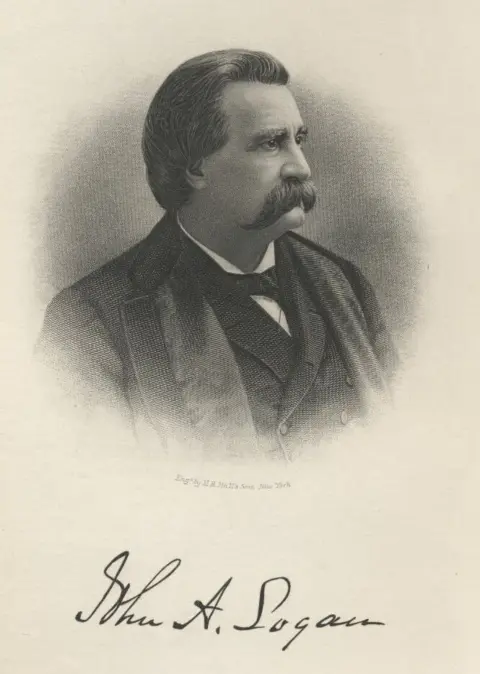
"The Great Conspiracy, Complete" by John Alexander Logan is a historical account written during the late 19th century that delves into the origins and development of what the author refers to as the Great Conspiracy surrounding the American Civil War and its contributing factors. The book examines the historical context of slavery, sectional tensions, and the political maneuverings that fueled the conflict, aiming for historical accuracy and objectivity in presenting the facts. The opening of the work sets a foundation for understanding the interwoven history of American slavery and its eventual influence on the civil strife that ensued. Logan introduces the evolution of the slavery issue from the early days of the republic, highlighting the complex attitudes toward slavery among the Founding Fathers and the conflicts that arose during the formation of the Constitution. He outlines key events leading up to the Civil War, tracing the origins of sectionalism, the influence of economic factors, and the political discourses that inevitably led the nation to civil war. Logan's nuanced portrayals of both pro- and anti-slavery sentiments, along with his detailed examination of legislative actions like the Missouri Compromise, underscore the depth of the national crisis that culminated in the conflict.
Introduction adapted from the source catalogue; source summaries may be automatically generated.
Free to read · English · 237,116 words · No account needed
MAKE TIME FOR A GOOD BOOK
On by default. Untick to stop anonymous reading totals. Each page counts after 10 seconds in view. How this works.
Anonymous counting is on unless you have switched it off.
The Morrill-Tariff of 1860, with modifications to it subsequently made by its Republican friends, secured to the Nation, through the triumph of the Union arms, great and manifold blessings and abundant prosperity flowing from the American Protective policy; while the Emancipation proclamations, together with the Constitutional amendments, and Congressional legislation, through the same triumph, and the acceptance of the legitimate results of the War, gave Freedom to all within the Nation's bound aries. This, at least, was the logical outcome of the failure of the Rebellion. Such was the general understanding, on all sides, at the conclusion of the War. Yet the Republican Party, in failing to stigmatize the heresy of Free Trade--which had so large an agency in bringing about the equally heretical doctrines of State Sovereignty and the right of Secession, and Rebellion itself,--as an issue or question settled by the War, as a part and parcel of the Rebellion, was guilty of a grave fault of omission, some of the ill-effects of which have already been felt, while others are yet to come. For, quickly after the War of the Rebellion closed,--as has been already mentioned--the defeated Rebel leaders, casting in their lot with their Democratic friends and allies, openly and without special rebuke, prevailed upon the National Democracy to adopt the Rebel Free-Trade Shibboleth of "a Tariff for revenue;" and that same Democracy, obtaining power and place, through violence and fraud and falsehood at the so-called "elections" in the Solid Southern States, now threatens the Country once more with iniquitous Free-Trade legislation, and all its attendant train of commercial disasters and general industrial ruin.
Were Abraham Lincoln able bodily to revisit the United States to-day, how his keen gray eyes would open in amazement, to find that many legitimate fruits of our Union victories had been filched from us; that --save the honorable few, who, accepting the legitimate results of the War, were still honestly striving for the success of principles harmonizing with such results, and inuring to the general welfare--they who strove with all their might to wreck the Government,--were now, --through the fraudulent and forcible restriction of voters in their right to vote--at the helm of State; that these, who sought to ruin the Nation, had thus wrongfully usurped its rule; that Free-Trade--after "running-a-muck" of panic and disaster, from the birth of the Republic, to the outbreak of the Rebellion, with whose failure it should naturally have expired--was now reanimated, and stood, defiantly threatening all the great industries of our Land; that all his own painstaking efforts, and those of the band of devoted Patriots who stood by him to free the Southern Slaves, had mainly resulted in hiding from sight the repulsive chains of enforced servitude, under the outward garb of Freedom; that the old Black codes had simply been replaced by enactments adapted to the new conditions; that the old system of African Slavery had merely been succeeded by the heartless and galling system of African Peonage; that the sacrifices made by him--including that of his martyrdom--had, to a certain extent, been made in vain; that all the sacrifices, the sorrows, the sufferings, of this Nation, made in blood, in tears, and in vast expenditures of time and treasure, had, in some degree, and in a certain sense, been useless; that the Union, to be sure, was saved--but saved to be measurably perverted from its grand purpose; that the power which animated Rebellion and which was supposed to have expired in the "last ditch" with the "Lost Cause" had, by political legerdemain and jugglery and violence, been regained; that the time had actually come for Patriots to take back seats, while unrepentant Rebels came to the front; that the Republic still lived, but only by sufferance, with the hands of Southern oligarchs about its palpitating throat--a Republic, not such as he expected, where all men are equal before the law, and protected in their rights, but where the rights of a certain class are persistently trampled under foot; that the people of the Northern, Middle, and Western States, observing nothing beyond their own vicinage, so to speak, and finding that each of their own States is still Republican in its form of government, persistently, and perversely, shut their eyes to the election terrorism practiced in the Solid South by, which the 16 solid, Southern States were, and are, solidified by these conspiring oligarchs into one compact, and powerful, political mass, ever ready to be hurled, in and out of Congress, against the best interests of the Nation--16 States, not all "Republican" in form, but many of them Despotisms, in substance,--16 States, misnamed "Democratic," many of them ruled not by a majority, but by an Oligarch-ridden minority--16 States, leagued, banded, bound solidly together, as one great controlling Oligarchy, to hold, in its merciless and selfish hands, the balance of power within this Republican Union; and that these confederated Southern States are now actually able to dictate to all the other States of the Union, the particular man, or men, to whose rule the Nation must submit, and the particular policy, or policies, which the Nation must adopt and follow:
Your reading position is saved on this browser. Take it to another device with a library code. Reading pages adapt to text, rather than matching a printed edition.
BEHIND THE BOOK
This eBook is for the use of anyone anywhere in the United States and most other parts of the world at no cost and with almost no restrictions whatsoever. You may copy it, give it away or re-use it under the terms of the Project Gutenberg License included with this eBook or online at www.gutenberg.org. If you are not located in the United States, you will have to check the laws of the country where you are located before using this eBook. Read the source licence.
The original source file, including credits and licence, is retained by this library. Request an original-format copy at no charge. Please include the book title and Project Gutenberg identifier #7140.
KEEP YOUR CURIOSITY GOING
Cécile Tormay

Moritz Busch
John L. Ransom
Frances Wright
Cécile Tormay

Mabel Potter Daggett