THE CLASSIC COLLECTION✦An outlaw’s diary: the CommuneCLASSIC FREE BOOKS
An outlaw’s diary: the Commune
Cécile Tormay
THE CLASSIC COLLECTION · 1886
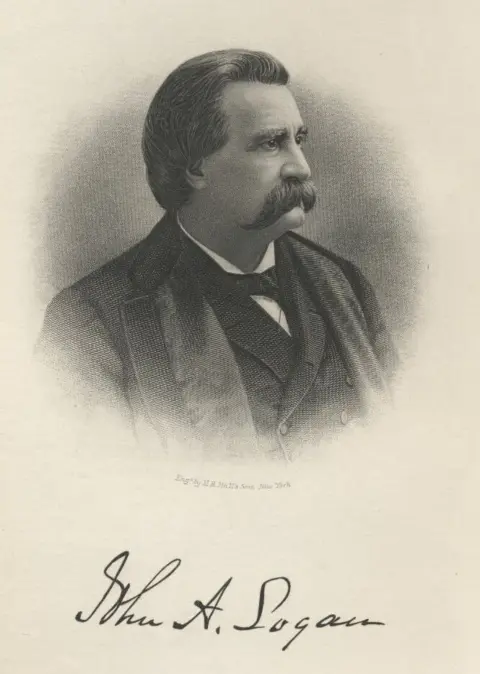
"The Great Conspiracy, Complete" by John Alexander Logan is a historical account written during the late 19th century that delves into the origins and development of what the author refers to as the Great Conspiracy surrounding the American Civil War and its contributing factors. The book examines the historical context of slavery, sectional tensions, and the political maneuverings that fueled the conflict, aiming for historical accuracy and objectivity in presenting the facts. The opening of the work sets a foundation for understanding the interwoven history of American slavery and its eventual influence on the civil strife that ensued. Logan introduces the evolution of the slavery issue from the early days of the republic, highlighting the complex attitudes toward slavery among the Founding Fathers and the conflicts that arose during the formation of the Constitution. He outlines key events leading up to the Civil War, tracing the origins of sectionalism, the influence of economic factors, and the political discourses that inevitably led the nation to civil war. Logan's nuanced portrayals of both pro- and anti-slavery sentiments, along with his detailed examination of legislative actions like the Missouri Compromise, underscore the depth of the national crisis that culminated in the conflict.
Introduction adapted from the source catalogue; source summaries may be automatically generated.
Free to read · English · 237,116 words · No account needed
MAKE TIME FOR A GOOD BOOK
On by default. Untick to stop anonymous reading totals. Each page counts after 10 seconds in view. How this works.
Anonymous counting is on unless you have switched it off.
At the close of Mr. Garfield's patriotic and eloquent remarks, Mr. Long again got the floor, declared that what he had said, he believed to be right, and he would "stand by it," though he had to "stand solitary and alone," and "even if it were necessary to brave bayonets, and prisons, and all the tyranny which may be imposed by the whole power and force of the Administration."
Said he: "I have deliberately uttered my sentiments in that speech, and I will not retract one syllable of it." And, to "rub it in" a little stronger, he exclaimed, as he took his seat, just before adjournment: "Give me Liberty, even if confined to an Island of Greece, or a Canton of Switzerland, rather than an Empire and a Despotism as we have here to-day!"
This treasonable speech naturally created much excitement throughout the
Country.
On the following day (Saturday, April 9, 1864), immediately after prayer, the reading of the Journal being dispensed with, the Speaker of the House (Colfax) came down from the Speaker's Chair, and, from the floor, offered a Preamble and Resolution, which ended thus:
"Resolved, That Alexander Long, a Representative from the second district of Ohio, having, on the 8th day of April, 1864, declared himself in favor of recognizing the Independence and Nationality of the so-called Confederacy now in arms against the Union, and thereby 'given aid, Countenance and encouragement to persons engaged in armed hostility to the United States,' is hereby expelled."
The debate which ensued consumed nearly a week, and every member of prominence, on both the Republican and Democratic sides, took part in it--the Democrats almost invariably being careful to protest their own loyalty, and yet attempting to justify the braver and more candid utterances of the accused member.
Mr. Cox led off, April 9th, in the defense, by counterattack. He quoted remarks made to the House (March 18, 1864) by Mr. Julian, of Indiana, to the effect that "Our Country, united and Free, must be saved, at whatever hazard or cost; and nothing, not even the Constitution, must be allowed to hold back the uplifted arm of the Government in blasting the power of the Rebels forever;"--and upon this, adopting the language of another--[Judge Thomas, of Massachusetts.]--Mr. Cox declared that "to make this a War, with the sword in one hand to defend the Constitution, and a hammer in the other to break it to pieces, is no less treasonable than Secession itself; and that, outside the pale of the Constitution, the whole struggle is revolutionary."
He thought, for such words as he had just quoted, Julian ought to have been expelled, if those of Long justified expulsion!
Your reading position is saved on this browser. Take it to another device with a library code. Reading pages adapt to text, rather than matching a printed edition.
BEHIND THE BOOK
This eBook is for the use of anyone anywhere in the United States and most other parts of the world at no cost and with almost no restrictions whatsoever. You may copy it, give it away or re-use it under the terms of the Project Gutenberg License included with this eBook or online at www.gutenberg.org. If you are not located in the United States, you will have to check the laws of the country where you are located before using this eBook. Read the source licence.
The original source file, including credits and licence, is retained by this library. Request an original-format copy at no charge. Please include the book title and Project Gutenberg identifier #7140.
KEEP YOUR CURIOSITY GOING
Cécile Tormay

Moritz Busch
John L. Ransom
Frances Wright
Cécile Tormay

Mabel Potter Daggett