THE CLASSIC COLLECTION✦An outlaw’s diary: the CommuneCLASSIC FREE BOOKS
An outlaw’s diary: the Commune
Cécile Tormay
THE CLASSIC COLLECTION · 1886
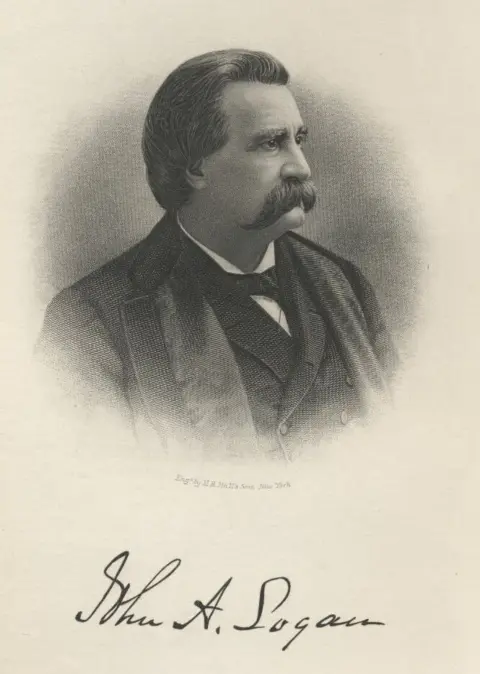
"The Great Conspiracy, Complete" by John Alexander Logan is a historical account written during the late 19th century that delves into the origins and development of what the author refers to as the Great Conspiracy surrounding the American Civil War and its contributing factors. The book examines the historical context of slavery, sectional tensions, and the political maneuverings that fueled the conflict, aiming for historical accuracy and objectivity in presenting the facts. The opening of the work sets a foundation for understanding the interwoven history of American slavery and its eventual influence on the civil strife that ensued. Logan introduces the evolution of the slavery issue from the early days of the republic, highlighting the complex attitudes toward slavery among the Founding Fathers and the conflicts that arose during the formation of the Constitution. He outlines key events leading up to the Civil War, tracing the origins of sectionalism, the influence of economic factors, and the political discourses that inevitably led the nation to civil war. Logan's nuanced portrayals of both pro- and anti-slavery sentiments, along with his detailed examination of legislative actions like the Missouri Compromise, underscore the depth of the national crisis that culminated in the conflict.
Introduction adapted from the source catalogue; source summaries may be automatically generated.
Free to read · English · 237,116 words · No account needed
MAKE TIME FOR A GOOD BOOK
On by default. Untick to stop anonymous reading totals. Each page counts after 10 seconds in view. How this works.
Anonymous counting is on unless you have switched it off.
"Right or wrong, I assumed this ground, and now avow it. I could not feel that, to the best of my ability, I have even tried to preserve the Constitution, if, to save Slavery, or any minor matter, I should permit the wreck of Government, Country, and Constitution, altogether.
"When, early in the War, General Fremont attempted Military Emancipation, I forbade it, because I did not then think it an Indispensable Necessity.
"When, a little later, General Cameron, then Secretary of War, suggested the Arming of the Blacks, I objected, because I did not yet think it an Indispensable Necessity.
"When, still later, General Hunter attempted Military Emancipation, I again forbade it, because I did not yet think the Indispensable Necessity had come.
"When in March, and May, and July, 1862, I made earnest and successive appeals to the Border-States to favor compensated Emancipation, I believed the Indispensable Necessity for Military Emancipation and arming the Blacks would come, unless averted by that measure.
"They declined the proposition, and I was, in my best judgment, driven to the alternative of either surrendering the Union, and with it, the Constitution, or of laying strong hand upon the Colored element. I chose the latter. In choosing it, I hoped for greater gain than loss, but of this I was not entirely confident.
"More than a year of trial now shows no loss by it in our Foreign Relations, none in our home popular sentiment, none in our white Military force, no loss by it anyhow, or anywhere. On the contrary, it shows a gain of quite a hundred and thirty thousand soldiers, seamen, and laborers.
"These are palpable facts, about which, as facts, there can be no cavilling. We have the men; and we could not have had them without the measure.
"And now let any Union man who complains of this measure, test himself by writing down in one line, that he is for subduing the Rebellion by force of arms; and in the next, that he is for taking one hundred and thirty thousand men from the Union side, and placing them where they would be best for the measure he condemns. If he cannot face his case so stated, it is only because he cannot face the truth.
"I add a word which was not in the verbal conversation. In telling this tale, I attempt no compliment to my own sagacity. I claim not to have controlled events, but confess plainly that events have controlled me. Now at the end of three years' struggle, the Nation's condition is not what either Party, or any man, devised or expected. God alone can claim it.
Your reading position is saved on this browser. Take it to another device with a library code. Reading pages adapt to text, rather than matching a printed edition.
BEHIND THE BOOK
This eBook is for the use of anyone anywhere in the United States and most other parts of the world at no cost and with almost no restrictions whatsoever. You may copy it, give it away or re-use it under the terms of the Project Gutenberg License included with this eBook or online at www.gutenberg.org. If you are not located in the United States, you will have to check the laws of the country where you are located before using this eBook. Read the source licence.
The original source file, including credits and licence, is retained by this library. Request an original-format copy at no charge. Please include the book title and Project Gutenberg identifier #7140.
KEEP YOUR CURIOSITY GOING
Cécile Tormay

Moritz Busch
John L. Ransom
Frances Wright
Cécile Tormay

Mabel Potter Daggett