THE CLASSIC COLLECTION✦An outlaw’s diary: the CommuneCLASSIC FREE BOOKS
An outlaw’s diary: the Commune
Cécile Tormay
THE CLASSIC COLLECTION · 1886
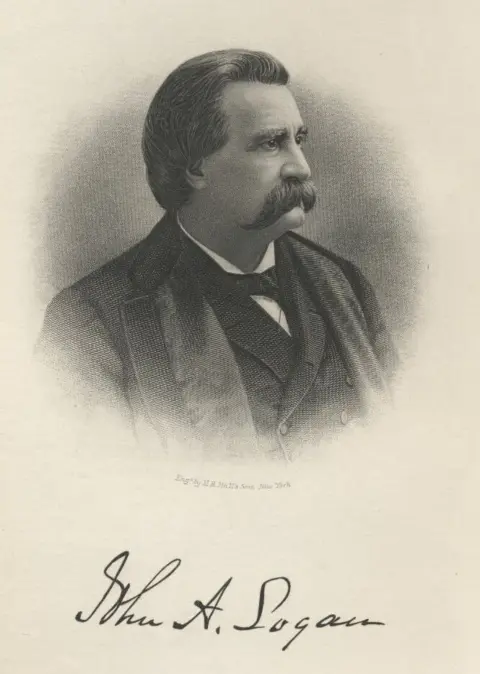
"The Great Conspiracy, Complete" by John Alexander Logan is a historical account written during the late 19th century that delves into the origins and development of what the author refers to as the Great Conspiracy surrounding the American Civil War and its contributing factors. The book examines the historical context of slavery, sectional tensions, and the political maneuverings that fueled the conflict, aiming for historical accuracy and objectivity in presenting the facts. The opening of the work sets a foundation for understanding the interwoven history of American slavery and its eventual influence on the civil strife that ensued. Logan introduces the evolution of the slavery issue from the early days of the republic, highlighting the complex attitudes toward slavery among the Founding Fathers and the conflicts that arose during the formation of the Constitution. He outlines key events leading up to the Civil War, tracing the origins of sectionalism, the influence of economic factors, and the political discourses that inevitably led the nation to civil war. Logan's nuanced portrayals of both pro- and anti-slavery sentiments, along with his detailed examination of legislative actions like the Missouri Compromise, underscore the depth of the national crisis that culminated in the conflict.
Introduction adapted from the source catalogue; source summaries may be automatically generated.
Free to read · English · 237,116 words · No account needed
MAKE TIME FOR A GOOD BOOK
On by default. Untick to stop anonymous reading totals. Each page counts after 10 seconds in view. How this works.
Anonymous counting is on unless you have switched it off.
Only a few days before this interview, President Lincoln--alarmed by the report of McClellan, that the magnificent Army of the Potomac under his command, which, only three months before, had boasted 161,000 men, had dwindled down to not more than "50,000 men left with their colors"--had been to the front, at Harrison's Landing, on the James river, and, although he had not found things quite so disheartening as he had been led to believe, yet they were bad enough, for only 86,000 men were found by him on duty, while 75,000 were unaccounted for--of which number 34,4172 were afterward reported as "absent by authority."
This condition of affairs, in connection with the fact that McClellan was always calling for more troops, undoubtedly had its influence in bringing Mr. Lincoln's mind to the conviction, hitherto mentioned, of the fast-approaching Military necessity for Freeing and Arming the Slaves.
It was to ward this off, if possible, that he had met and appealed to the Border-State Representatives. They had answered him with sneers and insults; and nothing was left him but the extreme course of almost immediate Emancipation.
Long and anxiously he had thought over the matter, but the time for
action was at hand.
And now, it cannot be better told, than in President Lincoln's own words, as given to the portrait-painter Carpenter, and recorded in the latter's, "Six months in the White House," what followed:
"It had got to be," said he, "midsummer, 1862. Things had gone on from bad to worse, until I felt that we had reached the end of our rope on the plan of operations we had been pursuing; that we had about played our last card, and must change our tactics, or lose the game!
"I now determined upon the adoption of the Emancipation Policy; and, without consultation with, or the knowledge of, the Cabinet, I prepared the original draft of the Proclamation, and, after much anxious thought, called a Cabinet meeting upon the subject. This was the last of July, or the first part of the month of August, 1862." (The exact date he did not remember.)
"This Cabinet meeting took place, I think, upon a Saturday. All were present, excepting Mr. Blair, the Postmaster-General, who was absent at the opening of the discussion, but came in subsequently. I said to the Cabinet, that I had resolved upon this step, and had not called them together to ask their advice, but to lay the subject-matter of a Proclamation before them; suggestions as to which would be in order, after they had heard it read.
Your reading position is saved on this browser. Take it to another device with a library code. Reading pages adapt to text, rather than matching a printed edition.
BEHIND THE BOOK
This eBook is for the use of anyone anywhere in the United States and most other parts of the world at no cost and with almost no restrictions whatsoever. You may copy it, give it away or re-use it under the terms of the Project Gutenberg License included with this eBook or online at www.gutenberg.org. If you are not located in the United States, you will have to check the laws of the country where you are located before using this eBook. Read the source licence.
The original source file, including credits and licence, is retained by this library. Request an original-format copy at no charge. Please include the book title and Project Gutenberg identifier #7140.
KEEP YOUR CURIOSITY GOING
Cécile Tormay

Moritz Busch
John L. Ransom
Frances Wright
Cécile Tormay

Mabel Potter Daggett