THE CLASSIC COLLECTION✦An outlaw’s diary: the CommuneCLASSIC FREE BOOKS
An outlaw’s diary: the Commune
Cécile Tormay
THE CLASSIC COLLECTION · 1886
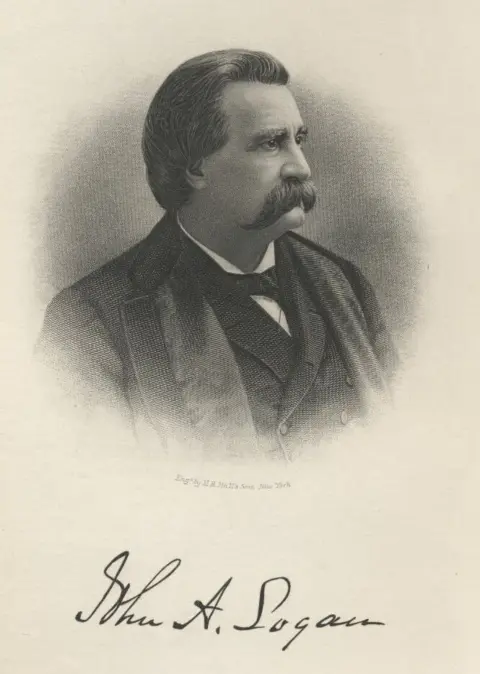
"The Great Conspiracy, Complete" by John Alexander Logan is a historical account written during the late 19th century that delves into the origins and development of what the author refers to as the Great Conspiracy surrounding the American Civil War and its contributing factors. The book examines the historical context of slavery, sectional tensions, and the political maneuverings that fueled the conflict, aiming for historical accuracy and objectivity in presenting the facts. The opening of the work sets a foundation for understanding the interwoven history of American slavery and its eventual influence on the civil strife that ensued. Logan introduces the evolution of the slavery issue from the early days of the republic, highlighting the complex attitudes toward slavery among the Founding Fathers and the conflicts that arose during the formation of the Constitution. He outlines key events leading up to the Civil War, tracing the origins of sectionalism, the influence of economic factors, and the political discourses that inevitably led the nation to civil war. Logan's nuanced portrayals of both pro- and anti-slavery sentiments, along with his detailed examination of legislative actions like the Missouri Compromise, underscore the depth of the national crisis that culminated in the conflict.
Introduction adapted from the source catalogue; source summaries may be automatically generated.
Free to read · English · 237,116 words · No account needed
MAKE TIME FOR A GOOD BOOK
On by default. Untick to stop anonymous reading totals. Each page counts after 10 seconds in view. How this works.
Anonymous counting is on unless you have switched it off.
"Resolved by the House of Representatives (the Senate Concurring), That the Proclamation of the President of the United States, of date the 22d of September, 1862, is not warranted by the Constitution.
"Resolved, That the policy of Emancipation as indicated in that Proclamation, is not calculated to hasten the restoration of Peace, was not well chosen as a War measure, and is an assumption of power dangerous to the rights of citizens and to the perpetuity of a Free People."
These resolutions were laid on the table by 95 yeas to 47 nays--the yeas all Republicans, save three, and the nays all Democrats save five.
On December 15, 1862, Mr. S. C. Fessenden, of Maine, offered resolutions to the House, in these words:
"Resolved, That the Proclamation of the President of the United States, of the date of 22d September, 1862, is warranted by the Constitution.
"Resolved, That the policy of Emancipation, as indicated in that Proclamation, is well adapted to hasten the restoration of Peace, was well chosen as a War measure, and is an exercise of power with proper regard for the rights of the States, and the perpetuity of Free Government."
These resolutions were adopted by 78 yeas to 52 nays--the yeas all Republicans, save two, and the nays all Democrats, save seven.
The Proclamation of September 22d, 1862, was very generally endorsed and upheld by the People at large; and, in accordance with its promise, it was followed at the appointed time, January 1st, 1863, by the supplemental Proclamation specifically Emancipating the Slaves in the rebellious parts of the United States--in the following terms:
"WHEREAS, On the twenty-second day of September, in the year of our Lord one thousand eight hundred and sixty-two, a Proclamation was issued by the President of the United States, containing, among other things, the following, to wit:
"'That on the first day of January, in the year of our Lord one thousand eight hundred and sixty-three, all Persons held as Slaves within any State, or designated part of a State, the people whereof shall then be in Rebellion against the United States, shall be then, thenceforward, and forever Free; and the Executive Government of the United States, including the Military and Naval Authority thereof, will recognize and maintain the Freedom of such Persons, and will do no act or acts to repress such Persons, or any of them, in any efforts they may make for their actual Freedom.
Your reading position is saved on this browser. Take it to another device with a library code. Reading pages adapt to text, rather than matching a printed edition.
BEHIND THE BOOK
This eBook is for the use of anyone anywhere in the United States and most other parts of the world at no cost and with almost no restrictions whatsoever. You may copy it, give it away or re-use it under the terms of the Project Gutenberg License included with this eBook or online at www.gutenberg.org. If you are not located in the United States, you will have to check the laws of the country where you are located before using this eBook. Read the source licence.
The original source file, including credits and licence, is retained by this library. Request an original-format copy at no charge. Please include the book title and Project Gutenberg identifier #7140.
KEEP YOUR CURIOSITY GOING
Cécile Tormay

Moritz Busch
John L. Ransom
Frances Wright
Cécile Tormay

Mabel Potter Daggett