THE CLASSIC COLLECTION✦An outlaw’s diary: the CommuneCLASSIC FREE BOOKS
An outlaw’s diary: the Commune
Cécile Tormay
THE CLASSIC COLLECTION · 1886
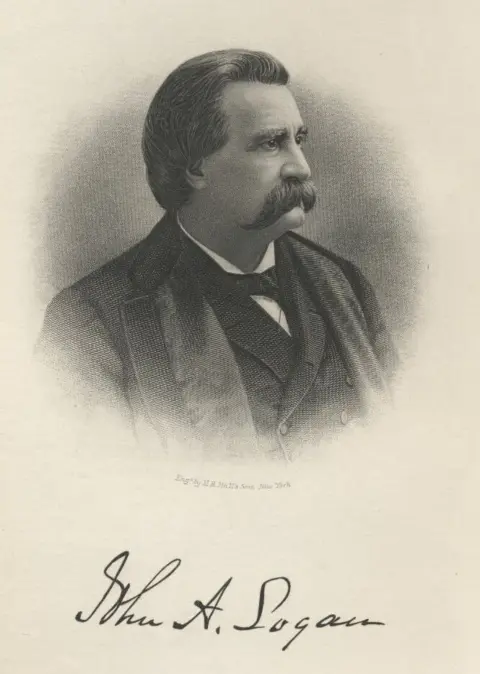
"The Great Conspiracy, Complete" by John Alexander Logan is a historical account written during the late 19th century that delves into the origins and development of what the author refers to as the Great Conspiracy surrounding the American Civil War and its contributing factors. The book examines the historical context of slavery, sectional tensions, and the political maneuverings that fueled the conflict, aiming for historical accuracy and objectivity in presenting the facts. The opening of the work sets a foundation for understanding the interwoven history of American slavery and its eventual influence on the civil strife that ensued. Logan introduces the evolution of the slavery issue from the early days of the republic, highlighting the complex attitudes toward slavery among the Founding Fathers and the conflicts that arose during the formation of the Constitution. He outlines key events leading up to the Civil War, tracing the origins of sectionalism, the influence of economic factors, and the political discourses that inevitably led the nation to civil war. Logan's nuanced portrayals of both pro- and anti-slavery sentiments, along with his detailed examination of legislative actions like the Missouri Compromise, underscore the depth of the national crisis that culminated in the conflict.
Introduction adapted from the source catalogue; source summaries may be automatically generated.
Free to read · English · 237,116 words · No account needed
MAKE TIME FOR A GOOD BOOK
On by default. Untick to stop anonymous reading totals. Each page counts after 10 seconds in view. How this works.
Anonymous counting is on unless you have switched it off.
Meanwhile, limited Military Emancipation of Slaves was announced and regulated, on the 22d July, 1862, by the following Executive Instructions, which were issued from the War Department by order of the President--the issue of which was assigned by Jefferson Davis as one reason for his Order of August 1, 1862, directing "that the commissioned officers of Pope's and Steinwehr's commands be not entitled, when captured, to be treated as soldiers and entitled to the benefit of the cartel of exchange:"
"WAR DEPARTMENT,
"WASHINGTON, D.C., July 22, 1862.
"First. Ordered that Military Commanders within the States of Virginia, North Carolina, Georgia, Florida, Alabama, Mississippi, Louisiana, Texas, and Arkansas, in an orderly manner seize and use any property, real or personal, which may be necessary or convenient for their several commands, for supplies, or for other Military purposes; and that while property may be destroyed for proper Military objects, none shall be destroyed in wantonness or malice.
"Second. That Military and Naval Commanders shall employ as laborers, within and from said States, so many Persons of African descent as can be advantageously used for Military or Naval purposes, giving them reasonable wages for their labor.
"Third. That, as to both property, and Persons of African descent, accounts shall be kept sufficiently accurate and in detail to show quantities and amounts, and from whom both property and such Persons shall have come, as a basis upon which compensation can be made in proper cases; and the several departments of this Government shall attend to and perform their appropriate parts towards the execution of these orders.
"By Order of the President:
"EDWIN M. STANTON,
"Secretary of War."
On the 9th of August, 1862, Major General McClellan promulgated the Executive Order of July 22, 1862, from his Headquarters at Harrison's Landing, Va., with certain directions of his own, among which were the following:
"Inhabitants, especially women and children, remaining peaceably at their homes, must not be molested; and wherever commanding officers find families peculiarly exposed in their persons or property to marauding from this Army, they will, as heretofore, so far as they can do with safety and without detriment to the service, post guards for their protection.
"In protecting private property, no reference is intended to Persons held to service or labor by reason of African Descent. Such Persons will be regarded by this Army, as they heretofore have been, as occupying simply a peculiar legal status under State laws, which condition the Military authorities of the United States are not required to regard at all in districts where Military operations are made necessary by the rebellious action of the State governments.
Your reading position is saved on this browser. Take it to another device with a library code. Reading pages adapt to text, rather than matching a printed edition.
BEHIND THE BOOK
This eBook is for the use of anyone anywhere in the United States and most other parts of the world at no cost and with almost no restrictions whatsoever. You may copy it, give it away or re-use it under the terms of the Project Gutenberg License included with this eBook or online at www.gutenberg.org. If you are not located in the United States, you will have to check the laws of the country where you are located before using this eBook. Read the source licence.
The original source file, including credits and licence, is retained by this library. Request an original-format copy at no charge. Please include the book title and Project Gutenberg identifier #7140.
KEEP YOUR CURIOSITY GOING
Cécile Tormay

Moritz Busch
John L. Ransom
Frances Wright
Cécile Tormay

Mabel Potter Daggett