THE CLASSIC COLLECTION✦An outlaw’s diary: the CommuneCLASSIC FREE BOOKS
An outlaw’s diary: the Commune
Cécile Tormay
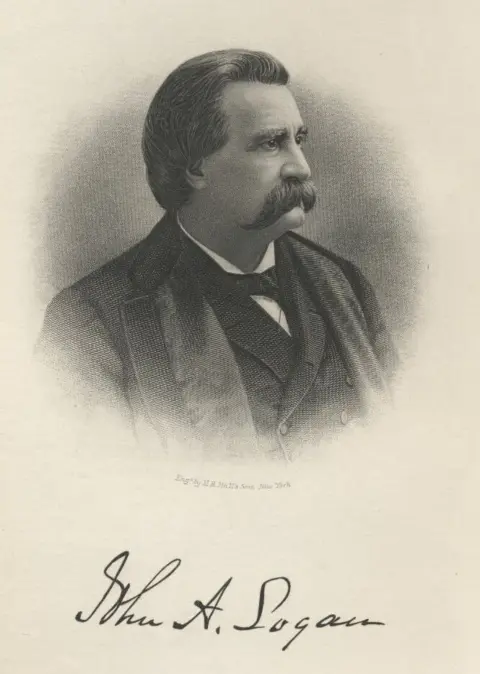
THE CLASSIC COLLECTION · 1886
"The Great Conspiracy, Complete" by John Alexander Logan is a historical account written during the late 19th century that delves into the origins and development of what the author refers to as the Great Conspiracy surrounding the American Civil War and its contributing factors. The book examines the historical context of slavery, sectional tensions, and the political maneuverings that fueled the conflict, aiming for historical accuracy and objectivity in presenting the facts. The opening of the work sets a foundation for understanding the interwoven history of American slavery and its eventual influence on the civil strife that ensued. Logan introduces the evolution of the slavery issue from the early days of the republic, highlighting the complex attitudes toward slavery among the Founding Fathers and the conflicts that arose during the formation of the Constitution. He outlines key events leading up to the Civil War, tracing the origins of sectionalism, the influence of economic factors, and the political discourses that inevitably led the nation to civil war. Logan's nuanced portrayals of both pro- and anti-slavery sentiments, along with his detailed examination of legislative actions like the Missouri Compromise, underscore the depth of the national crisis that culminated in the conflict.
Introduction adapted from the source catalogue; source summaries may be automatically generated.
Free to read · English · 237,116 words · No account needed
MAKE TIME FOR A GOOD BOOK
On by default. Untick to stop anonymous reading totals. Each page counts after 10 seconds in view. How this works.
Anonymous counting is on unless you have switched it off.
"Messrs. Nally, Gray, Dummington, Dent, Adams, Speake, Price, Posey, and Cobey, citizens of Maryland, have Negroes supposed to be with some of the regiments of this Division; the Brigadier General commanding directs that they be permitted to visit all the camps of his command, in search of their Property, and if found, that they be allowed to take possession of the same, without any interference whatever. Should any obstacle be thrown in their way by any officer or soldier in the Division, they will be at once reported by the regimental commanders to these headquarters.
"By command of Brigadier General Hooker;
"JOSEPH DICKINSON,
"Assistant Adjutant General."
On the following day, by direction of General Sickles, the following significant report was made touching the above order:
"HEADQUARTERS, SECOND REGIMENT, EXCELSIOR BRIGADE.
"CAMP HALL, March 27, 1862.
"LIEUTENANT:--In compliance with verbal directions from Brigadier General D. E. Sickles, to report as to the occurrence at this camp on the afternoon of the 26th instant, I beg leave to submit the following:
"At about 3:30 o'clock P. M., March 26, 1862, admission within our lines was demanded by a party of horsemen (civilians), numbering, perhaps, fifteen. They presented the lieutenant commanding the guard, with an order of entrance from Brigadier General Joseph Hooker, Commanding Division (copy appended), the order stating that nine men should be admitted.
"I ordered that the balance of the party should remain without the lines; which was done. Upon the appearance of the others, there was visible dissatisfaction and considerable murmuring among the soldiers, to so great an extent that I almost feared for the safety of the Slaveholders. At this time General Sickles opportunely arrived, and instructed me to order them outside the camp, which I did, amidst the loud cheers of our soldiers.
"It is proper to add, that before entering our lines, and within about seventy-five or one hundred yards of our camp, one of their number discharged two pistol shots at a Negro, who was running past them, with an evident intention of taking his life. This justly enraged our men.
"All of which is respectfully submitted.
"Your obedient servant,
"JOHN TOLEN.
"Major Commanding Second Regiment, E. B.
"To Lieutenant J. L. PALMER, Jr.,
"A. D. C. and A. A. A. General."
On April 6, the following important dispatch, in the nature of an order, was issued by General Doubleday to one of his subordinate officers:
"HEADQUARTERS MILITARY DEFENSES,
"NORTH OF THE POTOMAC,
"WASHINGTON, April 6, 1862.
"SIR:--I am directed by General Doubleday to say, in answer to your letter of the 2d instant, that all Negroes coming into the lines of any of the camps or forts under his command, are to be treated as persons, and not as chattels.
Your reading position is saved on this browser. Take it to another device with a library code. Reading pages adapt to text, rather than matching a printed edition.
BEHIND THE BOOK
This eBook is for the use of anyone anywhere in the United States and most other parts of the world at no cost and with almost no restrictions whatsoever. You may copy it, give it away or re-use it under the terms of the Project Gutenberg License included with this eBook or online at www.gutenberg.org. If you are not located in the United States, you will have to check the laws of the country where you are located before using this eBook. Read the source licence.
The original source file, including credits and licence, is retained by this library. Request an original-format copy at no charge. Please include the book title and Project Gutenberg identifier #7140.
KEEP YOUR CURIOSITY GOING
Cécile Tormay

Moritz Busch
John L. Ransom
Frances Wright
Cécile Tormay

Mabel Potter Daggett