THE CLASSIC COLLECTION✦An outlaw’s diary: the CommuneCLASSIC FREE BOOKS
An outlaw’s diary: the Commune
Cécile Tormay
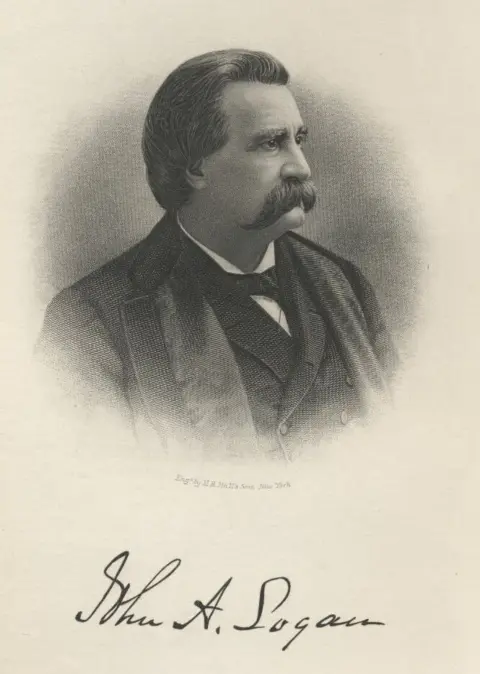
THE CLASSIC COLLECTION · 1886
"The Great Conspiracy, Complete" by John Alexander Logan is a historical account written during the late 19th century that delves into the origins and development of what the author refers to as the Great Conspiracy surrounding the American Civil War and its contributing factors. The book examines the historical context of slavery, sectional tensions, and the political maneuverings that fueled the conflict, aiming for historical accuracy and objectivity in presenting the facts. The opening of the work sets a foundation for understanding the interwoven history of American slavery and its eventual influence on the civil strife that ensued. Logan introduces the evolution of the slavery issue from the early days of the republic, highlighting the complex attitudes toward slavery among the Founding Fathers and the conflicts that arose during the formation of the Constitution. He outlines key events leading up to the Civil War, tracing the origins of sectionalism, the influence of economic factors, and the political discourses that inevitably led the nation to civil war. Logan's nuanced portrayals of both pro- and anti-slavery sentiments, along with his detailed examination of legislative actions like the Missouri Compromise, underscore the depth of the national crisis that culminated in the conflict.
Introduction adapted from the source catalogue; source summaries may be automatically generated.
Free to read · English · 237,116 words · No account needed
MAKE TIME FOR A GOOD BOOK
On by default. Untick to stop anonymous reading totals. Each page counts after 10 seconds in view. How this works.
Anonymous counting is on unless you have switched it off.
"It is believed that the course thus indicated will best secure the substantial rights of Loyal masters, and the benefits to the United States of the services of all disposed to support the Government, while it avoids all interference with the social systems or local Institutions of every State, beyond that which Insurrection makes unavoidable and which a restoration of peaceful relations to the Union, under the Constitution, will immediately remove. "Respectfully, "SIMON CAMERON, "Secretary of War.
"Brigadier-General T. W. SHERMAN,
"Commanding Expedition to the Southern Coast."
Brigadier-General Thomas W. Sherman, acting upon his own interpretation of these instructions, issued a proclamation to the people of South Carolina, upon occupying the Forts at Port Royal, in which he said:
"In obedience to the orders of the President of these United States of America, I have landed on your shores with a small force of National troops. The dictates of a duty which, under these circumstances, I owe to a great sovereign State, and to a proud and hospitable people, among whom I have passed some of the pleasantest days of my life, prompt me to proclaim that we have come amongst you with no feelings of personal animosity, no desire to harm your citizens, destroy your property, or interfere with any of your lawful rights or your social or local Institutions, beyond what the causes herein alluded to may render unavoidable."
Major-General Wool, at Fortress Monroe, where he had succeeded General Butler, likewise issued a Special Order on the subject of Contrabands, as follows:
"HEADQUARTERS DEPARTMENT OF VIRGINIA,
"FORT MONROE, October 14, 1861.
"[Special Orders No. 72.]
"All Colored Persons called Contrabands, employed as servants by officers and others residing within Fort Monroe, or outside of the Fort at Camp Hamilton and Camp Butler, will be furnished with their subsistence and at least eight dollars per month for males, and four dollars per month for females, by the officers or others thus employing them.
"So much of the above-named sums, as may be necessary to furnish clothing, to be decided by the Chief Quartermaster of the Department, will be applied to that purpose, and the remainder will be paid into his hands to create a fund for the support of those Contrabands who are unable to work for their own support.
"All able-bodied Colored Persons who are under the protection of the troops of this Department, and who are not employed as servants, will be immediately put to work in either the Engineer's or Quartermaster's Department.
"By command of Major-General Wool:
"[Signed] WILLIAM D. WHIPPLE,
"Assistant Adjutant General."
He subsequently also issued the following General Order:
"HEADQUARTERS DEPARTMENT OF VIRGINIA,
"FORT MONROE, November 1, 1861.
"[General Orders No. 34.]
Your reading position is saved on this browser. Take it to another device with a library code. Reading pages adapt to text, rather than matching a printed edition.
BEHIND THE BOOK
This eBook is for the use of anyone anywhere in the United States and most other parts of the world at no cost and with almost no restrictions whatsoever. You may copy it, give it away or re-use it under the terms of the Project Gutenberg License included with this eBook or online at www.gutenberg.org. If you are not located in the United States, you will have to check the laws of the country where you are located before using this eBook. Read the source licence.
The original source file, including credits and licence, is retained by this library. Request an original-format copy at no charge. Please include the book title and Project Gutenberg identifier #7140.
KEEP YOUR CURIOSITY GOING
Cécile Tormay

Moritz Busch
John L. Ransom
Frances Wright
Cécile Tormay

Mabel Potter Daggett