THE CLASSIC COLLECTION✦An outlaw’s diary: the CommuneCLASSIC FREE BOOKS
An outlaw’s diary: the Commune
Cécile Tormay
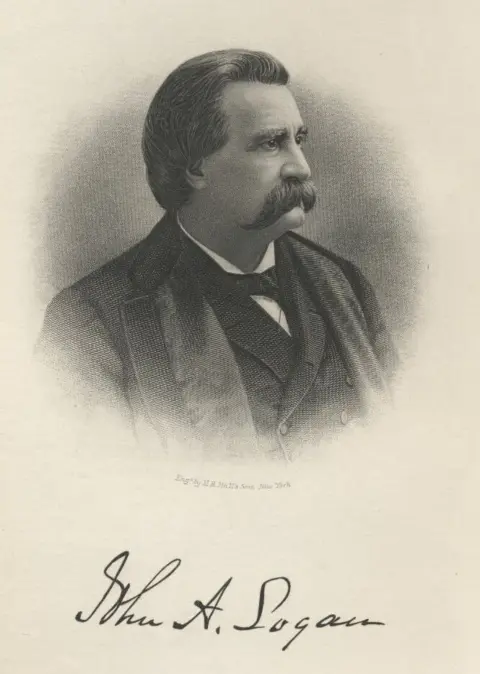
THE CLASSIC COLLECTION · 1886
"The Great Conspiracy, Complete" by John Alexander Logan is a historical account written during the late 19th century that delves into the origins and development of what the author refers to as the Great Conspiracy surrounding the American Civil War and its contributing factors. The book examines the historical context of slavery, sectional tensions, and the political maneuverings that fueled the conflict, aiming for historical accuracy and objectivity in presenting the facts. The opening of the work sets a foundation for understanding the interwoven history of American slavery and its eventual influence on the civil strife that ensued. Logan introduces the evolution of the slavery issue from the early days of the republic, highlighting the complex attitudes toward slavery among the Founding Fathers and the conflicts that arose during the formation of the Constitution. He outlines key events leading up to the Civil War, tracing the origins of sectionalism, the influence of economic factors, and the political discourses that inevitably led the nation to civil war. Logan's nuanced portrayals of both pro- and anti-slavery sentiments, along with his detailed examination of legislative actions like the Missouri Compromise, underscore the depth of the national crisis that culminated in the conflict.
Introduction adapted from the source catalogue; source summaries may be automatically generated.
Free to read · English · 237,116 words · No account needed
MAKE TIME FOR A GOOD BOOK
On by default. Untick to stop anonymous reading totals. Each page counts after 10 seconds in view. How this works.
Anonymous counting is on unless you have switched it off.
"Of course a record should be kept showing the name and description of the fugitives, the name and the character, as Loyal or Disloyal, of the master, and such facts as may be necessary to a correct understanding of the circumstances of each case after tranquillity shall have been restored. Upon the return of Peace, Congress will, doubtless, properly provide for all the persons thus received into the service of the Union, and for just compensation to Loyal masters. In this way only, it would seem, can the duty and safety of the Government and the just rights of all be fully reconciled and harmonized.
"You will therefore consider yourself as instructed to govern your future action, in respect to Fugitives from Service, by the principles here stated, and will report from time to time, and at least twice in each month, your action in the premises to this Department.
"You will, however, neither authorize, nor permit any interference, by the troops under your command, with the servants of peaceful citizens in house or field; nor will you, in any way, encourage such servants to leave the lawful Service of their masters; nor will you, except in cases where the Public Safety may seem to require, prevent the voluntary return of any Fugitive, to the Service from which he may have escaped."
"I am, General, very respectfully, your obedient servant,
"SIMON CAMERON,
"Secretary of War.
"Major-General B. F. BUTLER,
"Commanding Department of Virginia,
"Fortress Monroe."
Whether or not inspired by the prophetic speech of Thaddeus Stevens, aforesaid, the month of August was hardly out before its prophecy seemed in a fair way of immediate fulfilment. Major-General John Charles Fremont at that time commanded the Eastern Department--comprising the States of Missouri, Kansas, Illinois, and Kentucky-and he startled the Country by issuing the following Emancipation proclamation:
"St. Louis, August 30, 1861.
"Circumstances, in my judgment, of sufficient urgency, render it necessary that the commanding general of this Department should assume the administrative powers of the State. Its disorganized condition, the helplessness of the civil authority, the total insecurity of life, and the devastation of property by bands of murderers and marauders, who infest nearly every county of the State, and avail themselves of the public misfortunes and the vicinity of a hostile force to gratify private and neighborhood vengeance, and who find an enemy wherever they find plunder, finally demand the severest measures to repress the daily increasing crimes and outrages which are driving off the inhabitants and ruining the State.
"In this condition, the public safety and the success of our arms require unity of purpose, without let or hinderance, to the prompt administration of affairs.
Your reading position is saved on this browser. Take it to another device with a library code. Reading pages adapt to text, rather than matching a printed edition.
BEHIND THE BOOK
This eBook is for the use of anyone anywhere in the United States and most other parts of the world at no cost and with almost no restrictions whatsoever. You may copy it, give it away or re-use it under the terms of the Project Gutenberg License included with this eBook or online at www.gutenberg.org. If you are not located in the United States, you will have to check the laws of the country where you are located before using this eBook. Read the source licence.
The original source file, including credits and licence, is retained by this library. Request an original-format copy at no charge. Please include the book title and Project Gutenberg identifier #7140.
KEEP YOUR CURIOSITY GOING
Cécile Tormay

Moritz Busch
John L. Ransom
Frances Wright
Cécile Tormay

Mabel Potter Daggett