THE CLASSIC COLLECTION✦An outlaw’s diary: the CommuneCLASSIC FREE BOOKS
An outlaw’s diary: the Commune
Cécile Tormay
THE CLASSIC COLLECTION · 1886
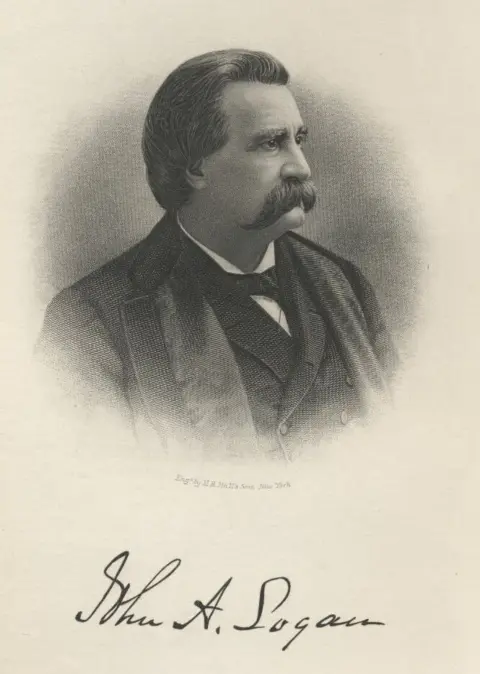
"The Great Conspiracy, Complete" by John Alexander Logan is a historical account written during the late 19th century that delves into the origins and development of what the author refers to as the Great Conspiracy surrounding the American Civil War and its contributing factors. The book examines the historical context of slavery, sectional tensions, and the political maneuverings that fueled the conflict, aiming for historical accuracy and objectivity in presenting the facts. The opening of the work sets a foundation for understanding the interwoven history of American slavery and its eventual influence on the civil strife that ensued. Logan introduces the evolution of the slavery issue from the early days of the republic, highlighting the complex attitudes toward slavery among the Founding Fathers and the conflicts that arose during the formation of the Constitution. He outlines key events leading up to the Civil War, tracing the origins of sectionalism, the influence of economic factors, and the political discourses that inevitably led the nation to civil war. Logan's nuanced portrayals of both pro- and anti-slavery sentiments, along with his detailed examination of legislative actions like the Missouri Compromise, underscore the depth of the national crisis that culminated in the conflict.
Introduction adapted from the source catalogue; source summaries may be automatically generated.
Free to read · English · 237,116 words · No account needed
MAKE TIME FOR A GOOD BOOK
On by default. Untick to stop anonymous reading totals. Each page counts after 10 seconds in view. How this works.
Anonymous counting is on unless you have switched it off.
"Question [by the Chairman].--Did he [Patterson] assign any reason for that movement? "Answer.--I was, of course, very indignant about it, and so were all my officers and men; so much so that when, subsequently, at Harper's Ferry, Patterson came by my camp, there was a universal groan--against all discipline, of course, and we suppressed it as soon as possible. The excuse given by Gen. Patterson was this: that he had received intelligence that he could rely upon, that Gen. Johnston had been re-enforced by 20,000 men from Manassas, and was going to make an attack upon him; and in the order which I received that night--a long order of three pages--I was ordered to occupy all the communicating roads, turning off a regiment here, and two or three regiments there, and a battery at another place, to occupy all the roads from Winchester to the neighborhood of Charlestown, and all the cross-roads, and hold them all that day, until Gen. Patterson's whole army went by me to Charlestown; and I sat seven hours in the saddle near a place called Smithfield, while Patterson, with his whole army, went by me on their way to Charlestown, he being apprehensive, as he said, of an attack from Johnston's forces."
"Question [by Mr. Odell].--You covered his movement? "Answer--Yes, Sir. Now the statement that he made, which came to me through Colonel Abercrombie, who was Patterson's brother-in-law, and commanded one division in that army, was, that Johnston had been re-enforced; and Gen. Fitz-John Porter reported the same thing to my officers. Gen. Porter was then the chief of Patterson's staff, and was a very excellent officer, and an accomplished soldier. They all had got this story, which was without the slightest shadow of foundation; for there had not a single man arrived at the camp since we had got full information that their force consisted of 20,000 men, of whom 1,800 were sick with the measles. The story was, however, that they had ascertained, by reliable information, of this re-enforcement. Where they got their information, I do not know. None such reached me; and I picked up deserters and other persons to get all the information I could; and we since have learned, as a matter of certainty, that Johnston's forces never did exceed 20,000 men there. But the excuse Patterson gave was, that Johnson had been re-enforced by 20,000 men from Manassas, and was going to attack him. That was the reason he gave then for this movement. But in this paper he has lately published, he hints at another reason--another excuse--which was that it was by order of Gen. Scott. Now, I know that the peremptory order of Gen. Scott to Gen. Patterson, repeated over and over again, was this--I was present on several occasions when telegraphic communications went from Gen. Scott to Gen. Patterson: Gen. Scott's orders to Gen. Patterson were that, if he were strong enough, he was to attack and beat Johnston. But if not, then he was to place himself in such a position as to keep Johnston employed, and prevent him from making a junction with Beauregard at Manassas. That was the repeated direction of Gen. Scott to Gen. Patterson; and it was because of Patterson's hesitancy, and his hanging back, and keeping so far beyond the reach of Johnston's camp, that I was ordered to go up there and re-enforce him, and assist him in any operations necessary to effect that object. The excuse of Gen. Patterson now is, that he had orders from Gen. Scott to move to Charlestown. Now, that is not so. But this state of things existed: Before the movement was made from Martinsburg, General Patterson suggested to General Scott that Charlestown would be a better base of operations than Martinsburg and suggested that he had better move on Charlestown, and thence make his approaches to Winchester; that it would be better to do that than to move directly to Winchester from Martinsburg; and General Scott wrote back to say that, if he found that movement a better one, he was at liberty to make it. But Gen. Patterson had already commenced his movement on Winchester direct from Martinsburg, and had got as far as Bunker Hill; so that the movement which he had formerly suggested, to Charlestown, was suppressed by his own act. But that is the pretence now given in his published speech for making the movement from Bunker Hill to Charlestown, which was a retreat, instead of the advance which the movement to Charlestown he first proposed to Gen. Scott was intended to be."
Your reading position is saved on this browser. Take it to another device with a library code. Reading pages adapt to text, rather than matching a printed edition.
BEHIND THE BOOK
This eBook is for the use of anyone anywhere in the United States and most other parts of the world at no cost and with almost no restrictions whatsoever. You may copy it, give it away or re-use it under the terms of the Project Gutenberg License included with this eBook or online at www.gutenberg.org. If you are not located in the United States, you will have to check the laws of the country where you are located before using this eBook. Read the source licence.
The original source file, including credits and licence, is retained by this library. Request an original-format copy at no charge. Please include the book title and Project Gutenberg identifier #7140.
KEEP YOUR CURIOSITY GOING
Cécile Tormay

Moritz Busch
John L. Ransom
Frances Wright
Cécile Tormay

Mabel Potter Daggett