THE CLASSIC COLLECTION✦An outlaw’s diary: the CommuneCLASSIC FREE BOOKS
An outlaw’s diary: the Commune
Cécile Tormay
THE CLASSIC COLLECTION · 1886
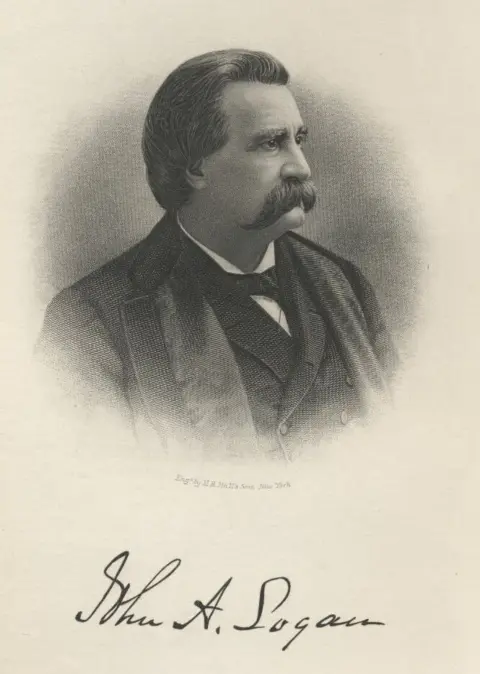
"The Great Conspiracy, Complete" by John Alexander Logan is a historical account written during the late 19th century that delves into the origins and development of what the author refers to as the Great Conspiracy surrounding the American Civil War and its contributing factors. The book examines the historical context of slavery, sectional tensions, and the political maneuverings that fueled the conflict, aiming for historical accuracy and objectivity in presenting the facts. The opening of the work sets a foundation for understanding the interwoven history of American slavery and its eventual influence on the civil strife that ensued. Logan introduces the evolution of the slavery issue from the early days of the republic, highlighting the complex attitudes toward slavery among the Founding Fathers and the conflicts that arose during the formation of the Constitution. He outlines key events leading up to the Civil War, tracing the origins of sectionalism, the influence of economic factors, and the political discourses that inevitably led the nation to civil war. Logan's nuanced portrayals of both pro- and anti-slavery sentiments, along with his detailed examination of legislative actions like the Missouri Compromise, underscore the depth of the national crisis that culminated in the conflict.
Introduction adapted from the source catalogue; source summaries may be automatically generated.
Free to read · English · 237,116 words · No account needed
MAKE TIME FOR A GOOD BOOK
On by default. Untick to stop anonymous reading totals. Each page counts after 10 seconds in view. How this works.
Anonymous counting is on unless you have switched it off.
In the meantime, however, Beauregard loses no time in advantageously posting his troops. On the morning of the 18th of July, when the Union advance enters Centreville, he has withdrawn all his advanced brigades within the Rebel lines of Bull Run, resting them on the South side of that stream, from Union Mills Ford, near the Orange and Alexandria railroad bridge, up to the stone bridge over which the Warrenton Pike crosses the Run,--a distance of some six to eight miles.
Between the Rebel left, at Stone Bridge, and the Rebel right, at Union Mills Ford, are several fords across Bull Run--the general course of the stream being from the North-West to South-East, to its confluence with the Occoquan River, some twelve miles from the Potomac River.
Mitchell's Ford, the Rebel center, is about three miles to the South-West of, and about the same distance North-East from, Manassas Junction. But it may be well, right here, to locate all these fordable crossings of the rocky, precipitous, and well-wooded Bull Run stream, between the Stone Bridge and Union Mills Ford. Thus, half a mile below the Stone Bridge is Lewis's Ford; half a mile below that, Ball's Ford; half a mile below that, Island Ford; one and one-half miles below that, Mitchell's Ford--one mile below that.
Blackburn's Ford; three-quarters of a mile farther down, McLean's Ford; and nearly two miles lower down the stream, Union Mills Ford.
By Thursday morning, the 18th of July, Beauregard has advantageously posted the seven brigades into which he has organized his forces, at these various positions along his extended front, as follows:
At the Stone Bridge, Brigadier-General N. G. Evans's Seventh Brigade, of one regiment and one battalion of Infantry, two companies of Cavalry, and a battery of four six-pounders.
At Lewis's, Balls, and Island Fords--Colonel P. St. George Cocke's Fifth Brigade, of three regiments of Infantry, one battery of Artillery, and one company of Cavalry.
At Mitchell's Ford, Brigadier-General M. L. Bonham's First Brigade, of four Infantry regiments, two batteries, and six companies of Cavalry.
At Blackburn's Ford, Brigadier-General J. Longstreet's Fourth Brigade, of four Infantry regiments, with two 6-pounders.
At McLean's Ford, Brigadier-General D. R. Jones's Third Brigade of three Infantry regiments, one Cavalry company, and two 6-pounders.
At Union Mills Ford, Brigadier-General R. S. Ewell's Second Brigade, of three Infantry regiments, three Cavalry companies, and four 12-powder howitzers--Colonel Jubal A. Early's Sixth Brigade, of three Infantry regiments and three rifled pieces of Walton's Battery, being posted in the rear of, and as a support to, Ewell's Brigade.
Your reading position is saved on this browser. Take it to another device with a library code. Reading pages adapt to text, rather than matching a printed edition.
BEHIND THE BOOK
This eBook is for the use of anyone anywhere in the United States and most other parts of the world at no cost and with almost no restrictions whatsoever. You may copy it, give it away or re-use it under the terms of the Project Gutenberg License included with this eBook or online at www.gutenberg.org. If you are not located in the United States, you will have to check the laws of the country where you are located before using this eBook. Read the source licence.
The original source file, including credits and licence, is retained by this library. Request an original-format copy at no charge. Please include the book title and Project Gutenberg identifier #7140.
KEEP YOUR CURIOSITY GOING
Cécile Tormay

Moritz Busch
John L. Ransom
Frances Wright
Cécile Tormay

Mabel Potter Daggett