THE CLASSIC COLLECTION✦An outlaw’s diary: the CommuneCLASSIC FREE BOOKS
An outlaw’s diary: the Commune
Cécile Tormay
THE CLASSIC COLLECTION · 1886
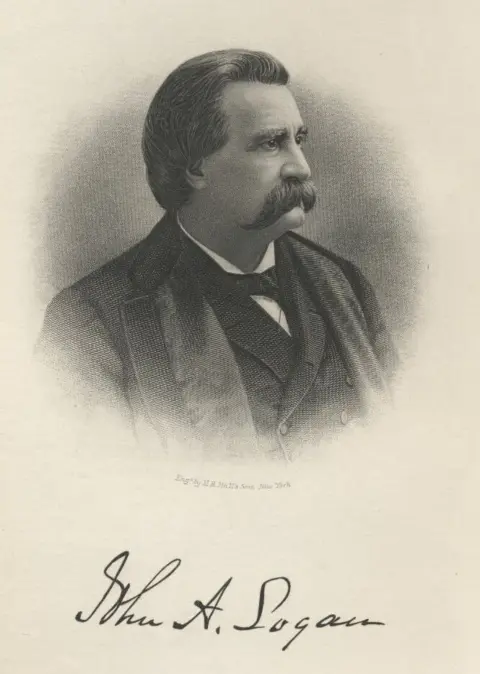
"The Great Conspiracy, Complete" by John Alexander Logan is a historical account written during the late 19th century that delves into the origins and development of what the author refers to as the Great Conspiracy surrounding the American Civil War and its contributing factors. The book examines the historical context of slavery, sectional tensions, and the political maneuverings that fueled the conflict, aiming for historical accuracy and objectivity in presenting the facts. The opening of the work sets a foundation for understanding the interwoven history of American slavery and its eventual influence on the civil strife that ensued. Logan introduces the evolution of the slavery issue from the early days of the republic, highlighting the complex attitudes toward slavery among the Founding Fathers and the conflicts that arose during the formation of the Constitution. He outlines key events leading up to the Civil War, tracing the origins of sectionalism, the influence of economic factors, and the political discourses that inevitably led the nation to civil war. Logan's nuanced portrayals of both pro- and anti-slavery sentiments, along with his detailed examination of legislative actions like the Missouri Compromise, underscore the depth of the national crisis that culminated in the conflict.
Introduction adapted from the source catalogue; source summaries may be automatically generated.
Free to read · English · 237,116 words · No account needed
MAKE TIME FOR A GOOD BOOK
On by default. Untick to stop anonymous reading totals. Each page counts after 10 seconds in view. How this works.
Anonymous counting is on unless you have switched it off.
The valley, between the Middle Ridge and the Blue Ridge, is known as the Shenandoah Valley, taking its name from the Shenandoah River, which, for more than one hundred miles, flows along the Western foot of the Blue Ridge, toward the North-East, until it empties into the Potomac, at Harper's Ferry.
The Orange and Alexandria railroad runs from Alexandria,--on the opposite bank of the Potomac from Washington, and a few miles below the Capital,--in a general Southeasterly direction, to Culpepper Court-House; thence Southerly to Gordonsville, where it joins the Virginia Central--the Western branch of which runs thence through Charlotteville, Staunton, and Covington, across the ridges and valleys of the Alleghanies, while its Eastern branch, taking a general South-easterly direction, crosses the Richmond and Fredricksburg railroad at Hanover Junction, some twenty miles North of Richmond, and thence sweeps Southerly to the Rebel capital.
It is along this Easterly branch of the Virginia Central that Rebel re-enforcements will be hurried to Beauregard, from Richmond to Gordonsville, and thence, by the Orange and Alexandria railroad, to Manassas Junction.
Some twenty-five miles from Alexandria, a short railroad-feeder--which runs from Strasburg, in the Shenandoah Valley, through the Blue Ridge, at Manassas Gap, in an East-South-easterly direction--strikes the Alexandria and Orange railroad. The point of contact is Manassas Junction; and it is along this Manassas-Gap feeder that Johnston, with his Army at Winchester--some twenty miles North-North-East of Strasburg --expects, in case of attack by Patterson, to be re-enforced by Beauregard; or, in case the latter is assailed, to go to his assistance, after shaking off Patterson.
This little link of railroad, known as the Manassas Gap railroad, is therefore an important factor in the game of War, now commencing in earnest; and it had, as we shall see, very much to do, not only with the advance of McDowell's Union Army upon Bull Run, but also with the result of the first pitched battle thereabout fought.
From Alexandria, some twelve miles to the Westward, runs a fine turnpike road to Fairfax Court-House; thence, continuing Westward, but gradually and slightly dipping award the South, it passes through Germantown, Centreville, and Groveton, to Warrenton.
This "Warrenton Pike"--as it is termed--also plays a somewhat conspicuous part, before, during, and after the Battle of Bull Run. For most of its length, from Fairfax Court-House to Warrenton, the Warrenton Pike pursues a course almost parallel with the Orange and Alexandria railroad aforesaid, while the stream of Bull Run, pursuing a South-easterly course, has a general direction almost parallel with that of the Manassas Gap railroad.
Your reading position is saved on this browser. Take it to another device with a library code. Reading pages adapt to text, rather than matching a printed edition.
BEHIND THE BOOK
This eBook is for the use of anyone anywhere in the United States and most other parts of the world at no cost and with almost no restrictions whatsoever. You may copy it, give it away or re-use it under the terms of the Project Gutenberg License included with this eBook or online at www.gutenberg.org. If you are not located in the United States, you will have to check the laws of the country where you are located before using this eBook. Read the source licence.
The original source file, including credits and licence, is retained by this library. Request an original-format copy at no charge. Please include the book title and Project Gutenberg identifier #7140.
KEEP YOUR CURIOSITY GOING
Cécile Tormay

Moritz Busch
John L. Ransom
Frances Wright
Cécile Tormay

Mabel Potter Daggett