THE CLASSIC COLLECTION✦An outlaw’s diary: the CommuneCLASSIC FREE BOOKS
An outlaw’s diary: the Commune
Cécile Tormay
THE CLASSIC COLLECTION · 1886
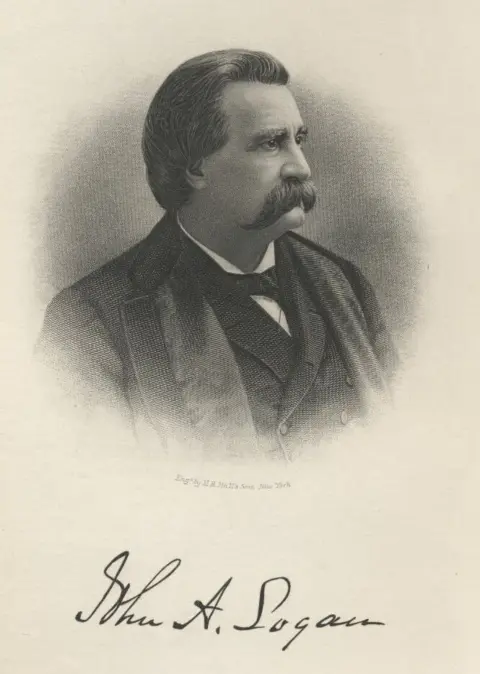
"The Great Conspiracy, Complete" by John Alexander Logan is a historical account written during the late 19th century that delves into the origins and development of what the author refers to as the Great Conspiracy surrounding the American Civil War and its contributing factors. The book examines the historical context of slavery, sectional tensions, and the political maneuverings that fueled the conflict, aiming for historical accuracy and objectivity in presenting the facts. The opening of the work sets a foundation for understanding the interwoven history of American slavery and its eventual influence on the civil strife that ensued. Logan introduces the evolution of the slavery issue from the early days of the republic, highlighting the complex attitudes toward slavery among the Founding Fathers and the conflicts that arose during the formation of the Constitution. He outlines key events leading up to the Civil War, tracing the origins of sectionalism, the influence of economic factors, and the political discourses that inevitably led the nation to civil war. Logan's nuanced portrayals of both pro- and anti-slavery sentiments, along with his detailed examination of legislative actions like the Missouri Compromise, underscore the depth of the national crisis that culminated in the conflict.
Introduction adapted from the source catalogue; source summaries may be automatically generated.
Free to read · English · 237,116 words · No account needed
MAKE TIME FOR A GOOD BOOK
On by default. Untick to stop anonymous reading totals. Each page counts after 10 seconds in view. How this works.
Anonymous counting is on unless you have switched it off.
"As further confirmatory of the above, the following telegraphic dispatch in the Charleston Mercury of January 7, 1861, is given:
"'[From our Own Correspondent.]
"'WASHINGTON, January 6.--The Senators from those of the Southern States which have called Conventions of their people, met in caucus last night, and adopted the following resolutions:
"'Resolved, That we recommend to our respective States immediate
Secession.
"'Resolved, That we recommend the holding of a General Convention of the said States, to be holden in the city of Montgomery, Alabama, at some period not later than the 15th day of February, 1861.'
"These resolutions were telegraphed this evening to the Conventions of Alabama, Mississippi, and Florida. A third resolution is also known to have been adopted, but it is of a confidential character, not to be divulged at present. There was a good deal of discussion in the caucus on the question of whether the Seceding States ought to continue their delegations in Congress till the 4th of March, to prevent unfriendly legislation, or whether the Representatives of the Seceding States should all resign together, and leave a clear field for the opposition to pass such bills, looking to Coercion, as they may see fit. It is believed that the opinion that they should remain prevailed."
Furthermore, upon the capture of Fernandina, Florida, in 1862, the following letter was found and published. Senator Yulee, the writer, was present and participated as one of the Florida Senators, in the traitorous "Consultation" therein referred to--and hence its especial value:
"WASHINGTON, January 7, 1861.
"My DEAR SIR:--On the other side is a copy of resolutions adopted at a consultation of the Senators from the Seceding States--in which Georgia, Alabama, Louisiana, Arkansas, Texas, Mississippi, and Florida were present.
"The idea of the meeting was that the States should go out at once, and provide for the early organization of a Confederate Government, not later than 15th February. This time is allowed to enable Louisiana and Texas to participate. It seemed to be the opinion that if we left here, force, loan, and volunteer Bills might be passed, which would put Mr. Lincoln in immediate condition for hostilities; whereas, by remaining in our places until the 4th of March, it is thought we can keep the hands of Mr. Buchanan tied, and disable the Republicans from effecting any legislation which will strengthen the hands of the incoming Administration.
"The resolutions will be sent by the delegation to the President of the Convention. I have not been able to find Mr. Mallory (his Senatorial colleague) this morning. Hawkins (Representative from Florida) is in Connecticut. I have therefore thought it best to send you this copy of the resolutions.
"In haste, yours truly
"D. L. YULEE.
Your reading position is saved on this browser. Take it to another device with a library code. Reading pages adapt to text, rather than matching a printed edition.
BEHIND THE BOOK
This eBook is for the use of anyone anywhere in the United States and most other parts of the world at no cost and with almost no restrictions whatsoever. You may copy it, give it away or re-use it under the terms of the Project Gutenberg License included with this eBook or online at www.gutenberg.org. If you are not located in the United States, you will have to check the laws of the country where you are located before using this eBook. Read the source licence.
The original source file, including credits and licence, is retained by this library. Request an original-format copy at no charge. Please include the book title and Project Gutenberg identifier #7140.
KEEP YOUR CURIOSITY GOING
Cécile Tormay

Moritz Busch
John L. Ransom
Frances Wright
Cécile Tormay

Mabel Potter Daggett