THE CLASSIC COLLECTION✦An outlaw’s diary: the CommuneCLASSIC FREE BOOKS
An outlaw’s diary: the Commune
Cécile Tormay
THE CLASSIC COLLECTION · 1886
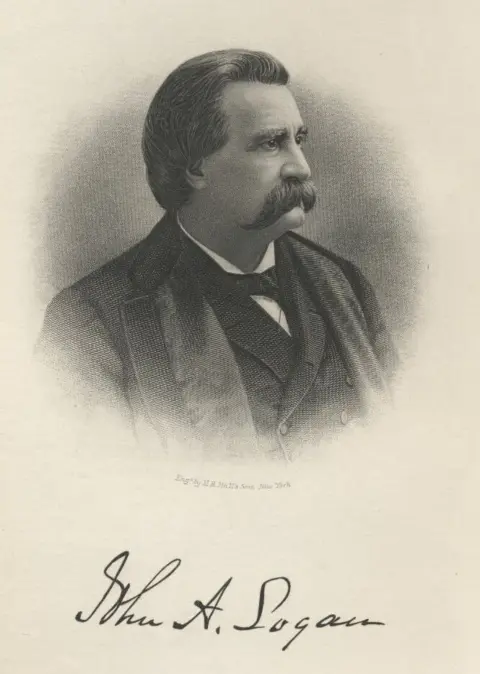
"The Great Conspiracy, Complete" by John Alexander Logan is a historical account written during the late 19th century that delves into the origins and development of what the author refers to as the Great Conspiracy surrounding the American Civil War and its contributing factors. The book examines the historical context of slavery, sectional tensions, and the political maneuverings that fueled the conflict, aiming for historical accuracy and objectivity in presenting the facts. The opening of the work sets a foundation for understanding the interwoven history of American slavery and its eventual influence on the civil strife that ensued. Logan introduces the evolution of the slavery issue from the early days of the republic, highlighting the complex attitudes toward slavery among the Founding Fathers and the conflicts that arose during the formation of the Constitution. He outlines key events leading up to the Civil War, tracing the origins of sectionalism, the influence of economic factors, and the political discourses that inevitably led the nation to civil war. Logan's nuanced portrayals of both pro- and anti-slavery sentiments, along with his detailed examination of legislative actions like the Missouri Compromise, underscore the depth of the national crisis that culminated in the conflict.
Introduction adapted from the source catalogue; source summaries may be automatically generated.
Free to read · English · 237,116 words · No account needed
MAKE TIME FOR A GOOD BOOK
On by default. Untick to stop anonymous reading totals. Each page counts after 10 seconds in view. How this works.
Anonymous counting is on unless you have switched it off.
"'Mr. President, being last winter a careful eye-witness of all that occurred, I soon became satisfied that it was a deliberate, wilful design, on the part of some representatives of Southern States, to seize upon the election of Mr. Lincoln merely as an excuse to precipitate this revolution upon the Country. One evidence, to my mind, is the fact that South Carolina never sent her Senators here.'
"Then they certainly were not influenced by the Clark amendment.
"'An additional evidence is, that when gentlemen on this floor, by their votes, could have controlled legislation, they refused to cast them for fear that the very Propositions submitted to this body might have an influence in changing the opinions of their constituencies. Why, Sir, when the resolutions submitted by the Senator from New Hampshire [Mr. Clark], were offered as an amendment to the Crittenden Propositions, for the manifest purpose of embarrassing the latter, and the vote taken on the 16th of January, 1861, I ask, what did we see? There were fifty-five Senators at that time upon this floor, in person. The Globe of the second Session, Thirty-Sixth Congress, Part I., page 409, shows that upon the call of the yeas and nays immediately preceding the vote on the substituting of Mr. Clark's amendment, there were fifty-five votes cast. I will read the vote from the Globe:
"'YEAS--Messrs. Anthony, Baker, Bingham, Cameron, Chandler, Clark, Collamer, Dixon, Doolittle, Durkee, Fessenden, Foot, Foster, Grimes, Hale, Harlan, King, Seward, Simmons, Sumner, Ten Eyck, Trumbull, Wade, Wilkinson, and Wilson--25.
"NAYS--Messrs. Bayard, Benjamin, Bigler, Bragg, Bright, Clingman, Crittenden, Douglas, Fitch, Green, Gwin, Hemphill, Hunter, Iverson, Johnson of Arkansas, Johnson of Tennessee, Kennedy, Lane, Latham, Mason, Nicholson, Pearce, Polk, Powell, Pugh, Rice, Saulsbury, Sebastian, Slidell and Wigfall--30.
"The vote being taken immediately after, on the Clark Proposition,
was as follows:
"YEAS--Messrs. Anthony, Baker, Bingham, Cameron, Chandler, Clark, Collamer, Dixon, Doolittle, Durkee, Fessenden, Foot, Foster, Grimes, Hale, Harlan, King, Seward, Simmons, Sumner, Ten Eyck, Trumbull, Wade, Wilkinson and Wilson--25.
"NAYS-Messrs. Bayard, Bigler, Bragg, Bright, Clingman, Crittenden, Fitch, Green, Gwin, Hunter, Johnson of Tennessee, Kennefly, Lane, Latham, Mason, Nicholson, Pearce, Polk, Powell, Pugh, Rice, Saulsbury and Sebastian-23.
"'Six senators retained their seats and refused to vote, thus themselves allowing the Clark Proposition to supplant the Crittenden Resolution by a vote of twenty-five to twenty-three. Mr. Benjamin of Louisiana, Mr. Hemphill and Mr. Wigfall of Texas, Mr. Iverson of Georgia, Mr. Johnson of Arkansas, and Mr. Slidell of Louisiana, were in their seats, but refused to cast their votes.'
Your reading position is saved on this browser. Take it to another device with a library code. Reading pages adapt to text, rather than matching a printed edition.
BEHIND THE BOOK
This eBook is for the use of anyone anywhere in the United States and most other parts of the world at no cost and with almost no restrictions whatsoever. You may copy it, give it away or re-use it under the terms of the Project Gutenberg License included with this eBook or online at www.gutenberg.org. If you are not located in the United States, you will have to check the laws of the country where you are located before using this eBook. Read the source licence.
The original source file, including credits and licence, is retained by this library. Request an original-format copy at no charge. Please include the book title and Project Gutenberg identifier #7140.
KEEP YOUR CURIOSITY GOING
Cécile Tormay

Moritz Busch
John L. Ransom
Frances Wright
Cécile Tormay

Mabel Potter Daggett