THE CLASSIC COLLECTION✦An outlaw’s diary: the CommuneCLASSIC FREE BOOKS
An outlaw’s diary: the Commune
Cécile Tormay
THE CLASSIC COLLECTION · 1886
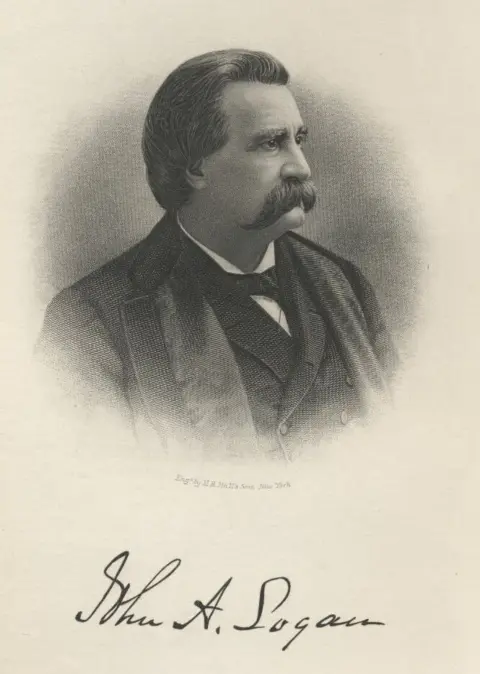
"The Great Conspiracy, Complete" by John Alexander Logan is a historical account written during the late 19th century that delves into the origins and development of what the author refers to as the Great Conspiracy surrounding the American Civil War and its contributing factors. The book examines the historical context of slavery, sectional tensions, and the political maneuverings that fueled the conflict, aiming for historical accuracy and objectivity in presenting the facts. The opening of the work sets a foundation for understanding the interwoven history of American slavery and its eventual influence on the civil strife that ensued. Logan introduces the evolution of the slavery issue from the early days of the republic, highlighting the complex attitudes toward slavery among the Founding Fathers and the conflicts that arose during the formation of the Constitution. He outlines key events leading up to the Civil War, tracing the origins of sectionalism, the influence of economic factors, and the political discourses that inevitably led the nation to civil war. Logan's nuanced portrayals of both pro- and anti-slavery sentiments, along with his detailed examination of legislative actions like the Missouri Compromise, underscore the depth of the national crisis that culminated in the conflict.
Introduction adapted from the source catalogue; source summaries may be automatically generated.
Free to read · English · 237,116 words · No account needed
MAKE TIME FOR A GOOD BOOK
On by default. Untick to stop anonymous reading totals. Each page counts after 10 seconds in view. How this works.
Anonymous counting is on unless you have switched it off.
["Its advocates, with good reason, claimed a large majority of the People in its favor, and clamored for its submission to a direct popular vote. Had such a submission been accorded, it is very likely that the greater number of those who voted at all would have voted to ratify it. * * * The 'Conservatives,' so called, were still able to establish this Crittenden Compromise by their own proper strength, had they been disposed so to do. The President was theirs; the Senate strongly theirs; in the House, they had a small majority, as was evidenced in their defeat of John Sherman for Speaker. Had they now come forward and said, with authority: 'Enable us to pass the Crittenden Compromise, and all shall be peace and harmony,' they would have succeeded without difficulty. It was only through the withdrawal of pro-slavery members that the Republicans had achieved an unexpected majority in either House. Had those members chosen to return to the seats still awaiting them, and to support Mr. Crittenden's proposition, they could have carried it without difficulty."--Vol. 360, Greeley's Am. Conflict.]
But no, they wilfully withdrew their Congressional membership, State by State, as each Seceded, and refused all terms save those which involved an absolute surrender to them on all points, including the impossible claim of the "Right of Secession."
Let us now briefly trace the history of the Compromise measures in the
two Houses of Congress.
The Crittenden-Compromise Joint-Resolution had been introduced in the Senate at the opening of its session and referred to a Select Committee of Thirteen, and subsequently, January 16th, 1861, having been reported back, came up in that body for action. On that day it was amended by inserting the words "now held or hereafter to be acquired" after the words "In all the territory of the United States," in the first line of Article I., so that it would read as given above. This amendment--by which not only in all territory then belonging to the United States, but also by implication in all that might thereafter be acquired, Slavery South of 36 30' was to be recognized--was agreed to by 29 yeas to 21 nays, as follows:
YEAS.--Messrs. Baker, Bayard, Benjamin, Bigler, Bragg, Bright, Clingman, Crittenden, Douglas, Fitch, Green, Gwin, Hemphill, Hunter, Iverson, Johnson of Tennessee, Kennedy, Lane, Mason, Nicholson, Pearce, Polk, Powell, Pugh, Rice, Saulsbury, Sebastian, Slidell and Wigfall--29.
NAYS.--Messrs. Anthony, Bingham, Cameron, Chandler, Clark, Collamer, Dixon, Doolittle, Durkee, Fessenden, Foot, Foster, Grimes, Hale, Harlan, King, Latham, Seward, Simmons, Sumner, Ten Eyck, Trumbull, Wade and Wilson--24.
Your reading position is saved on this browser. Take it to another device with a library code. Reading pages adapt to text, rather than matching a printed edition.
BEHIND THE BOOK
This eBook is for the use of anyone anywhere in the United States and most other parts of the world at no cost and with almost no restrictions whatsoever. You may copy it, give it away or re-use it under the terms of the Project Gutenberg License included with this eBook or online at www.gutenberg.org. If you are not located in the United States, you will have to check the laws of the country where you are located before using this eBook. Read the source licence.
The original source file, including credits and licence, is retained by this library. Request an original-format copy at no charge. Please include the book title and Project Gutenberg identifier #7140.
KEEP YOUR CURIOSITY GOING
Cécile Tormay

Moritz Busch
John L. Ransom
Frances Wright
Cécile Tormay

Mabel Potter Daggett