THE CLASSIC COLLECTION✦An outlaw’s diary: the CommuneCLASSIC FREE BOOKS
An outlaw’s diary: the Commune
Cécile Tormay
THE CLASSIC COLLECTION · 1886
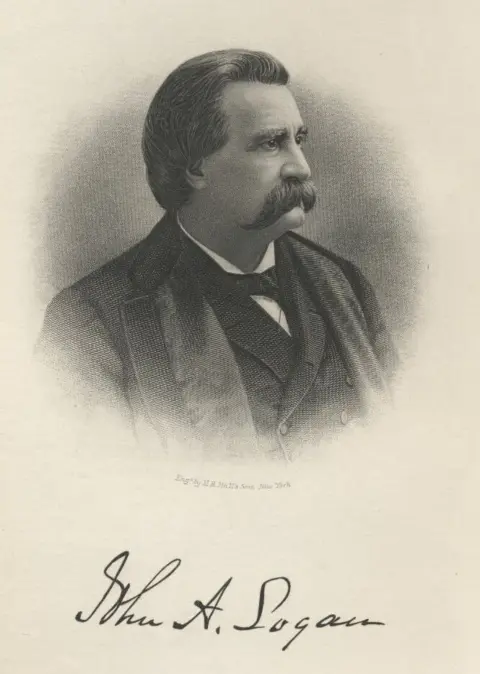
"The Great Conspiracy, Complete" by John Alexander Logan is a historical account written during the late 19th century that delves into the origins and development of what the author refers to as the Great Conspiracy surrounding the American Civil War and its contributing factors. The book examines the historical context of slavery, sectional tensions, and the political maneuverings that fueled the conflict, aiming for historical accuracy and objectivity in presenting the facts. The opening of the work sets a foundation for understanding the interwoven history of American slavery and its eventual influence on the civil strife that ensued. Logan introduces the evolution of the slavery issue from the early days of the republic, highlighting the complex attitudes toward slavery among the Founding Fathers and the conflicts that arose during the formation of the Constitution. He outlines key events leading up to the Civil War, tracing the origins of sectionalism, the influence of economic factors, and the political discourses that inevitably led the nation to civil war. Logan's nuanced portrayals of both pro- and anti-slavery sentiments, along with his detailed examination of legislative actions like the Missouri Compromise, underscore the depth of the national crisis that culminated in the conflict.
Introduction adapted from the source catalogue; source summaries may be automatically generated.
Free to read · English · 237,116 words · No account needed
MAKE TIME FOR A GOOD BOOK
On by default. Untick to stop anonymous reading totals. Each page counts after 10 seconds in view. How this works.
Anonymous counting is on unless you have switched it off.
"I have the honor to be, very respectfully, your obedient servant,
"J. HOLT.
"Secretary of War,
On February 20th, Forts Chadbourne and Belknap were seized by the Texan Rebels; and on the 22nd, the Federal General Twiggs basely surrendered to them all the fortifications under his control, his little Army, and all the Government stores in his possession--comprising $55,000 in specie, 35,000 stand of arms, 26 pieces of mounted artillery, 44 dismounted guns, and ammunition, horses, wagons, forage, etc., valued at nearly $2,000,000.
On the 2nd of March, the Texan Rebels seized the United States Revenue cutter "Dodge" at Galveston; and on the 6th, Fort Brown was surrendered to them.
Thus, with surrender after surrender, and seizure after seizure, of its revenue vessels and fortifications and troops and arms and munitions of war in the Southern States--with Fort Sumter invested and at the mercy of any attack, and Fortress Monroe alone of all the National strongholds yet safe--with State after State seceding--what wonder that, while these events gave all encouragement to the Southern Rebels, the Patriots of the North stood aghast at the appalling spectacle of a crumbling and dissolving Union!
During this period of National peril, the debates in both branches of Congress upon propositions for adjustment of the unfortunate differences between the Southern Seceders and the Union, as has been already hinted, contributed still further to agitate the public mind. Speech after speech by the ablest and most brilliant Americans in public life, for or against such propositions, and discussing the rightfulness or wrongfulness of Secession, were made in Congress day after day, and, by means of the telegraph and the press, alternately swayed the Northern heart with feelings of hope, chagrin, elation or despair.
The Great Debate was opened in the Senate on almost the very first day of its session (December 4th, 1860), by Mr. Clingman, of North Carolina, who, referring to South Carolina, declared that "Instead of being precipitate, she and the whole South have been wonderfully patient." A portion of that speech is interesting even at this time, as showing how certain phases of the Tariff and Internal Improvement questions entered into the consideration of some of the Southern Secession leaders. Said he, "I know there are intimations that suffering will fall upon us of the South, if we secede. My people are not terrified by any such considerations. * * * They have no fears of the future if driven to rely on themselves. The Southern States have more territory than all the Colonies had when they Seceded from Great Britain, and a better territory. Taking its position, climate, and fertility into consideration, there is not upon Earth a body of territory superior to it. * * * The Southern States have, too, at this day, four times the population the Colonies had when they Seceded from Great Britain. Their exports to the North and to Foreign Countries were, last year, more than $300,000,000; and a duty of ten per cent. upon the same amount of imports would give $30,000,000 of revenue--twice as much as General Jackson's administration spent in its first year. Everybody can see, too, how the bringing in of $300,000,000 of imports into Southern ports would enliven business in our seaboard towns. I have seen with some satisfaction, also, Mr. President, that the war made upon us has benefitted certain branches of industry in my State. There are manufacturing establishments in North Carolina, the proprietors of which tell me that they are making fifty per cent. annually on their whole capital, and yet cannot supply one tenth of the demand for their production. The result of only ten per cent. duties in excluding products from abroad, would give life and impetus to mechanical and manufacturing industry, throughout the entire South. Our people understand these things, and they are not afraid of results, if forced to declare Independence. Indeed I do not see why Northern Republicans should wish to continue a connection with us upon any terms. * * * They want High Tariff likewise. They may put on five hundred per cent. if they choose, upon their own imports, and nobody on our side will complain. They may spend all the money they raise on railroads, or opening harbors, or anything on earth they desire, without interference from us; and it does seem to me that if they are sincere in their views they ought to welcome a separation."
Your reading position is saved on this browser. Take it to another device with a library code. Reading pages adapt to text, rather than matching a printed edition.
BEHIND THE BOOK
This eBook is for the use of anyone anywhere in the United States and most other parts of the world at no cost and with almost no restrictions whatsoever. You may copy it, give it away or re-use it under the terms of the Project Gutenberg License included with this eBook or online at www.gutenberg.org. If you are not located in the United States, you will have to check the laws of the country where you are located before using this eBook. Read the source licence.
The original source file, including credits and licence, is retained by this library. Request an original-format copy at no charge. Please include the book title and Project Gutenberg identifier #7140.
KEEP YOUR CURIOSITY GOING
Cécile Tormay

Moritz Busch
John L. Ransom
Frances Wright
Cécile Tormay

Mabel Potter Daggett