THE CLASSIC COLLECTION✦An outlaw’s diary: the CommuneCLASSIC FREE BOOKS
An outlaw’s diary: the Commune
Cécile Tormay
THE CLASSIC COLLECTION · 1886
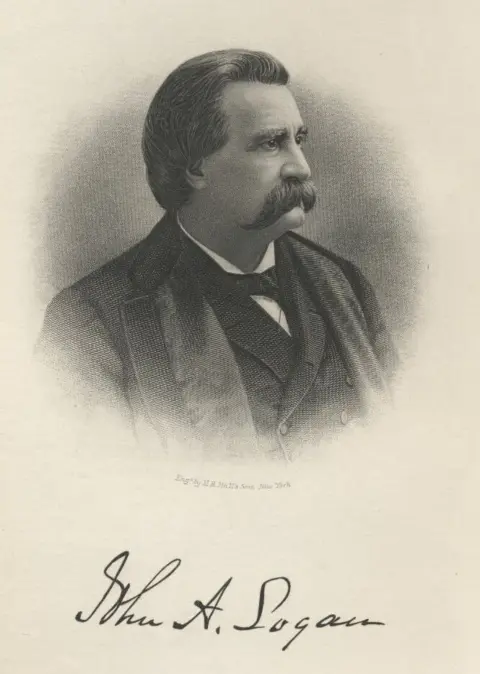
"The Great Conspiracy, Complete" by John Alexander Logan is a historical account written during the late 19th century that delves into the origins and development of what the author refers to as the Great Conspiracy surrounding the American Civil War and its contributing factors. The book examines the historical context of slavery, sectional tensions, and the political maneuverings that fueled the conflict, aiming for historical accuracy and objectivity in presenting the facts. The opening of the work sets a foundation for understanding the interwoven history of American slavery and its eventual influence on the civil strife that ensued. Logan introduces the evolution of the slavery issue from the early days of the republic, highlighting the complex attitudes toward slavery among the Founding Fathers and the conflicts that arose during the formation of the Constitution. He outlines key events leading up to the Civil War, tracing the origins of sectionalism, the influence of economic factors, and the political discourses that inevitably led the nation to civil war. Logan's nuanced portrayals of both pro- and anti-slavery sentiments, along with his detailed examination of legislative actions like the Missouri Compromise, underscore the depth of the national crisis that culminated in the conflict.
Introduction adapted from the source catalogue; source summaries may be automatically generated.
Free to read · English · 237,116 words · No account needed
MAKE TIME FOR A GOOD BOOK
On by default. Untick to stop anonymous reading totals. Each page counts after 10 seconds in view. How this works.
Anonymous counting is on unless you have switched it off.
"WAR DEPARTMENT, February 18, 1861. [Congressional Globe, August 8, 1861, pp. 457,458] "SIR: On the 11th February, the House of Representatives adopted a resolution requesting the President, if not incompatible with the public interests, to communicate 'the reasons that had induced him to assemble so large a number of troops in this city, and why they are kept here; and whether he has any information of a Conspiracy upon the part of any portion of the citizens of this Country to seize upon the Capital and prevent the Inauguration of the President elect.'
"This resolution having been submitted to this Department for consideration and report, I have the honor to state, that the body of troops temporarily transferred to this city is not as large as is assumed by the resolution, though it is a well-appointed corps and admirably adapted for the preservation of the public peace. The reasons which led to their being assembled here will now be briefly stated.
"I shall make no comment upon the origin of the Revolution which, for the last three months, has been in progress in several of the Southern States, nor shall I enumerate the causes which have hastened its advancement or exasperated its temper. The scope of the questions submitted by the House will be sufficiently met by dealing with the facts as they exist, irrespective of the cause from which they have proceeded. That Revolution has been distinguished by a boldness and completeness of success rarely equaled in the history of Civil Commotions. Its overthrow of the Federal authority has not only been sudden and wide-spread, but has been marked by excesses which have alarmed all and been sources of profound humiliation to a large portion of the American People. Its history is a history of surprises and treacheries and ruthless spoliations. The Forts of the United States have been captured and garrisoned, and hostile flags unfurled upon their ramparts. Its arsenals have been seized, and the vast amount of public arms they contained appropriated to the use of the captors; while more than half a million dollars, found in the Mint at New Orleans, has been unscrupulously applied to replenish the coffers of Louisiana. Officers in command of revenue cutters of the United States have been prevailed on to violate their trusts and surrender the property in their charge; and instead of being branded for their crimes, they, and the vessels they betrayed, have been cordially received into the service of the Seceded States. These movements were attended by yet more discouraging indications of immorality. It was generally believed that this Revolution was guided and urged on by men occupying the highest positions in the public service, and who, with the responsibilities of an oath to support the Constitution still resting upon their consciences, did not hesitate secretly to plan and openly to labor for, the dismemberment of the Republic whose honors they enjoyed and upon whose Treasury they were living. As examples of evil are always more potent than those of good, this spectacle of demoralization on the part of States and statesmen could not fail to produce the most deplorable consequences. The discontented and the disloyal everywhere took courage. In other States, adjacent to and supposed to sympathize in sense of political wrong with those referred to, Revolutionary schemes were set on foot, and Forts and arms of the United States seized. The unchecked prevalence of the Revolution, and the intoxication which its triumphs inspired, naturally suggested wilder and yet more desperate enterprises than the conquest of ungarrisoned Forts, or the plunder of an unguarded Mint. At what time the armed occupation of Washington City became a part of the Revolutionary Programme, is not certainly known. More than six weeks ago, the impression had already extensively obtained that a Conspiracy for the accomplishment of this guilty purpose was in process of formation, if not fully matured. The earnest endeavors made by men known to be devoted to the Revolution, to hurry Virginia and Maryland out of the Union, were regarded as preparatory steps for the subjugation of Washington. This plan was in entire harmony with the aim and spirit of those seeking the subversion of the Government, since no more fatal blow at its existence could be struck than the permanent and hostile possession of the seat of its power. It was in harmony, too, with the avowed designs of the Revolutionists, which looked to the formation of a Confederacy of all the Slave States, and necessarily to the Conquest of the Capital within their limits. It seemed not very indistinctly prefigured in a Proclamation made upon the floor of the Senate, without qualification, if not exultingly, that the Union was already dissolved--a Proclamation which, however intended, was certainly calculated to invite, on the part of men of desperate fortunes or of Revolutionary States, a raid upon the Capital. In view of the violence and turbulent disorders already exhibited in the South, the public mind could not reject such a scheme as at all improbable. That a belief in its existence was entertained by multitudes, there can be no doubt, and this belief I fully shared. My conviction rested not only on the facts already alluded to, but upon information, some of which was of a most conclusive character, that reached the Government from many parts of the Country, not merely expressing the prevalence of the opinion that such an organization had been formed, but also often furnishing the plausible grounds on which the opinion was based. Superadded to these proofs, were the oft-repeated declarations of men in high political positions here, and who were known to have intimate affiliations with the Revolution--if indeed they did not hold its reins in their hands--to the effect that Mr. Lincoln would not, or should not be inaugurated at Washington. Such declarations, from such men, could not be treated as empty bluster. They were the solemn utterances of those who well understood the import of their words, and who, in the exultation of the temporary victories gained over their Country's flag in the South, felt assured that events would soon give them the power to verify their predictions. Simultaneously with these prophetic warnings, a Southern journal of large circulation and influence, and which is published near the city of Washington, advocated its seizure as a possible political necessity.
Your reading position is saved on this browser. Take it to another device with a library code. Reading pages adapt to text, rather than matching a printed edition.
BEHIND THE BOOK
This eBook is for the use of anyone anywhere in the United States and most other parts of the world at no cost and with almost no restrictions whatsoever. You may copy it, give it away or re-use it under the terms of the Project Gutenberg License included with this eBook or online at www.gutenberg.org. If you are not located in the United States, you will have to check the laws of the country where you are located before using this eBook. Read the source licence.
The original source file, including credits and licence, is retained by this library. Request an original-format copy at no charge. Please include the book title and Project Gutenberg identifier #7140.
KEEP YOUR CURIOSITY GOING
Cécile Tormay

Moritz Busch
John L. Ransom
Frances Wright
Cécile Tormay

Mabel Potter Daggett