THE CLASSIC COLLECTION✦An outlaw’s diary: the CommuneCLASSIC FREE BOOKS
An outlaw’s diary: the Commune
Cécile Tormay
THE CLASSIC COLLECTION · 1886
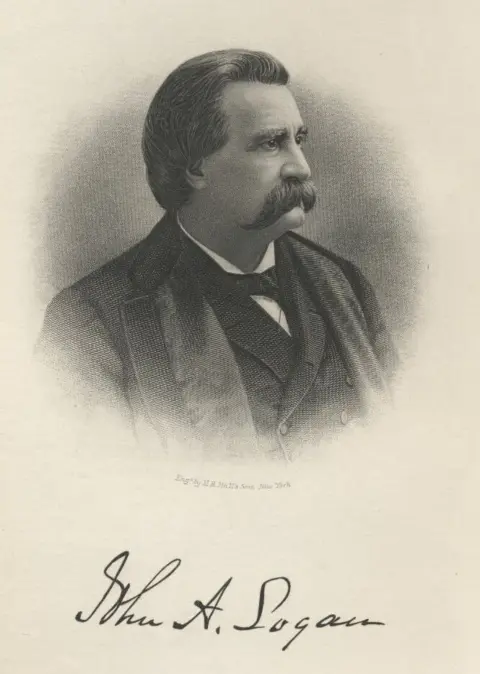
"The Great Conspiracy, Complete" by John Alexander Logan is a historical account written during the late 19th century that delves into the origins and development of what the author refers to as the Great Conspiracy surrounding the American Civil War and its contributing factors. The book examines the historical context of slavery, sectional tensions, and the political maneuverings that fueled the conflict, aiming for historical accuracy and objectivity in presenting the facts. The opening of the work sets a foundation for understanding the interwoven history of American slavery and its eventual influence on the civil strife that ensued. Logan introduces the evolution of the slavery issue from the early days of the republic, highlighting the complex attitudes toward slavery among the Founding Fathers and the conflicts that arose during the formation of the Constitution. He outlines key events leading up to the Civil War, tracing the origins of sectionalism, the influence of economic factors, and the political discourses that inevitably led the nation to civil war. Logan's nuanced portrayals of both pro- and anti-slavery sentiments, along with his detailed examination of legislative actions like the Missouri Compromise, underscore the depth of the national crisis that culminated in the conflict.
Introduction adapted from the source catalogue; source summaries may be automatically generated.
Free to read · English · 237,116 words · No account needed
MAKE TIME FOR A GOOD BOOK
On by default. Untick to stop anonymous reading totals. Each page counts after 10 seconds in view. How this works.
Anonymous counting is on unless you have switched it off.
On January 2nd, prior to the Secession of Georgia, Forts Pulaski and Jackson, commanding Savannah, and the Federal Arsenal at Augusta, Georgia, with two 12 pound howitzers, two cannon, 22,000 muskets and rifles, and ammunition in quantity, were seized by Rebel militia. About the same date, although North Carolina had not seceded, her Governor (Ellis) seized the Federal Arsenal at Fayetteville, Fort Macon, and other fortifications in that State, "to preserve them" from mob-seizure.
January 4th, anticipating Secession, Alabama State troops seized Fort Morgan, with 5,000 shot and shell, and Mount Vernon Arsenal at Mobile, with 2,000 stand of arms, 150, 000 pounds of powder, some pieces of cannon, and a large quantity of other munitions of war. The United States Revenue cutter, "Lewis Cass," was also surrendered to Alabama.
On the 5th, the Federal steamer "Star of the West," with reinforcements and supplies for Fort Sumter, left New York in the night--and Secretary Jacob Thompson notified the South Carolina Rebels of the fact.
On the 9th, the "Star of the West" appeared off Charleston bar, and while steaming toward Fort Sumter, was fired upon by Rebel batteries at Fort Moultrie and Morris Island, and struck by a shot, whereupon she returned to New York without accomplishing her mission. That day the State of Mississippi seceded from the Union.
On the 10th, the Federal storeship "Texas," with Federal guns and stores, was seized by Texans. On the same day Florida seceded.
On the 11th, Forts Jackson and St. Philip, commanding the mouth of the Mississippi River, and Fort Pike, dominating Lake Pontchartrain, were seized by Louisiana troops; also the Federal Arsenal at Baton Rouge, with 50,000 small arms, 4 howitzers, 20 heavy pieces of ordnance, 2 batteries, 300 barrels of powder, and other stores. The State of Alabama also seceded the same day.
On the 12th--Fort Marion, the coast surveying schooner "Dana," the Arsenal at St. Augustine, and that on the Chattahoochee, with 500,000 musket cartridges, 300,000 rifle cartridges and 50,000 pounds of powder, having previously been seized--Forts Barrancas and McRae, and the Navy Yard at Pensacola, were taken by Rebel troops of Florida, Alabama and Mississippi. On the same day, Colonel Hayne, of South Carolina, arrived at Washington as Agent or Commissioner to the National Government from Governor Pickens of that State.
On the 14th, the South Carolina Legislature resolved "that any attempt by the Federal Government to reinforce Fort Sumter will be regarded as an act of open hostility, and a Declaration of War."
On the 16th, Colonel Hayne, of South Carolina, developed his mission, which was to demand of the President the surrender of Fort Sumter to the South Carolina authorities--a demand that had already been made upon, and refused by, Major Anderson.
Your reading position is saved on this browser. Take it to another device with a library code. Reading pages adapt to text, rather than matching a printed edition.
BEHIND THE BOOK
This eBook is for the use of anyone anywhere in the United States and most other parts of the world at no cost and with almost no restrictions whatsoever. You may copy it, give it away or re-use it under the terms of the Project Gutenberg License included with this eBook or online at www.gutenberg.org. If you are not located in the United States, you will have to check the laws of the country where you are located before using this eBook. Read the source licence.
The original source file, including credits and licence, is retained by this library. Request an original-format copy at no charge. Please include the book title and Project Gutenberg identifier #7140.
KEEP YOUR CURIOSITY GOING
Cécile Tormay

Moritz Busch
John L. Ransom
Frances Wright
Cécile Tormay

Mabel Potter Daggett