THE CLASSIC COLLECTION✦An outlaw’s diary: the CommuneCLASSIC FREE BOOKS
An outlaw’s diary: the Commune
Cécile Tormay
THE CLASSIC COLLECTION · 1886
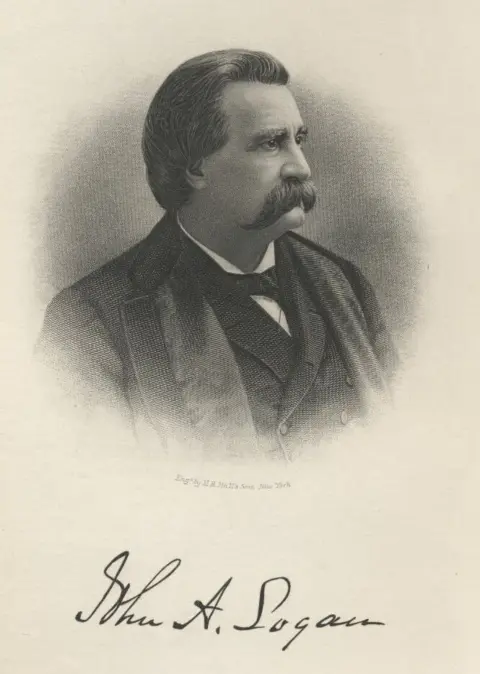
"The Great Conspiracy, Complete" by John Alexander Logan is a historical account written during the late 19th century that delves into the origins and development of what the author refers to as the Great Conspiracy surrounding the American Civil War and its contributing factors. The book examines the historical context of slavery, sectional tensions, and the political maneuverings that fueled the conflict, aiming for historical accuracy and objectivity in presenting the facts. The opening of the work sets a foundation for understanding the interwoven history of American slavery and its eventual influence on the civil strife that ensued. Logan introduces the evolution of the slavery issue from the early days of the republic, highlighting the complex attitudes toward slavery among the Founding Fathers and the conflicts that arose during the formation of the Constitution. He outlines key events leading up to the Civil War, tracing the origins of sectionalism, the influence of economic factors, and the political discourses that inevitably led the nation to civil war. Logan's nuanced portrayals of both pro- and anti-slavery sentiments, along with his detailed examination of legislative actions like the Missouri Compromise, underscore the depth of the national crisis that culminated in the conflict.
Introduction adapted from the source catalogue; source summaries may be automatically generated.
Free to read · English · 237,116 words · No account needed
MAKE TIME FOR A GOOD BOOK
On by default. Untick to stop anonymous reading totals. Each page counts after 10 seconds in view. How this works.
Anonymous counting is on unless you have switched it off.
Second, The Minority Report of the Committee, which, after re-affirming the Cincinnati platform, declared that "Inasmuch as differences of opinion exist in the Democratic party as to the nature and extent of the powers of a Territorial Legislature, and as to the powers and duties of Congress, under the Constitution of the United States, over the institution of Slavery within the Territories * * * the Democratic Party will abide by the decisions of the Supreme Court of the United States on the questions of Constitutional law."
Third, The recommendation of Benjamin F. Butler, that the platform should consist simply of a re-affirmation of the Cincinnati platform, and not another word.
The last proposition was first voted on, and lost, by 105 yeas to 198 nays. The Minority platform was then adopted by 165 yeas to 138 nays.
The aggressive Slave-holders (Majority) platform, and the Butler Compromise do-nothing proposition, being both defeated, and the Douglas (Minority) platform adopted, the Alabama delegation, under instructions from their State Convention to withdraw in case the National Convention refused to adopt radical Territorial Pro-Slavery resolutions, at once presented a written protest and withdrew from the Convention, and were followed, in rapid succession, by; the delegates from Mississippi, Louisiana (all but two), South Carolina, Florida, Texas, Arkansas (in part), Delaware (mostly), and Georgia (mostly)--the seceding delegates afterwards organizing in another Hall, adopting the above Majority platform, and after a four days' sitting, adjourning to meet at Richmond, Virginia, on the 11th of June.
Meanwhile, the Regular Democratic National Convention had proceeded to ballot for President--after adopting the two-thirds rule. Thirty-seven ballots having been cast, that for Stephen A. Douglas being, on the thirty-seventh, 151, the Convention, on the 3d of May, adjourned to meet again at Baltimore, June 18th.
After re-assembling, and settling contested election cases, the delegates (in whole or in part) from Virginia, North Carolina, Tennessee, California, Delaware, Kentucky, Maryland and Massachusetts, withdrew from the Convention, the latter upon the ground mainly that there had been "a withdrawal, in part, of a majority of the States," while Butler, who had voted steadily for Jefferson Davis throughout all the balloting at Charleston, gave as an additional ground personal to himself, that "I will not sit in a convention where the African Slave Trade--which is piracy by the laws of my Country--is approvingly advocated"--referring thereby to a speech, that had been much applauded by the Convention at Charleston, made by a Georgia delegate (Gaulden), in which that delegate had said: "I would ask my friends of the South to come up in a proper spirit; ask our Northern friends to give us all our rights, and take off the ruthless restrictions which cut off the supply of Slaves from foreign lands. * * * I tell you, fellow Democrats, that the African Slave Trader is the true Union man (cheers and laughter). I tell you that the Slave Trading of Virginia is more immoral, more unchristian in every possible point of view, than that African Slave Trade which goes to Africa and brings a heathen and worthless man here, makes him a useful man, Christianizes him, and sends him and his posterity down the stream of Time, to enjoy the blessings of civilization. (Cheers and laughter.) * * * I come from the first Congressional District of Georgia. I represent the African Slave Trade interest of that Section. (Applause.) I am proud of the position I occupy in that respect. I believe that the African Slave Trader is a true missionary, and a true Christian. (Applause.) * * * Are you prepared to go back to first principles, and take off your unconstitutional restrictions, and leave this question to be settled by each State? Now, do this, fellow citizens, and you will have Peace in the Country. * * * I advocate the repeal of the laws prohibiting the African Slave Trade, because I believe it to be the true Union movement. * * * I believe that by re-opening this Trade and giving us Negroes to populate the Territories, the equilibrium of the two Sections will be maintained."
Your reading position is saved on this browser. Take it to another device with a library code. Reading pages adapt to text, rather than matching a printed edition.
BEHIND THE BOOK
This eBook is for the use of anyone anywhere in the United States and most other parts of the world at no cost and with almost no restrictions whatsoever. You may copy it, give it away or re-use it under the terms of the Project Gutenberg License included with this eBook or online at www.gutenberg.org. If you are not located in the United States, you will have to check the laws of the country where you are located before using this eBook. Read the source licence.
The original source file, including credits and licence, is retained by this library. Request an original-format copy at no charge. Please include the book title and Project Gutenberg identifier #7140.
KEEP YOUR CURIOSITY GOING
Cécile Tormay

Moritz Busch
John L. Ransom
Frances Wright
Cécile Tormay

Mabel Potter Daggett