THE CLASSIC COLLECTION✦Froth: A NovelCLASSIC FREE BOOKS
Froth: A Novel
Armando Palacio Valdés
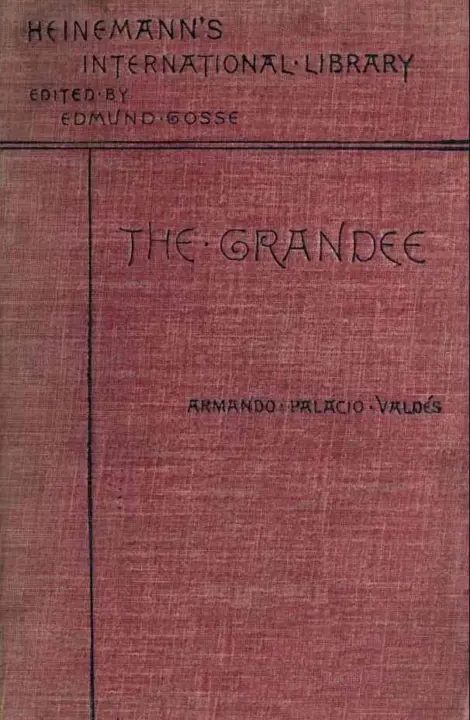
THE CLASSIC COLLECTION · 1894
"The Grandee" by Armando Palacio Valdés is a novel written in the late 19th century. The story is set in a provincial city in Spain, focusing on the life and dynamics within a noble household, particularly that of the protagonist Don Pedro Quiñones de Leon, an aging grandee struggling with his sense of dignity in a changing society. The narrative explores themes of societal hierarchy, pride, and personal turmoil against the backdrop of local customs and the intricacies of family relationships. At the start of "The Grandee," the atmospheric setting of Lancia is established through a wintry night, with elements that reflect the town's old-world charm and the quirks of its inhabitants. We meet Don Pedro Quiñones, who navigates the challenges of his aristocratic status despite facing paralysis and the burden of maintaining respectability. His interactions with guests during a social gathering reveal a tapestry of relationships intertwined with humor, social expectations, and unfulfilled desires, setting the stage for deeper explorations of the characters' motivations and conflicts as the story unfolds. The text hints at underlying tensions, notably regarding Don Pedro's strained marriage to Amalia, and foreshadows the complexities and darker themes that will be explored further in the narrative.
Introduction adapted from the source catalogue; source summaries may be automatically generated.
Free to read · English · 95,134 words · No account needed
MAKE TIME FOR A GOOD BOOK
On by default. Untick to stop anonymous reading totals. Each page counts after 10 seconds in view. How this works.
Anonymous counting is on unless you have switched it off.
"There is no foundation in what you say of Luis. I have not renewed, nor do I wish to renew, my relations with him, and this for reasons too many to be given, and some of which you know. The suit of Don Santos, as there is nobody else, has a far better chance. He is certainly old for me, but very conventional and affectionate. I should not be surprised if I ended by having him."
Garnet listened with great attention, opening his eyes unusually wide with astonishment. When Paco finished, he said in a deep voice, "This letter is ipocryphal."
The three friends turned round in surprise, and great was their difficulty to keep from laughing, whilst Manuel Antonio improved the occasion by giving Don Santos another embrace and saying:
"Go to, you rude, mistrustful thing! Show him the letter, Paco. Do you not know Fernanda's writing? Emilita is constantly having letters from her. You are too modest, Santos. I will not say you are a perfect gentleman, but you have a certain grace and a certain je ne sais quoi."
"Yes, I should think so!" exclaimed Paco; "and you take what Manuel Antonio says, for he is a judge."
"There are some who can tell at once, my dear fellow," continued the latter, in a quick voice. "They have only to cast their eyes on a face and they know whether it is handsome, ugly, or mediocre."
But not wishing to waste any more breath in forwarding Paco's plans they left Garnet in peace, and the Chatterbox changed the conversation.
"Ah! here come some friends of yours, Don Cristobal!"
And raising his head the Pensioner saw eight or ten soldiers approaching. They were officers of the battalion of Pontevedra, which, to his disgust, had recently arrived for the garrison of the town.
Mateo gnashed his teeth, and gave utterance to sounds indicative of his hatred of the armed force, and then exclaimed in an ironical tone:
"How delightful to see warriors in time of peace!"
"You are quite cracked about them, Don Cristobal. Soldiers are very
useful."
"Useful!" exclaimed the Pensioner, in a rage. "What use are they I should like to know? How are they useful?"
"They keep the peace, man."
"They keep war, you mean. The Civil Guard can keep us from rogues, but they foment dissensions and cause the ruin of the country. Directly they see the enemy appear, they take care to go off in another direction, and then they get appointments, crosses, and pensions. I maintain that as long as there are soldiers, there will be no peace in Spain."
"But, Don Cristobal, supposing a foreign nation attacked us?"
Your reading position is saved on this browser. Take it to another device with a library code. Reading pages adapt to text, rather than matching a printed edition.
Armando Palacio Valdés

Armando Palacio Valdés

Armando Palacio Valdés
Armando Palacio Valdés
BEHIND THE BOOK
This eBook is for the use of anyone anywhere in the United States and most other parts of the world at no cost and with almost no restrictions whatsoever. You may copy it, give it away or re-use it under the terms of the Project Gutenberg License included with this eBook or online at www.gutenberg.org. If you are not located in the United States, you will have to check the laws of the country where you are located before using this eBook. Read the source licence.
The original source file, including credits and licence, is retained by this library. Request an original-format copy at no charge. Please include the book title and Project Gutenberg identifier #31056.
KEEP YOUR CURIOSITY GOING
Coulson Kernahan

Maurice Baring
Frances Wright
Cécile Tormay

Frederic Jesup Stimson

W. H. P. (William Henry Pope) Jarvis