THE CLASSIC COLLECTION✦Froth: A NovelCLASSIC FREE BOOKS
Froth: A Novel
Armando Palacio Valdés
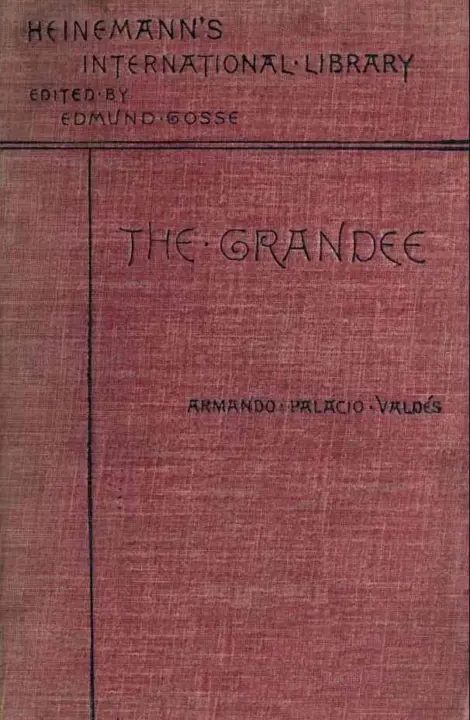
THE CLASSIC COLLECTION · 1894
"The Grandee" by Armando Palacio Valdés is a novel written in the late 19th century. The story is set in a provincial city in Spain, focusing on the life and dynamics within a noble household, particularly that of the protagonist Don Pedro Quiñones de Leon, an aging grandee struggling with his sense of dignity in a changing society. The narrative explores themes of societal hierarchy, pride, and personal turmoil against the backdrop of local customs and the intricacies of family relationships. At the start of "The Grandee," the atmospheric setting of Lancia is established through a wintry night, with elements that reflect the town's old-world charm and the quirks of its inhabitants. We meet Don Pedro Quiñones, who navigates the challenges of his aristocratic status despite facing paralysis and the burden of maintaining respectability. His interactions with guests during a social gathering reveal a tapestry of relationships intertwined with humor, social expectations, and unfulfilled desires, setting the stage for deeper explorations of the characters' motivations and conflicts as the story unfolds. The text hints at underlying tensions, notably regarding Don Pedro's strained marriage to Amalia, and foreshadows the complexities and darker themes that will be explored further in the narrative.
Introduction adapted from the source catalogue; source summaries may be automatically generated.
Free to read · English · 95,134 words · No account needed
MAKE TIME FOR A GOOD BOOK
On by default. Untick to stop anonymous reading totals. Each page counts after 10 seconds in view. How this works.
Anonymous counting is on unless you have switched it off.
It was a peculiar feature of those delightful sessions that the gin changed the character of both. The irascible, impetuous temper of the baron was softened in a remarkable way whilst the beneficial effects of alcohol lasted. He was cheerful, communicative, conciliatory, nobody's remarks upset him, nothing seemed worth getting angry about. Fray Diego, on the contrary, who, in his normal condition, was always a jovial, jocose priest, turned into a very devil for disputing and nagging, and he betrayed a combative disposition that nobody would have suspected under his round, placid face and pious calling.
He roused himself at the end of a few minutes, looked at the baron fixedly for some moments with strange ferocity, and said stammeringly:
"Will the senor baron kindly explain to me what he means by a common
vessel?"
"Come, I've done with that. Are we to go on about that? What does it signify to you what the one or the other means?"
"Because I choose to know; we must understand one another."
"We have understood each other. You have two pints of gin inside you and I another two, or perhaps more," he added, with several winks.
"It is not so, senor baron, it is not so! We must understand each other
once for all, stupid!"
"Here there are no barons and no priests," exclaimed the noble in an excess of good humour, jumping up from his seat. "Here we are only Uncle Francisco--that is I, and Uncle Diego, that is you--are we not? Your hand upon it."
Advancing with his hand extended he staggered, but kept his feet.
"Give me your hand, my brave fellow!"
The cleric was pacified, and they shook hands.
"Now an embrace for the legitimate King of Spain."
"Don't speak to me of embraces," cried the priest, again getting angry. "I recollect Vergarra's embrace, fool!"
"Don't bother yourself, my friend, for we shall pay him out.
"Ay, ay, ay! mutila
Chaplen gorria."
And he began to sing the Carlist hymn in a hoarse voice, but soon
interrupting himself, he said:
"Well, Uncle Diego, sing! Give over tears now!"
His friend was in fact shedding great tears as he recalled the treachery
of Vergarra.
"Cheer up, soldier! A drink to the extermination of the negroes would
not come amiss."
Fray Diego admitted by a movement of his head that he would willingly be a party to this consolatory toast, but he did not move from his seat. They quaffed another glass, and the effect upon the emotional soul of the baron was so marvellous, that immediately he began dancing an English breakdown on the table, which did not stop Fray Diego's copious flow of tears.
Your reading position is saved on this browser. Take it to another device with a library code. Reading pages adapt to text, rather than matching a printed edition.
Armando Palacio Valdés

Armando Palacio Valdés

Armando Palacio Valdés
Armando Palacio Valdés
BEHIND THE BOOK
This eBook is for the use of anyone anywhere in the United States and most other parts of the world at no cost and with almost no restrictions whatsoever. You may copy it, give it away or re-use it under the terms of the Project Gutenberg License included with this eBook or online at www.gutenberg.org. If you are not located in the United States, you will have to check the laws of the country where you are located before using this eBook. Read the source licence.
The original source file, including credits and licence, is retained by this library. Request an original-format copy at no charge. Please include the book title and Project Gutenberg identifier #31056.
KEEP YOUR CURIOSITY GOING
Coulson Kernahan

Maurice Baring
Frances Wright
Cécile Tormay

Frederic Jesup Stimson

W. H. P. (William Henry Pope) Jarvis