THE CLASSIC COLLECTION✦Froth: A NovelCLASSIC FREE BOOKS
Froth: A Novel
Armando Palacio Valdés
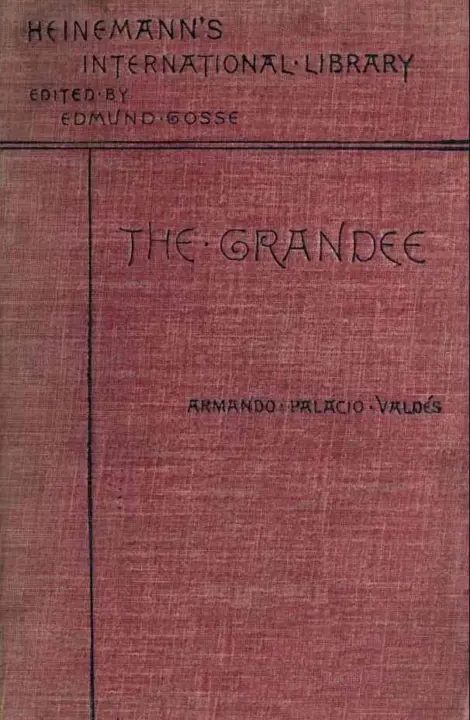
THE CLASSIC COLLECTION · 1894
"The Grandee" by Armando Palacio Valdés is a novel written in the late 19th century. The story is set in a provincial city in Spain, focusing on the life and dynamics within a noble household, particularly that of the protagonist Don Pedro Quiñones de Leon, an aging grandee struggling with his sense of dignity in a changing society. The narrative explores themes of societal hierarchy, pride, and personal turmoil against the backdrop of local customs and the intricacies of family relationships. At the start of "The Grandee," the atmospheric setting of Lancia is established through a wintry night, with elements that reflect the town's old-world charm and the quirks of its inhabitants. We meet Don Pedro Quiñones, who navigates the challenges of his aristocratic status despite facing paralysis and the burden of maintaining respectability. His interactions with guests during a social gathering reveal a tapestry of relationships intertwined with humor, social expectations, and unfulfilled desires, setting the stage for deeper explorations of the characters' motivations and conflicts as the story unfolds. The text hints at underlying tensions, notably regarding Don Pedro's strained marriage to Amalia, and foreshadows the complexities and darker themes that will be explored further in the narrative.
Introduction adapted from the source catalogue; source summaries may be automatically generated.
Free to read · English · 95,134 words · No account needed
MAKE TIME FOR A GOOD BOOK
On by default. Untick to stop anonymous reading totals. Each page counts after 10 seconds in view. How this works.
Anonymous counting is on unless you have switched it off.
In these moments of frenzy she fostered ideas of revenge. She wrote several anonymous letters to Don Pedro, but none arrived at their destination, for she tore them up before posting them, because the pride, that was one of her characteristics, revolted against such a low proceeding; and they were destroyed with bitter tears of anger. After tearing up the last that she wrote she had reason to be glad of her course of action, for she casually learnt that very evening, that no letter reached Quinones without first passing through the hands of his wife.
Sometimes, unable to bear it any longer, she would throw herself into an armchair where she remained for a long time with her eyes fixed, in deep and miserable meditation. At these moments she was a prey to sudden fits of tenderness, she confessed without shame, nay even with voluptuous enjoyment, the love that she felt; she pardoned Luis with all her heart, and vowed to love him all her life long in silence and never to belong to another man. As days went by this feeling increased and took the form of a morbid, irrational desire. The excitement of her feelings, which took possession of her whole being, combined with the bitterness of wounded self-love, fostered this same desire. There was little wanting when she saw Luis at her side to make her open her heart to him and confess the passion that consumed her.
Hardly conscious of what she was doing, Fernanda sought for her ex-fiance all over the place. Everything interested her; the wood, the house, the servants, even the animals grazing in the meadows were accorded a sympathetic glance. How pleasant even that tumble-down house corroded with damp and mice seemed to her! After wandering for some time through the most solitary parts of the wood, she absently made her way to the meadows; there she went along until she came to a certain spot where there were some workmen making a ditch to drain the land. She knew without inquiring that the count after inspecting the work for some time had gone off. She waited for a little while to divert attention, and then she went on with a slow step dragging her parasol along the ground like one who is uncertain where to go next. In fact she did not know, but that was not for want of an object, but because she knew not where the count was. A cruel idea floated in her brain without taking form--she fancied that Luis at that moment might be alone with Amalia. By degrees, as she walked through the fields, the idea gained force, and the stronger it grew, the more her heart was filled with spite and anger. Why? was she not perfectly aware of their criminal relations? Yes, and the more angry the idea made her, the more determined she was not to stand it, for she thought she had a right to prevent their being together. Without having a clear notion of what she was about, she quickened her step. Her nerves became more and more agitated; by the time she arrived at the courtyard she was perfectly certain that the adulterers were together, and alone. She entered the house, and like one who visits it from curiosity she explored it all, even to the most remote little rooms. But she did not find them, and the fact of not finding Amalia anywhere confirmed her suspicions. Tired with hunting about, and excited with nervous anxiety, she went again into the open air. She avoided people who might detain her and repaired to the garden, and directly she put her foot there she was imbued with fresh hope of finding them. That verdant spot where the little trees left to their own sweet will, were so interlaced as to form an impenetrable mass was a perfect place for love passages. She went cautiously and noiselessly along the paths which had almost disappeared under their carpets of grass, intersected in many places by brambles and branches of trees. Sometimes a little clump of irises obstructed her path and she was obliged to jump over it, or else a rhododendron, stretching its boughs to embrace a camellia in front, had formed a bower so low that she was obliged to bend a good deal to get along. She thought she heard the sound of voices a little distance off. She stood motionless and waited for some minutes, and then she turned to listen, and directed her steps to the spot whence it came.
Your reading position is saved on this browser. Take it to another device with a library code. Reading pages adapt to text, rather than matching a printed edition.
Armando Palacio Valdés

Armando Palacio Valdés

Armando Palacio Valdés

Armando Palacio Valdés
BEHIND THE BOOK
This eBook is for the use of anyone anywhere in the United States and most other parts of the world at no cost and with almost no restrictions whatsoever. You may copy it, give it away or re-use it under the terms of the Project Gutenberg License included with this eBook or online at www.gutenberg.org. If you are not located in the United States, you will have to check the laws of the country where you are located before using this eBook. Read the source licence.
The original source file, including credits and licence, is retained by this library. Request an original-format copy at no charge. Please include the book title and Project Gutenberg identifier #31056.
KEEP YOUR CURIOSITY GOING
Coulson Kernahan

Maurice Baring
Frances Wright
Cécile Tormay

Frederic Jesup Stimson

W. H. P. (William Henry Pope) Jarvis