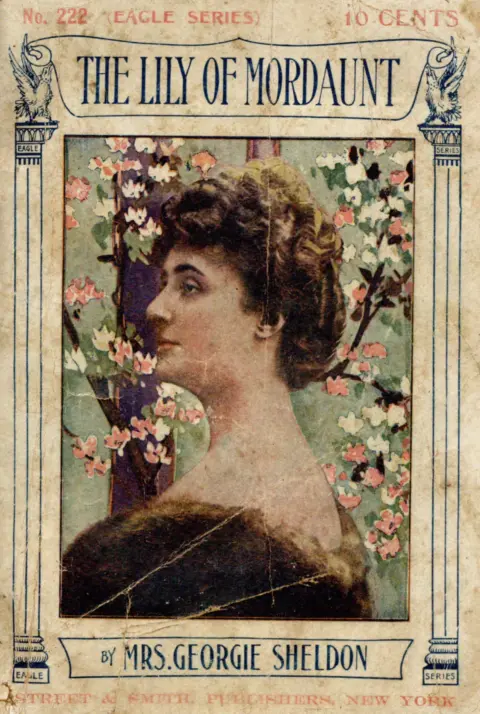
The lily of Mordaunt
Georgie, Mrs. Sheldon
THE CLASSIC COLLECTION · 1896
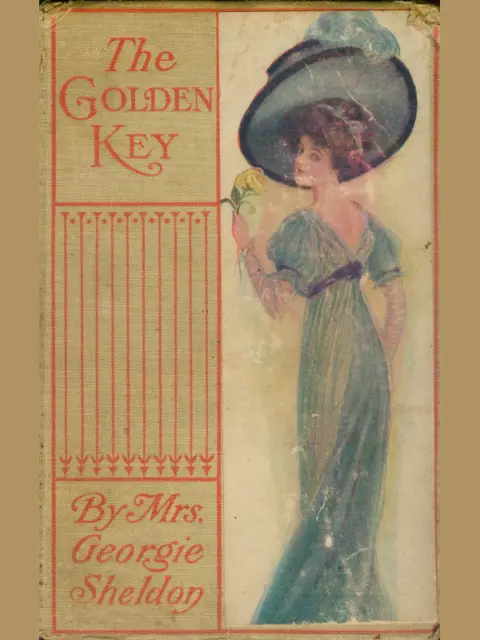
"The Golden Key; Or, A Heart's Silent Worship" by Mrs. Georgie Sheldon is a novel likely written during the late 19th century. The story focuses on the poignant themes of love, loss, and deception surrounding the lives of its primary characters, including Alice Brewster, her husband Adam, and a nurse named Nancy Porter. The novel's opening sets a tone of drama as these characters grapple with emotional turmoil stemming from the loss of a child and an ensuing secret surrounding an abandoned baby. At the start of the book, the reader is introduced to Alice Brewster, who is devastated by the death of her infant daughter shortly after birth. While Alice struggles with her grief, her sister Nancy, a skilled nurse, is determined to support her. The narrative takes a turn when Nancy discovers an abandoned baby with a note attached to her blanket, appealing for someone to care for the child. Overwhelmed by the circumstances and driven by her concern for Alice, Nancy decides to adopt the abandoned baby as her own, hiding the truth from Alice and Adam Brewster. This act of secrecy sets the stage for unfolding drama and complications as the story progresses.
Introduction adapted from the source catalogue; source summaries may be automatically generated.
Free to read · English · 63,755 words · No account needed
MAKE TIME FOR A GOOD BOOK
On by default. Untick to stop anonymous reading totals. Each page counts after 10 seconds in view. How this works.
Anonymous counting is on unless you have switched it off.
“Do you think it would have been possible for Mr. Winchester to get possession of your father’s keys without his knowledge?” Gerald’s counsel inquired, a ring of triumph in his tones.
“Certainly not,” Allison replied confidently; “papa always kept them in a small drawer of a table in his room. He was sitting close beside it when I entered the room, and Mr. Winchester was on the opposite side of the table, and there is no drawer on that side.”
There was a little burst of applause at this latter statement,
which plainly betrayed the sympathy of those who had listened to
the evidence.
Mr. Arnold said he had no further questions to ask, and John Hubbard refusing, with frigid dignity, to catechise his ward, Allison was allowed to leave the stand.
The judge then remarked that, in view of the evidence just given, the aspect of the whole case was reversed, and it was self-evident that the prisoner was innocent of all wrong. The jury announced a verdict of acquittal without leaving their seats.
The moment the court was adjourned, and before her guardian could intercept her, she darted to Gerald’s side and cordially shook hands with him, after which he formally introduced her to his lawyer, who commended her most heartily for the step she had taken, and the timely aid she had given his client.
“Gerald,” she asked, with a look of reproach, “why didn’t you call upon me as a witness?”
He flushed at the question.
“I could not,” he replied, with evident embarrassment; “I could not endure the thought of your coming to such a place, and, besides, I did not know how much or how little you had heard of my conversation with Mr. Brewster.”
“But, at least, you might have let me know that you were in trouble,” Allison returned, with a flash of resentment, while hot tears of wounded feeling rushed to her eyes.
“I supposed, of course, you knew,” he faltered, flushing sensitively, “the newspapers were full of the affair.”
“But I didn’t see the papers.” Then, with a searching look into his face, she added: “If you believed I was aware of your trouble, you must have thought me very--very unfriendly and indifferent--not to send you some word of sympathy, nor come near you.”
Again Gerald flushed.
“I am afraid I haven’t been quite just to you,” he confessed.
“Well?” questioned the girl, somewhat sharply, as a hand was at that moment laid upon her arm, and she turned to find her guardian at her side.
“I have come to take you home,” he briefly remarked.
Your reading position is saved on this browser. Take it to another device with a library code. Reading pages adapt to text, rather than matching a printed edition.
Georgie, Mrs. Sheldon
Georgie, Mrs. Sheldon
Georgie, Mrs. Sheldon
Georgie, Mrs. Sheldon
BEHIND THE BOOK
This eBook is for the use of anyone anywhere in the United States and most other parts of the world at no cost and with almost no restrictions whatsoever. You may copy it, give it away or re-use it under the terms of the Project Gutenberg License included with this eBook or online at www.gutenberg.org. If you are not located in the United States, you will have to check the laws of the country where you are located before using this eBook. Read the source licence.
The original source file, including credits and licence, is retained by this library. Request an original-format copy at no charge. Please include the book title and Project Gutenberg identifier #50909.
KEEP YOUR CURIOSITY GOING
Coulson Kernahan

Maurice Baring
Frances Wright
Cécile Tormay

Frederic Jesup Stimson

W. H. P. (William Henry Pope) Jarvis