THE CLASSIC COLLECTION✦ToleranceCLASSIC FREE BOOKS
Tolerance
Hendrik Willem Van Loon
THE CLASSIC COLLECTION · 1916
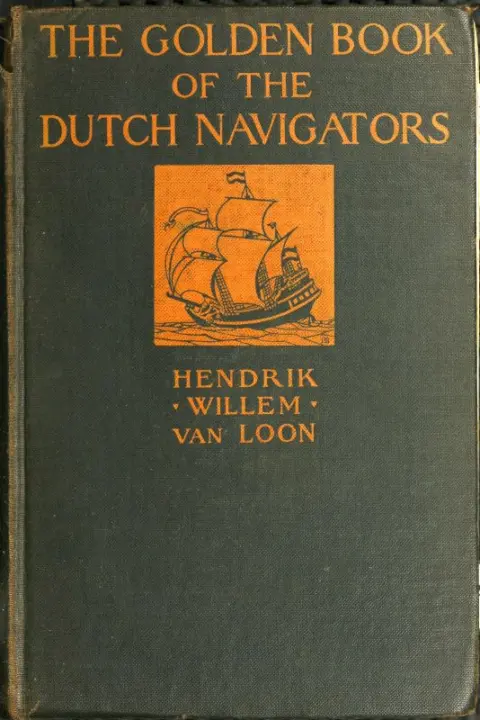
"The Golden Book of the Dutch Navigators" by Hendrik Willem van Loon is a historical account written in the early 20th century. This work explores the adventurous and often perilous voyages undertaken by Dutch explorers during the Age of Exploration, focusing on their contributions to maritime navigation and trade. The narrative covers various expeditions, highlighting the triumphs and tragedies faced by these navigators as they sought new trade routes to the East Indies and beyond. At the start of the book, the author sets the stage for the story by acknowledging the significant sacrifices made by early Dutch navigators, many of whom met tragic ends yet remained undeterred in their quests. The introduction discusses the historical backdrop of the Dutch struggle for independence and their eventual flourishing as a maritime power. The opening chapters introduce key figures like Jan Huygen van Linschoten, who ventured to Spain and eventually became a vital link for Dutch traders seeking access to the riches of the Indian seas. The narrative goes on to describe not only the reckless bravery of these men but also the socio-economic environment of the time, painting a vivid picture of the adventurous spirit that drove them into the unknown.
Introduction adapted from the source catalogue; source summaries may be automatically generated.
Free to read · English · 50,855 words · No account needed
MAKE TIME FOR A GOOD BOOK
On by default. Untick to stop anonymous reading totals. Each page counts after 10 seconds in view. How this works.
Anonymous counting is on unless you have switched it off.
The booty found in this small settlement had not been of great value. The expedition felt inclined to move toward a richer port. They did not have food enough for their prisoners, and fourteen of the nineteen Spaniards who were locked up in the hold were thrown overboard. This sounds very cruel, but it was the custom of the time that these two nations rarely gave each other quarter. Whosoever was made a prisoner was killed. The Spaniards started this practice in the middle of the sixteenth century because the Hollanders as heretics deserved no better fate. The Hollanders reciprocated. On this distant island of the Pacific both parties obeyed the unwritten law. The Hollanders drowned their prisoners. When Spanish reinforcements reached Chiloe and retook the fort, they killed the Dutch garrison, for such was the custom of the time.
The Trouwe after this famous exploit was in a difficult position, all alone in the heart of the Pacific, with enemies on every side and a bad conscience. The idea of attacking some other Spanish harbor in Chile and Peru was given up as too dangerous. Near the harbor of Truxillo a Spanish ship loaded with grain and wine was captured, and provided with new supplies, De Cordes decided to risk the trip across the Pacific. On the third of January, 1601, he reached Ternate in the Indies, where Van Noort had been the year before, and where they found a Dutch settlement commanded by that same Van der Does whose account of Houtman's first trip to India we have given in the fourth chapter of this little book. Van der Does warned De Cordes not to visit the next island of Tidore. There were only twenty-four Hollanders left on board the Trouwe. It was too dangerous to visit an unfriendly Portuguese colony with a damaged ship and so small a crew. But De Cordes, who seems to have been a reckless sort of person, went to Tidore all the same. Much to his surprise he was very cordially received by the commander of the Portuguese garrison and the governor of the town. They both assured him that he might trade in their colony as much as he wished. If, however, he would let them know what he wished to buy, they would give orders that provisions and a cargo of spice should be got ready for their distinguished visitors. They invited him to come on shore the next morning. They wanted to make him a present of an ox for the benefit of his hungry crew and entertain him personally, and, then after a few more days further arrangements for the purpose of a mutually profitable trade might be made. The next morning the Dutch captain and six men went ashore to get their ox. The ship itself was left in the care of the first mate. Soon a Portuguese boat rowed out to the Trouwe and asked the mate to come on shore, too, and have breakfast with his Portuguese colleagues. The mate was suspicious and refused the invitation. He suggested that the Portuguese officer come on board the Trouwe and breakfast with him. But the officer said that he was too heavy a man to climb on board so high a ship, and he did not care to take this exercise so early in the morning. So the mate left the ship, together with the ship's carpenter, to see what a Portuguese kitchen served for breakfast. The moment the two men landed a loud outcry was heard from the Trouwe. The mate at once jumped into the sea and looked for his comrade. The carpenter was dead and his head, hacked from his body, was used as a football by the Portuguese. The mate swam out to the ship, but when he reached it he found that the Portuguese had jumped on board the moment he had left for his breakfast party. He swam back to the shore, was made a prisoner, and was locked up in the fortress. With six other men he escaped the general murder which had taken place as soon as he landed. De Cordes himself had been killed with a dagger. The six men who had accompanied him on shore had heard the noise of the attack upon the Trouwe and had rowed away from shore in a boat, trying to get back to their vessel. But the Trouwe was already in the hands of the Portuguese, and since the Hollanders had no arms, they surrendered after the Portuguese had given their oath not to hurt them and to spare their lives. They were taken on board a Portuguese ship. As soon as they were on deck they had been placed in a row, and a soldier had been ordered to take his sword and hack their heads off. He had killed four men when the other two managed to jump overboard. One of these was drowned. The other was fished out of the water and was sent to the fortress with the mate and five sailors who had put up such a desperate fight on board the Trouwe that the Portuguese had promised to treat them with clemency if only they would surrender.
Your reading position is saved on this browser. Take it to another device with a library code. Reading pages adapt to text, rather than matching a printed edition.
Hendrik Willem Van Loon
Hendrik Willem Van Loon
Hendrik Willem Van Loon
Hendrik Willem Van Loon
BEHIND THE BOOK
This eBook is for the use of anyone anywhere in the United States and most other parts of the world at no cost and with almost no restrictions whatsoever. You may copy it, give it away or re-use it under the terms of the Project Gutenberg License included with this eBook or online at www.gutenberg.org. If you are not located in the United States, you will have to check the laws of the country where you are located before using this eBook. Read the source licence.
The original source file, including credits and licence, is retained by this library. Request an original-format copy at no charge. Please include the book title and Project Gutenberg identifier #45799.
KEEP YOUR CURIOSITY GOING
Wilfrid Scawen Blunt
Wilfrid Scawen Blunt

E. W. (Edgar Watson) Howe
Cécile Tormay

Moritz Busch
John L. Ransom