THE CLASSIC COLLECTION✦ToleranceCLASSIC FREE BOOKS
Tolerance
Hendrik Willem Van Loon
THE CLASSIC COLLECTION · 1916
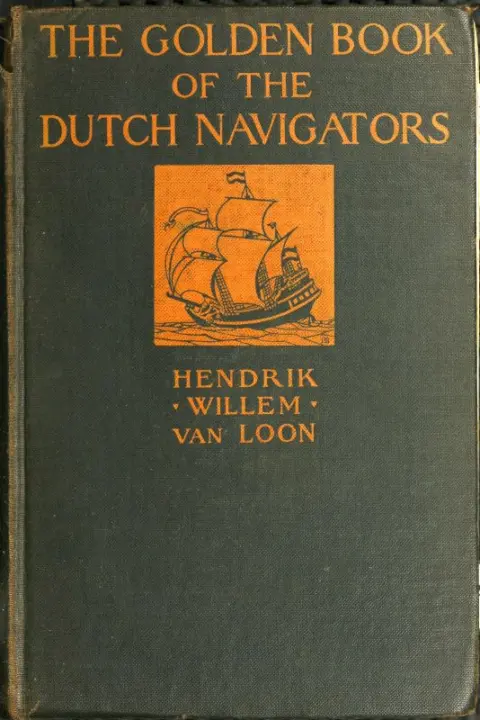
"The Golden Book of the Dutch Navigators" by Hendrik Willem van Loon is a historical account written in the early 20th century. This work explores the adventurous and often perilous voyages undertaken by Dutch explorers during the Age of Exploration, focusing on their contributions to maritime navigation and trade. The narrative covers various expeditions, highlighting the triumphs and tragedies faced by these navigators as they sought new trade routes to the East Indies and beyond. At the start of the book, the author sets the stage for the story by acknowledging the significant sacrifices made by early Dutch navigators, many of whom met tragic ends yet remained undeterred in their quests. The introduction discusses the historical backdrop of the Dutch struggle for independence and their eventual flourishing as a maritime power. The opening chapters introduce key figures like Jan Huygen van Linschoten, who ventured to Spain and eventually became a vital link for Dutch traders seeking access to the riches of the Indian seas. The narrative goes on to describe not only the reckless bravery of these men but also the socio-economic environment of the time, painting a vivid picture of the adventurous spirit that drove them into the unknown.
Introduction adapted from the source catalogue; source summaries may be automatically generated.
Free to read · English · 50,855 words · No account needed
MAKE TIME FOR A GOOD BOOK
On by default. Untick to stop anonymous reading totals. Each page counts after 10 seconds in view. How this works.
Anonymous counting is on unless you have switched it off.
In July of the year 1600 the Geloof reached the English Channel, and on the thirteenth of that month she entered the mouth of the Maas. There, within sight of home, one more sailor died. He was number sixty-nine. Only thirty-six men came back to Rotterdam. They were ill and had a story to tell of constant hardships and of terrible disappointments. The great expedition of the two courageous merchants and all their investments were a complete loss. None of the other ships ever came back to Holland. But year after year stragglers from the other four ships reached home and told of the fate of the other three hundred sailors who had taken part in the unfortunate voyage. Some of these reports have come down to us, and we are able to give a short account of the adventures of each ship after that day early in the year 1600 when the Pacific storms had separated them from one another.
First of all there was the Trouwe, which had remained faithful to De Weert after the other three vessels had disappeared. The wind had blown the Trouwe out of the strait into the Pacific Ocean. For many weeks her captain had lost all track of his whereabouts. Through sheer luck he had at last reached a coast which he supposed to be the continent of South America and after a search of a few days he had found some natives who were friendly. The natives told the Hollanders that this was not the American continent, but an island called Chiloe, situated a few miles off the Chilean coast. The Dutch ships had been made welcome. They were invited to stay in the harbor as long as they wished. Meanwhile the natives told their captain about a plan of their own which undoubtedly would please him. It seemed that the inhabitants of Chiloe had good reason to hate the Spaniards, who were mighty on the near-by continent and who recently had built a strong fort on the island, from which they exercised their tyrannical rule over all the natives and made them pay very heavy tribute. Perhaps, so the natives argued, the Hollanders could be induced to give their assistance in a campaign against the Spaniard. De Cordes, who commanded the Trouwe, was a Catholic, but he was quite ready to offer his services in so good a cause and was delighted to start a little private war of his own upon the Spaniards. He made ready to sail for that part of the coast where, according to his informants, the Spaniard had fortified himself. Meanwhile the natives were to proceed on shore toward the same Spanish fortress. An attack was to follow simultaneously from the land and the sea. On the way to the fortress all Spanish houses and plantations, storerooms and churches, were burned down and at last the fortress itself was reached. The commander of the fortress, however, had heard of the approach of this handful of Hollanders, and he sent them an insulting message telling them that he needed a new stable boy, anyway, and would bestow this high office upon the Dutch captain as soon as he could have the necessary arrangements made. But when the Dutch captain actually appeared upon the scene with a well-armed vessel and a band of native auxiliaries and informed the Spaniard that the new stable boy had come to take possession of his domain, the commander changed his mind and offered the Hollanders whatever they wished if they would only leave him alone. De Cordes, however, attacked the fort at once. He took it, and the garrison was locked up in the church as prisoners. Then the Chilean natives in their rage attacked the church and killed several of the Spaniards. This was not what De Cordes wanted to be done. He did not mind if a Hollander killed a Spaniard, but it did not look well for one white man to allow a native to kill another while he himself stood by. Therefore he returned their arms to the Spaniards and together they then drove the natives away. When the natives, however, told the Dutch sailors that the fort contained hidden treasures of which the Spaniards had made no mention, the former allies attacked each other for the second time, and the Spanish prisoners were sent on board the Dutch ship. The story which we possess of this episode of the voyage is not very clear. It was written many years later by one of the few sailors who came back to Holland. His account of these adventures was so badly printed and the spelling of the original pamphlet was so extraordinary that a second scribe was later hired to turn the booklet into more or less readable Dutch. The present translation has been made from this second version. Everything is a bit mixed, and it is not easy to find out what really happened. A common and ignorant sailor of the year 1600 was not very different from the same sort of fellow who at present is fighting in the European war. They both remember events in chunks, so to speak. They have very vivid impressions of a few occurrences, but they have forgotten other things of more importance because at the time these did not strike their unobservant brain as being of any special interest. But we have no other account of the adventures of the Trouwe. We must use this information such as it is.
Your reading position is saved on this browser. Take it to another device with a library code. Reading pages adapt to text, rather than matching a printed edition.
Hendrik Willem Van Loon
Hendrik Willem Van Loon
Hendrik Willem Van Loon
Hendrik Willem Van Loon
BEHIND THE BOOK
This eBook is for the use of anyone anywhere in the United States and most other parts of the world at no cost and with almost no restrictions whatsoever. You may copy it, give it away or re-use it under the terms of the Project Gutenberg License included with this eBook or online at www.gutenberg.org. If you are not located in the United States, you will have to check the laws of the country where you are located before using this eBook. Read the source licence.
The original source file, including credits and licence, is retained by this library. Request an original-format copy at no charge. Please include the book title and Project Gutenberg identifier #45799.
KEEP YOUR CURIOSITY GOING
Wilfrid Scawen Blunt
Wilfrid Scawen Blunt

E. W. (Edgar Watson) Howe
Cécile Tormay

Moritz Busch
John L. Ransom