THE CLASSIC COLLECTION✦An outlaw’s diary: the CommuneCLASSIC FREE BOOKS
An outlaw’s diary: the Commune
Cécile Tormay
THE CLASSIC COLLECTION · 1915
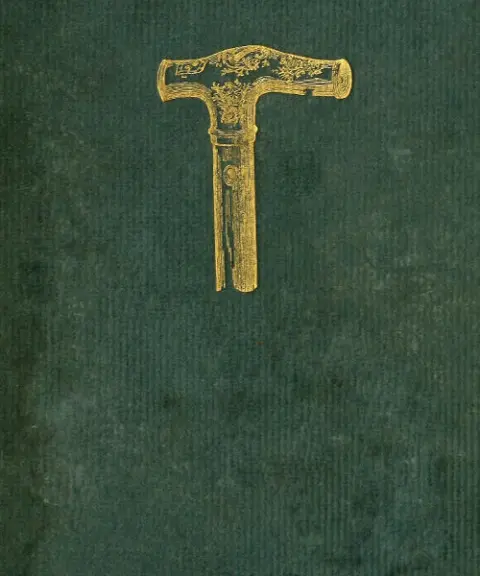
"The Gold-Headed Cane" by William Macmichael is a medical biography written in the early 19th century. This work relays the historical significance of the titular cane, which has been passed down through notable physicians, starting with Dr. John Radcliffe. Through a narrative framed as the cane’s autobiography, it recounts the lives, practices, and contributions of various eminent doctors, including Radcliffe and Dr. Mead, thereby offering a glimpse into the evolution of contemporary medical practices and the personalities that shaped them. At the start of the book, the cane reflects on its new resting place in the Library of the College of Physicians, where it laments its transition from a significant role in medical practice to a mere artifact. The opening chapter introduces Dr. Radcliffe, its first possessor, detailing his interactions with patients, particularly King William III, and illustrating the blend of empirical practice and the societal customs of the late 17th century. Through these recountings, readers gain insights into not only the medical knowledge of the period but also the personal traits and experiences of the physicians, setting the tone for a rich narrative about the characters and their contributions to medicine.
Introduction adapted from the source catalogue; source summaries may be automatically generated.
Free to read · English · 49,944 words · No account needed
MAKE TIME FOR A GOOD BOOK
On by default. Untick to stop anonymous reading totals. Each page counts after 10 seconds in view. How this works.
Anonymous counting is on unless you have switched it off.
When the Radcliffe Library was opened at Oxford, which was done April 13th, 1749, with great solemnity, the degree of Doctor of Medicine was conferred by diploma upon Dr. William Pitcairn; and the College of Physicians hastened to adopt him, in the following year, into their corporate body. He was descended from the family of Dr. Archibald Pitcairn, celebrated as the founder of the mechanical sect of medicine, who, having followed the fortunes of the exiled James, was, for a short time, Professor of the Practice of Physic at the University of Leyden. Boerhaave and Mead had been fellow pupils of this distinguished man, and Dr. Wm. Pitcairn, into whose hands I now was delivered, had studied under Boerhaave; afterwards he had travelled with the Duke of Hamilton (to whose family he was related), though not in a medical capacity. His brother, a Major in the army, had been killed at the battle of Bunker’s Hill, and as there was not in the world a more excellent or benevolent character than my present master, he adopted his orphan children, and always acted towards them with the affection and solicitude of a parent. He was a man of very agreeable manners, and his society was much sought after.--Among the many occasions on which I attended him to the houses of his professional brethren, I remember once particularly, when in company with his nephew, then a very young man (afterwards Dr. David Pitcairn), we called upon Dr. Richard Warren. We were received with the greatest kindness and alacrity, the Doctor showing my master that respectful attention which, without checking the familiar tone of friendly intercourse, is due and agreeable to superiors in age. During the lively and entertaining conversation which ensued, Dr. Pitcairn, in introducing his nephew, expressed himself in these words:--“Dr. Warren, my nephew, whom I present to you, received his early education at Glasgow, but afterwards I took him home, and kept him here in London, under my own eye for a short time, endeavouring to give him some of my peculiar views of practice. He is now just returned from Edinburgh, where he has been under the tuition of my countryman, Dr. Cullen, whose clinical clerk he has been for a twelvemonth. Surely you will think him a youth of promise in his profession when I inform you, that in the case of the son of that great master of physic, which the father thought desperate, he took a hint from what he had learned in London, and advised a larger dose of laudanum than is usually made use of, which restored the child of his preceptor and friend. My currus triumphalis opii, as some of my brethren have been pleased to call my practice, has thus travelled northwards to my own country, and I rejoice that it has reached the door of so amiable a man and excellent practitioner as Dr. Cullen.” So strong a recommendation was not without its effect, and the expressions of friendship with which Dr. Warren received the young student of physic were afterwards amply fulfilled by the real assistance and countenance which he gave him in the commencement of his professional career. On our return from Sackville Street, where Dr. Warren lived, to our own residence, in Warwick Court, Warwick Lane, when I had been carefully replaced in the carriage--“David,” said my master to his nephew, “the Physician whose house we have left is a remarkable man, and well worthy your observation. He has risen rapidly to the top of his profession, and his abilities justify his success. You must have remarked the liveliness, distinctness, and accuracy of his mind, and the felicity of expression with which he explains himself, exhibiting at once a clearness of comprehension and a depth of knowledge that are very rarely to be met with. He has certainly had some considerable advantages in the beginning of his professional life, was early admitted into the best society, and is the intimate friend of the minister, Lord North, who is confessedly the most agreeable man of our day. You see how kindly he has received you; and as I hope, nay, fully expect, that you will become intimately acquainted with him, I think you will like to know all about him. His father was the Rev. Dr. Richard Warren, Archdeacon of Suffolk and Rector of Cavendish, in the same county; a divine of considerable eminence, and one of those who entered into the controversy upon the Sacrament against Bishop Hoadley. He was also editor of the Greek Commentary of Hierocles upon the golden verses of Pythagoras. My friend, the Doctor, was the third son, and was born at Cavendish, in December, 1731: he received the rudiments of his education at the public school at Bury St. Edmunds, in Suffolk; from whence in the year 1748, immediately upon his father’s death, he removed to Jesus College, Cambridge. At this time he had little but his industry and natural talents to support him, aided by the reputation of being the son of a clergyman of ability. How far this served him, however, in the beginning of life may be doubted, for the low church party prevailed at that time in the University with such violence, as not to dispose the persons then in authority to look with an eye of kindness upon the son of an antagonist of Hoadley. In due time he took the degree of A. B., and his name appears fourth in the list of wranglers of that year. I am not much acquainted with the forms of these English Universities, as I have never resided at either of them; but I have been given to understand, that if fair justice had been done my friend, he ought to have been placed even higher; it is certain, however, that he obtained the prize granted to the middle Bachelors of Arts for Latin prose composition, and the following year got the prize for the senior Bachelors. Being already elected Fellow of his College, the choice of a profession presented itself to his mind. To pursue the steps of his father, who had been like himself a Fellow of Jesus College, was perhaps the most obvious; but he had two elder brothers already in the church, which indeed might be considered his family profession, as his ancestors had followed it from the time of Queen Elizabeth. His own inclination, as I have often heard him say, would have led him to the law, but the res angusta domi was an invincible obstacle, and accident at length threw him upon the study of physic.
Your reading position is saved on this browser. Take it to another device with a library code. Reading pages adapt to text, rather than matching a printed edition.
BEHIND THE BOOK
This eBook is for the use of anyone anywhere in the United States and most other parts of the world at no cost and with almost no restrictions whatsoever. You may copy it, give it away or re-use it under the terms of the Project Gutenberg License included with this eBook or online at www.gutenberg.org. If you are not located in the United States, you will have to check the laws of the country where you are located before using this eBook. Read the source licence.
The original source file, including credits and licence, is retained by this library. Request an original-format copy at no charge. Please include the book title and Project Gutenberg identifier #53557.
KEEP YOUR CURIOSITY GOING
Cécile Tormay

Moritz Busch
John L. Ransom
Frances Wright
Cécile Tormay

Mabel Potter Daggett