THE CLASSIC COLLECTION✦An outlaw’s diary: the CommuneCLASSIC FREE BOOKS
An outlaw’s diary: the Commune
Cécile Tormay
THE CLASSIC COLLECTION · 1915
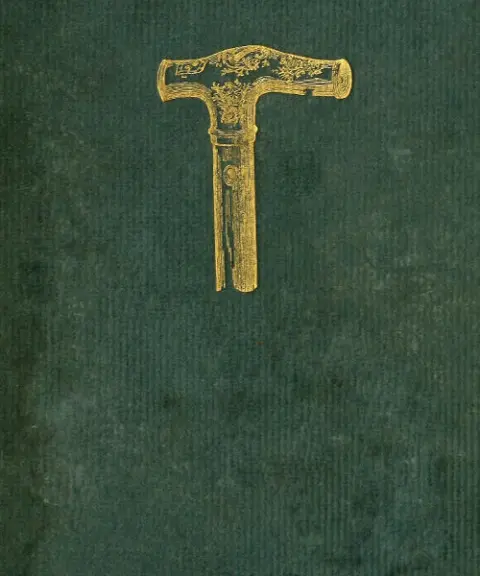
"The Gold-Headed Cane" by William Macmichael is a medical biography written in the early 19th century. This work relays the historical significance of the titular cane, which has been passed down through notable physicians, starting with Dr. John Radcliffe. Through a narrative framed as the cane’s autobiography, it recounts the lives, practices, and contributions of various eminent doctors, including Radcliffe and Dr. Mead, thereby offering a glimpse into the evolution of contemporary medical practices and the personalities that shaped them. At the start of the book, the cane reflects on its new resting place in the Library of the College of Physicians, where it laments its transition from a significant role in medical practice to a mere artifact. The opening chapter introduces Dr. Radcliffe, its first possessor, detailing his interactions with patients, particularly King William III, and illustrating the blend of empirical practice and the societal customs of the late 17th century. Through these recountings, readers gain insights into not only the medical knowledge of the period but also the personal traits and experiences of the physicians, setting the tone for a rich narrative about the characters and their contributions to medicine.
Introduction adapted from the source catalogue; source summaries may be automatically generated.
Free to read · English · 49,944 words · No account needed
MAKE TIME FOR A GOOD BOOK
On by default. Untick to stop anonymous reading totals. Each page counts after 10 seconds in view. How this works.
Anonymous counting is on unless you have switched it off.
With the account of Baillie and the state of physic in his time the Cane ceased its autobiography and regarded its honorable career as closed. Dr. Munk, in the third edition, published in 1884, wrote a continuation of the narrative in very good imitation of Macmichael’s style, which brought the story down to the year 1871.
The publication of a new edition of a medical and literary classic such as the Gold-Headed Cane requires no apologia. The three previous editions are now all of them so difficult to obtain, the book so eagerly sought for, and its perusal productive of so much profit and pleasure, that the demand is obvious.
The medical profession in Great Britain and America owe the present undertaking entirely to the unselfish zeal of the Publisher, whose love and admiration for the merits of the Cane prompted him to undertake a venture from which in a commercial point of view no profit can be expected.
The present edition follows the text and illustrations contained in the second edition, which was chosen for reprinting because it was revised, added to and published by the author himself. The first edition contained 179 pages. To the second edition Dr. Macmichael added 88 pages of text, which contain much of the very best of his work. The third edition contained no illustrations, and although the continuation of the narrative is most interesting, it is not Macmichael’s and therefore not the Cane’s.
It is to be hoped that with the recent great stimulation of interest in medical history which the profession in this country has shown this little volume will achieve the same popularity as its predecessors and add more lustre to the glory of the Cane.
Philadelphia, March, 1915.
“A Journey from Moscow to Constantinople in the year 1817-18.”
4to, London, 1819.
“A New View of the Infection of Scarlet Fever; illustrated by Remarks on Other Contagious Disorders,” 8vo, vi, 100 pp. London, T. and G. Underwood, 1822.
“A Brief Sketch of the Progress of Opinion upon the Subject of Contagion, with Some Remarks on Quarantine.” 8vo, London, 1825.
“The Gold-Headed Cane,” 179 pp., 8vo, London, J. Murray, 1827.
“The Gold-Headed Cane,” 267 pp., 8vo, London, J. Murray, 1828.
“Is the Cholera Spasmodica of India a Contagious Disease?” The question considered in a letter to Sir Henry Halford, Bart., M.D. 34 pp., 8vo, London, J. Murray, 1831. A French translation of this pamphlet was published in Paris in 1831.
“Some Remarks on Dropsy; with a Narrative of the Last Illness of H. R. H. the Duke of York”; read at the Royal College of Physicians, May 25, 1835. 18 pp., 8vo, London, J. Murray, 1835.
Your reading position is saved on this browser. Take it to another device with a library code. Reading pages adapt to text, rather than matching a printed edition.
BEHIND THE BOOK
This eBook is for the use of anyone anywhere in the United States and most other parts of the world at no cost and with almost no restrictions whatsoever. You may copy it, give it away or re-use it under the terms of the Project Gutenberg License included with this eBook or online at www.gutenberg.org. If you are not located in the United States, you will have to check the laws of the country where you are located before using this eBook. Read the source licence.
The original source file, including credits and licence, is retained by this library. Request an original-format copy at no charge. Please include the book title and Project Gutenberg identifier #53557.
KEEP YOUR CURIOSITY GOING
Cécile Tormay

Moritz Busch
John L. Ransom
Frances Wright
Cécile Tormay

Mabel Potter Daggett