THE CLASSIC COLLECTION✦An outlaw’s diary: the CommuneCLASSIC FREE BOOKS
An outlaw’s diary: the Commune
Cécile Tormay
THE CLASSIC COLLECTION · 1915
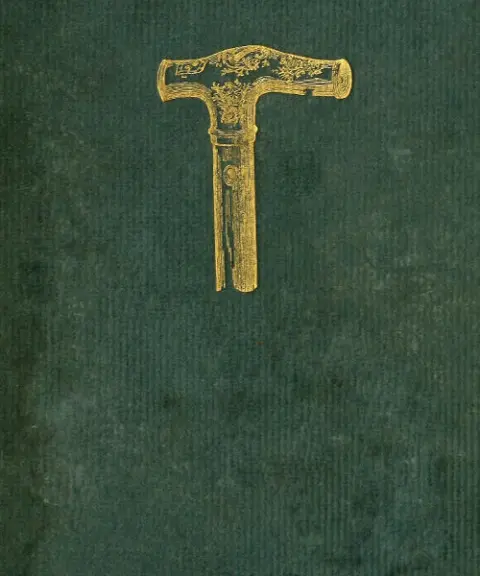
"The Gold-Headed Cane" by William Macmichael is a medical biography written in the early 19th century. This work relays the historical significance of the titular cane, which has been passed down through notable physicians, starting with Dr. John Radcliffe. Through a narrative framed as the cane’s autobiography, it recounts the lives, practices, and contributions of various eminent doctors, including Radcliffe and Dr. Mead, thereby offering a glimpse into the evolution of contemporary medical practices and the personalities that shaped them. At the start of the book, the cane reflects on its new resting place in the Library of the College of Physicians, where it laments its transition from a significant role in medical practice to a mere artifact. The opening chapter introduces Dr. Radcliffe, its first possessor, detailing his interactions with patients, particularly King William III, and illustrating the blend of empirical practice and the societal customs of the late 17th century. Through these recountings, readers gain insights into not only the medical knowledge of the period but also the personal traits and experiences of the physicians, setting the tone for a rich narrative about the characters and their contributions to medicine.
Introduction adapted from the source catalogue; source summaries may be automatically generated.
Free to read · English · 49,944 words · No account needed
MAKE TIME FOR A GOOD BOOK
On by default. Untick to stop anonymous reading totals. Each page counts after 10 seconds in view. How this works.
Anonymous counting is on unless you have switched it off.
On the 1st of August, 1714, died Queen Anne; an event memorable in the life of Radcliffe. The domestic physicians of Her Majesty, assisted by Dr. Mead, had applied various remedies without success. It was reported that the privy council, as well as the Queen, had given orders that my master should be present at the consultation, and that he excused himself under pretence of indisposition. The truth is, he was not in town at that time, but down at his country-house at Carshalton in Surrey, ill himself of the gout, which had seized his head and stomach. Yet notwithstanding this, the enemies of Radcliffe imputed the death of the Queen to his absence, and he was accordingly threatened with assassination. This unpopularity, undeserved as it was, made him keep his house, where, on the 4th of August, three days after the death of Her Majesty, Dr. Mead and his brother the lawyer came down to dine with him at two o’clock. In spite of the ill state of his health, the conversation of two such good friends afforded him much pleasure and satisfaction. After dinner, his wonted good humour returned, and, taking me in his hand, he presented me, with the following discourse, to Dr. Mead:--
“Though my life is, I dare say, pretty well known to you, yet I will mention some of the leading circumstances of it, from which perhaps you may be able to derive some instruction. Since I began the study of medicine, I have devoted myself chiefly to a careful examination of the most valuable modern treatises. In this particular I differ, I know, from you, who are a profound scholar; but my books have always been few, though I hope well chosen. When I was at the university, a few vials, a skeleton, and an herbal, chiefly formed my library. By following the dictates of common sense, while I practised at Oxford after taking my bachelor of medicine’s degree, instead of stoving up my patients who were ill of the small-pox, as was done by the Galenists of those days, I gave them air and cooling emulsions, and thus rescued more than a hundred from the grave. I have always endeavoured to discountenance the attempts of quacks and intermeddlers in physic, and by the help of Providence I have succeeded most wonderfully. My good Dr. Mead, you must consider this conversation as quite confidential, and if I mention any thing that has the air of boasting, you will reflect that I unbosom myself to a friend, and what I am about to say is for your encouragement. In 1686, I was made principal physician to Her Royal Highness the Princess Anne of Denmark, and soon after His late Majesty King William’s arrival in England, he was graciously pleased to make me an offer of being sworn one of his physicians in ordinary, with a salary of two hundred pounds per annum more than any other. At the same time he generously ordered me five hundred guineas out of the privy purse for the cures of M. Bentinck and M. Zulestein. Though I begged to be permitted to refuse the post, yet the King was so frequently ill of rheum and asthma, that, for the first eleven years of his reign, I gained, one year with another, more than six hundred guineas per annum by my attendance upon His Majesty. My practice rapidly increased, and I was even credibly informed that Dr. Gibbons, who lived in my neighbourhood, got more than one thousand pounds a year by patients whom I really had not time to see, and who had therefore recourse to him. As my wealth increased, you will naturally ask me why I never married: it does not become me to speak of my good or ill fortune in that line, especially now when I ought to call my thoughts from all such vanities, and when the decays of nature tell me that I have only a short time to live. That time is, I am afraid, barely sufficient to repent me of the idle hours which I have spent in riotous living; for I now feel, in the pain which afflicts my nerves, that I am a martyr to excess, and am afraid that I have been an abettor and encourager of intemperance in others. Though by an indiscreet speech I lost the good graces of the Princess Anne, yet His Majesty King William still continued to have confidence in my skill. As a proof of it, I may mention that in 1695 I was sent for to Namur, to cure Lord Albemarle. After a week’s residence in the camp abroad, His Majesty generously gave me an order on the Treasury for £1200; and his Lordship presented me with four hundred guineas, and this diamond ring, which I have always worn since. As to honours, I have always refused them: a baronetcy was offered me, but of what use would a title have been to me, who have no descendants to inherit it? I have always lived in a state of celibacy, and have uniformly replied to those who formerly urged me to marry some young gentlewoman to get heirs by, that truly I had an old one to take care of, who I intended should be my executrix, as Oxford[10] will learn after my death. For, thanks to Providence, I have been very successful, from the very beginning of my professional life; and I had not been settled a year in London, when I got twenty guineas a day by my practice: and even Dandridge, the apothecary whom I patronised, died, as I am informed, worth more than £50,000. The liberality of my patients enabled me to live and act in a generous manner. My fees were good: of which you may form some notion when I mention, that to go from Bloomsbury Square to Bow, I received five guineas. I do not tell this to you, my good friend, out of ostentation, but that it may serve as an encouragement to you to hear how the practice of physic has been remunerated.”
Your reading position is saved on this browser. Take it to another device with a library code. Reading pages adapt to text, rather than matching a printed edition.
BEHIND THE BOOK
This eBook is for the use of anyone anywhere in the United States and most other parts of the world at no cost and with almost no restrictions whatsoever. You may copy it, give it away or re-use it under the terms of the Project Gutenberg License included with this eBook or online at www.gutenberg.org. If you are not located in the United States, you will have to check the laws of the country where you are located before using this eBook. Read the source licence.
The original source file, including credits and licence, is retained by this library. Request an original-format copy at no charge. Please include the book title and Project Gutenberg identifier #53557.
KEEP YOUR CURIOSITY GOING
Cécile Tormay

Moritz Busch
John L. Ransom
Frances Wright
Cécile Tormay

Mabel Potter Daggett