THE CLASSIC COLLECTION✦An outlaw’s diary: the CommuneCLASSIC FREE BOOKS
An outlaw’s diary: the Commune
Cécile Tormay
THE CLASSIC COLLECTION · 1915
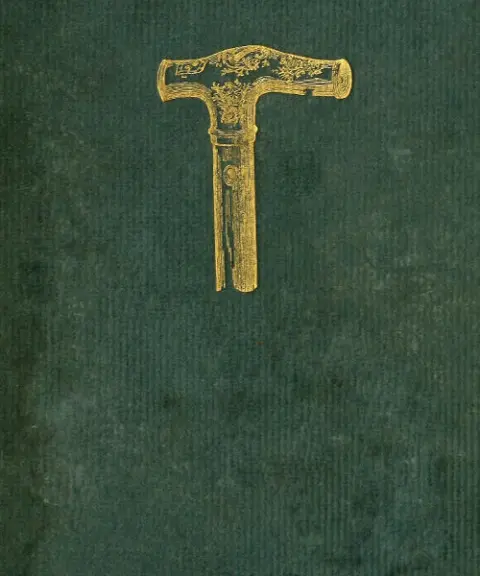
"The Gold-Headed Cane" by William Macmichael is a medical biography written in the early 19th century. This work relays the historical significance of the titular cane, which has been passed down through notable physicians, starting with Dr. John Radcliffe. Through a narrative framed as the cane’s autobiography, it recounts the lives, practices, and contributions of various eminent doctors, including Radcliffe and Dr. Mead, thereby offering a glimpse into the evolution of contemporary medical practices and the personalities that shaped them. At the start of the book, the cane reflects on its new resting place in the Library of the College of Physicians, where it laments its transition from a significant role in medical practice to a mere artifact. The opening chapter introduces Dr. Radcliffe, its first possessor, detailing his interactions with patients, particularly King William III, and illustrating the blend of empirical practice and the societal customs of the late 17th century. Through these recountings, readers gain insights into not only the medical knowledge of the period but also the personal traits and experiences of the physicians, setting the tone for a rich narrative about the characters and their contributions to medicine.
Introduction adapted from the source catalogue; source summaries may be automatically generated.
Free to read · English · 49,944 words · No account needed
MAKE TIME FOR A GOOD BOOK
On by default. Untick to stop anonymous reading totals. Each page counts after 10 seconds in view. How this works.
Anonymous counting is on unless you have switched it off.
[43] Evelyn relates that he dined with Dr. Whistler in the house which stands on the right hand as you cross the court, in 1683, and met on that occasion Sir Thomas Millington, the President. He represents them both as learned men, and speaks of Dr. Whistler, who was then Censor, as the most facetious man in nature, and says, that he was himself then consulted about the building of this Library.
[44] Marmor incisum epitaphium, in suo apud nos Musæo.--Hamey’s MS.
[45] Sloane Street and Hans Place are names still retained: the estate now belongs to Lord Cadogan. Charles, Baron Oakley, brother of the first Earl Cadogan, married Elizabeth, daughter and co-heiress of Sir Hans Sloane.
[46] It is by Rysbrach, and cost £280.
[47] It is related of this gentleman that he corresponded with seventy different persons, and yet that he was very punctual; for he never read a letter without having pen, ink, and paper ready to write the answer, by which means he prevented his letters from accumulating, and himself from being fatigued, by having many answers to write at the same time.
[48] The fate of Poland is well known. The destiny of the family bearing the name of Poniatowsky has been equally disastrous. At the battle of Leipsic, wounded, and while covering the retreat of the French army, in attempting to leap the narrow stream which flows past that city, Prince Joseph Poniatowsky fell, and was drowned. A simple monument is erected to him in a garden, on the bank of the river where he perished, with this inscription upon it:
Hic
In Undis Elystri
JOSEPHUS PONIATOWSKY
Princeps
Summus Exercitûs Polonorum Præfectus,
Imperii Gallici Mareschallus, Tribus Vulneribus
Letiferis acceptis, Ultimus ex Acie discedens
Dum receptum magni Gallorum Exercitus tuetur,
Vitâ Gloriæ et Patriæ sacratâ functus est
Die 19 Octobris, An. 1813,
Anno Ætatis Impleto 52.
Popularis Populari, Duci Miles,
Hoc Monumentum, Lachyrmis suis irrigatum,
Posuit
ALEXANDER ROZNIECKI.
[49] The benefit conferred upon his countrymen by this discovery was thus spoken of in an Harveian oration, delivered 1809:--Quòd si unum civem qui servasset, coronâ quondam civili esset donandus; quid ille meruit, qui totam provinciam in salutem vindicavit?
Amen Corner, The College of Physicians in, 117
Anatomy, 87
Anne, Queen, 27-48;
her illness, 48;
and death, 35;
Radcliffe blamed by the public, 36
Antimony, its use and disuse in medicine, 99
Arcanum Goddardianum, 203
Aristophanes, Hamey’s notes and criticisms on, 101
Ascites, tapping in, 70
Aselli, 92
Askew, Dr., 149;
a great traveller, 150;
a great book collector, 151;
makes bibliomania fashionable, 155
Baillie, Dr. Matthew, 225;
his appearance and manner, 229;
treatise on morbid anatomy, 226;
his practice, 230
Baker, Sir George, his profound attainments, 115;
his Latin pleasantries, 217, 218
Banks, Sir Joseph, P.R.S., 227
Baronet, the first medical, 54
Bibliotheca Askeviana, 157
Bidloo, Dr., 8-22
Boerhaave, 240
Your reading position is saved on this browser. Take it to another device with a library code. Reading pages adapt to text, rather than matching a printed edition.
BEHIND THE BOOK
This eBook is for the use of anyone anywhere in the United States and most other parts of the world at no cost and with almost no restrictions whatsoever. You may copy it, give it away or re-use it under the terms of the Project Gutenberg License included with this eBook or online at www.gutenberg.org. If you are not located in the United States, you will have to check the laws of the country where you are located before using this eBook. Read the source licence.
The original source file, including credits and licence, is retained by this library. Request an original-format copy at no charge. Please include the book title and Project Gutenberg identifier #53557.
KEEP YOUR CURIOSITY GOING
Cécile Tormay

Moritz Busch
John L. Ransom
Frances Wright
Cécile Tormay

Mabel Potter Daggett