THE CLASSIC COLLECTION✦An outlaw’s diary: the CommuneCLASSIC FREE BOOKS
An outlaw’s diary: the Commune
Cécile Tormay
THE CLASSIC COLLECTION · 1915
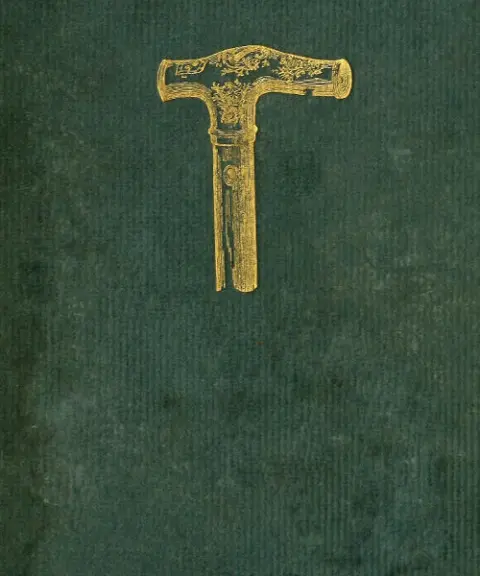
"The Gold-Headed Cane" by William Macmichael is a medical biography written in the early 19th century. This work relays the historical significance of the titular cane, which has been passed down through notable physicians, starting with Dr. John Radcliffe. Through a narrative framed as the cane’s autobiography, it recounts the lives, practices, and contributions of various eminent doctors, including Radcliffe and Dr. Mead, thereby offering a glimpse into the evolution of contemporary medical practices and the personalities that shaped them. At the start of the book, the cane reflects on its new resting place in the Library of the College of Physicians, where it laments its transition from a significant role in medical practice to a mere artifact. The opening chapter introduces Dr. Radcliffe, its first possessor, detailing his interactions with patients, particularly King William III, and illustrating the blend of empirical practice and the societal customs of the late 17th century. Through these recountings, readers gain insights into not only the medical knowledge of the period but also the personal traits and experiences of the physicians, setting the tone for a rich narrative about the characters and their contributions to medicine.
Introduction adapted from the source catalogue; source summaries may be automatically generated.
Free to read · English · 49,944 words · No account needed
MAKE TIME FOR A GOOD BOOK
On by default. Untick to stop anonymous reading totals. Each page counts after 10 seconds in view. How this works.
Anonymous counting is on unless you have switched it off.
[11] Bustorum aliquot Reliquiæ. There is a copy of this curious MS. now in the College Library: it was purchased at the sale of Lord Verney’s books, and presented to the College of Physicians by Dr. Munro, June 25, 1783.
[12] Afterwards inhabited by Sir John Rushout.
[13] At this time he weighed more than thirty stone, though he afterwards, by changing his habits, and living on milk and vegetables, reduced himself to less than half that weight.
[14] During his stay in Jamaica, a vast treasure which had been sunk in a Spanish galleon, about forty-five years before, somewhere near Hispaniola, or the Bahama Islands, was brought into the Downs. It had been weighed up by some gentlemen, who were at the charge of divers, &c. to the enriching them beyond all expectation. The Duke of Albemarle, as Governor of Jamaica, received for his share, about £90,000. A medal was struck on the occasion.
[15] This anticipation was actually realized not two years ago; for the mere agitation of the Plague question in the House of Commons excited the greatest alarm among the maritime nations of Europe, and for several months vessels sailing from England were put into quarantine at the different ports in the Mediterranean.
[16] I have heard that all these particulars are carefully recorded on the monument of this dropsical lady, in Bunhill Fields.
[17] This subject had long occupied the thoughts of Dr. Mead, although his treatise styled “Medica Sacra, sive de Morbis insignioribus qui in Bibliis memorantur, Commentarius,” did not appear till 1749.
[18] This appointment was held by Dr. Gideon Harvey, from the year 1719
till 1754.
[19] Arbuthnot was a dilettante in the art of music, and occasionally composed sacred pieces. One anthem by him, “As pants the hart,” is in the collection of the Chapel Royal.
[20] At Mead’s sale this statue, three feet and a half high, was bought by Dr. Anthony Askew, for £50. On the same occasion, a magnificent statue of Antinous, of white marble and of the size of nature, was purchased by the Marquess of Rockingham, for £241. 10s. The celebrated bronze head of Homer was sold for £136. 10s. to Lord Exeter.
[21] De Medicorum apud Veteres Romanos Degentium Conditione. Cantab.
1726.
[22] A little dialogue between Soarenes and Chirurgi.--The name of Caius was spelt in many ways--Gauius, Gavius, Kaius. Anglicè--Kaye, Keye, Cay.
[23] The term Reader (Prælector) seems to have gone into disuse, except perhaps at Oxford, where the “Reader in Anatomy” teaches that Science, in Christ Church, in a small but elegant Theatre, which gives the ill-omened name of Skeleton Corner to a thickly peopled, but very inconvenient angle of that distinguished College.
Your reading position is saved on this browser. Take it to another device with a library code. Reading pages adapt to text, rather than matching a printed edition.
BEHIND THE BOOK
This eBook is for the use of anyone anywhere in the United States and most other parts of the world at no cost and with almost no restrictions whatsoever. You may copy it, give it away or re-use it under the terms of the Project Gutenberg License included with this eBook or online at www.gutenberg.org. If you are not located in the United States, you will have to check the laws of the country where you are located before using this eBook. Read the source licence.
The original source file, including credits and licence, is retained by this library. Request an original-format copy at no charge. Please include the book title and Project Gutenberg identifier #53557.
KEEP YOUR CURIOSITY GOING
Cécile Tormay

Moritz Busch
John L. Ransom
Frances Wright
Cécile Tormay

Mabel Potter Daggett