THE CLASSIC COLLECTION✦PoemsCLASSIC FREE BOOKS
Poems
Katherine Mansfield
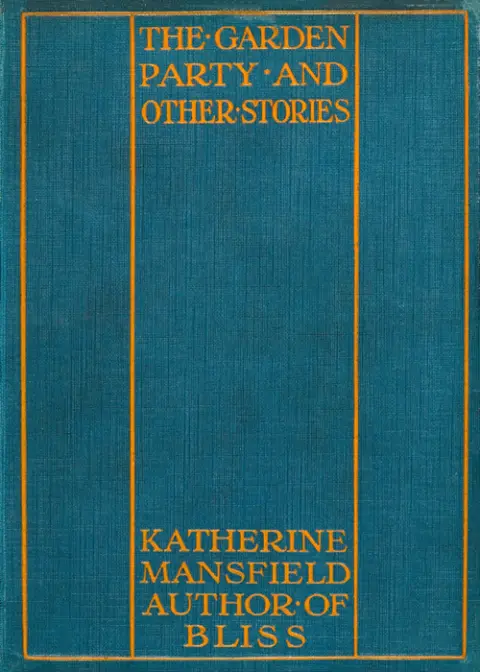
THE CLASSIC COLLECTION · 1922
"The Garden Party and Other Stories" by Katherine Mansfield is a collection of short stories written in the early 20th century. The stories explore themes of social class, identity, and the intricacies of human relationships, often set against the backdrop of the changing world of the time. The varied cast of characters, including the affluent Burnell family and their interactions with the working-class individuals around them, embodies the tensions and disconnections of different social strata. The opening of "The Garden Party" introduces a beautiful summer day filled with preparations for the titular garden party hosted by the Burnell family. The atmosphere is lively as Laura Burnell, the main character, navigates family dynamics while arranging the event. She interacts with the charismatic workmen setting up the marquee and contemplates her position within the established social order. Amid the joyful preparations, the news of a tragic accident—a local man’s death—complicates Laura’s feelings about the day, leading her to question the morality of celebrating such a moment when tragedy is occurring nearby. This sets the stage for a story rife with tension between personal sensibility and societal expectations.
Introduction adapted from the source catalogue; source summaries may be automatically generated.
Free to read · English · 59,166 words · No account needed
MAKE TIME FOR A GOOD BOOK
On by default. Untick to stop anonymous reading totals. Each page counts after 10 seconds in view. How this works.
Anonymous counting is on unless you have switched it off.
The week after was one of the busiest weeks of their lives. Even when they went to bed it was only their bodies that lay down and rested; their minds went on, thinking things out, talking things over, wondering, deciding, trying to remember where....
Constantia lay like a statue, her hands by her sides, her feet just
overlapping each other, the sheet up to her chin. She stared at the
ceiling.
“Do you think father would mind if we gave his top-hat to the porter?”
“The porter?” snapped Josephine. “Why ever the porter? What a very
extraordinary idea!”
“Because,” said Constantia slowly, “he must often have to go to funerals. And I noticed at—at the cemetery that he only had a bowler.” She paused. “I thought then how very much he’d appreciate a top-hat. We ought to give him a present, too. He was always very nice to father.”
“But,” cried Josephine, flouncing on her pillow and staring across the dark at Constantia, “father’s head!” And suddenly, for one awful moment, she nearly giggled. Not, of course, that she felt in the least like giggling. It must have been habit. Years ago, when they had stayed awake at night talking, their beds had simply heaved. And now the porter’s head, disappearing, popped out, like a candle, under father’s hat.... The giggle mounted, mounted; she clenched her hands; she fought it down; she frowned fiercely at the dark and said “Remember” terribly sternly.
“We can decide to-morrow,” she said.
Constantia had noticed nothing; she sighed.
“Do you think we ought to have our dressing-gowns dyed as well?”
“Black?” almost shrieked Josephine.
“Well, what else?” said Constantia. “I was thinking—it doesn’t seem quite sincere, in a way, to wear black out of doors and when we’re fully dressed, and then when we’re at home—”
“But nobody sees us,” said Josephine. She gave the bedclothes such a twitch that both her feet became uncovered, and she had to creep up the pillows to get them well under again.
“Kate does,” said Constantia. “And the postman very well might.”
Josephine thought of her dark-red slippers, which matched her dressing-gown, and of Constantia’s favourite indefinite green ones which went with hers. Black! Two black dressing-gowns and two pairs of black woolly slippers, creeping off to the bathroom like black cats.
“I don’t think it’s absolutely necessary,” said she.
Silence. Then Constantia said, “We shall have to post the papers with the notice in them to-morrow to catch the Ceylon mail.... How many letters have we had up till now?”
“Twenty-three.”
Your reading position is saved on this browser. Take it to another device with a library code. Reading pages adapt to text, rather than matching a printed edition.
Katherine Mansfield
Katherine Mansfield
Katherine Mansfield
BEHIND THE BOOK
This eBook is for the use of anyone anywhere in the United States and most other parts of the world at no cost and with almost no restrictions whatsoever. You may copy it, give it away or re-use it under the terms of the Project Gutenberg License included with this eBook or online at www.gutenberg.org. If you are not located in the United States, you will have to check the laws of the country where you are located before using this eBook. Read the source licence.
The original source file, including credits and licence, is retained by this library. Request an original-format copy at no charge. Please include the book title and Project Gutenberg identifier #1429.
KEEP YOUR CURIOSITY GOING
Coulson Kernahan

Maurice Baring
Frances Wright
Cécile Tormay

Frederic Jesup Stimson

W. H. P. (William Henry Pope) Jarvis