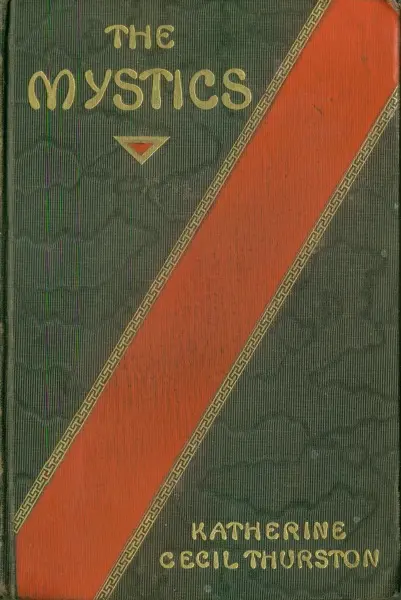
The Mystics: A Novel
Katherine Cecil Thurston
THE CLASSIC COLLECTION · 1905
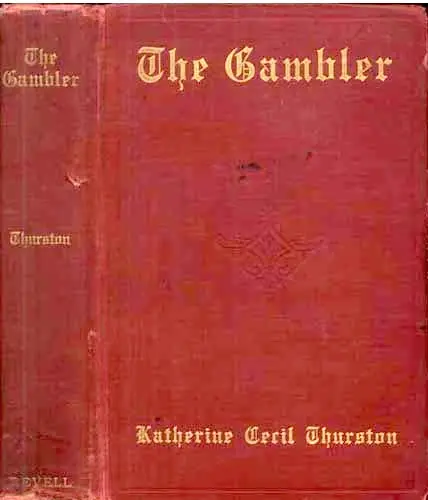
"The Gambler: A Novel" by Katherine Cecil Thurston is a work of fiction written in the early 20th century. The narrative follows James Milbanke, an English archaeologist, as he embarks on a journey to Ireland, where he is set to reconnect with an old friend, Denis Asshlin, who seems to be struggling with personal demons. As the story unfolds, themes of nostalgia, personal change, and the cultural contrasts between the English and the Irish emerge. At the start of the novel, we are introduced to Milbanke during his arrival in Ireland, where he reflects on his past and his long-standing friendship with Asshlin, who he has not seen in nearly thirty years. The journey is marked by the dreariness of a rainy landscape, evoking a sense of isolation. Once he reaches the Asshlin home, their reunion is filled with warmth but also hints at underlying tensions. Through dinner conversations, Milbanke feels a mix of nostalgia and unease about his friend’s life and his own evolving viewpoint, setting the stage for the complexities of their relationship that will develop throughout the story. As he interacts with Asshlin and his daughters, Clodagh and Nance, the unfolding drama around gambling, familial expectations, and personal struggles begins to take shape.
Introduction adapted from the source catalogue; source summaries may be automatically generated.
Free to read · English · 123,295 words · No account needed
MAKE TIME FOR A GOOD BOOK
On by default. Untick to stop anonymous reading totals. Each page counts after 10 seconds in view. How this works.
Anonymous counting is on unless you have switched it off.
She gave a little sigh, then a little laugh, and seated herself.
Lady Frances looked up from the cigarette she was drawing from her
case.
"Illusions!" she said. "Why, life is all illusions at your age!" She paused; then, after a moment's silence, went on again, but in a slower, more considered voice: "You thought I was jesting at dinner, when I asked you to come south with me. But I wasn't. I meant it." She struck a match and lighted her cigarette. "You don't know how you would enjoy Nice. You lost yourself in the delights of roulette at Venice. Think what Monte Carlo would be!"
With a sudden tumultuous confusion, Clodagh flushed.
"I--I have ceased to care about things like that," she said in a
hurried voice.
Lady Frances's expression changed to one of deep interest, sharpened by
surprise.
"Ceased to care?" she repeated softly. "Since when? And why?"
"Since"--Clodagh hesitated--"oh, since that time in Venice."
Her hostess flicked the ash from her cigarette.
"Some new influence?"
Clodagh was taken unawares.
"I--I have got to know myself better since that time in Venice," she said below her breath. "Some one--something--has made me see that it was not my true self that showed then. I was foolish in those days. I was carried away----"
A very faint smile flitted across Lady Frances's lips.
"That idea belongs to the some one else?" she said in a quiet, cordial tone that invited confidence.
Moved by a sudden impulse, Clodagh leant forward in her seat and clasped her hands. As on the day in Florence--the day when she had written her letter to Laurence Asshlin--her soul thirsted for confession. After two long years of silent thought, the temptation to open her heart in speech was overmastering. The room was comfortable, dimly lighted, almost homelike; the hour was propitious; her hostess's voice was extraordinarily kind. She stole one half-shy, half-eager glance at the averted face.
"Lady Frances," she said suddenly, "I was very childish, very foolish, that time in Venice. I knew it even before I--before I left."
With extreme tact, Lady Frances refrained from looking at her. Smoking quietly, she made her next remark in a low, reassuring voice.
"Then that was why you left so suddenly?"
"That was why."
"Walter Gore must have been very eloquent!"
Lady Frances spoke in the same even tone; but, as she felt the thrill of surprise with which Clodagh received her words, she turned quickly and decisively, and met her startled eyes.
"I always knew that Walter Gore went back with you to your hotel on that last night," she said. "I always knew that he read you a very moral lecture."
Your reading position is saved on this browser. Take it to another device with a library code. Reading pages adapt to text, rather than matching a printed edition.
Katherine Cecil Thurston
Katherine Cecil Thurston
BEHIND THE BOOK
This eBook is for the use of anyone anywhere in the United States and most other parts of the world at no cost and with almost no restrictions whatsoever. You may copy it, give it away or re-use it under the terms of the Project Gutenberg License included with this eBook or online at www.gutenberg.org. If you are not located in the United States, you will have to check the laws of the country where you are located before using this eBook. Read the source licence.
The original source file, including credits and licence, is retained by this library. Request an original-format copy at no charge. Please include the book title and Project Gutenberg identifier #33490.
KEEP YOUR CURIOSITY GOING
Coulson Kernahan

Maurice Baring
Frances Wright
Cécile Tormay

Frederic Jesup Stimson

W. H. P. (William Henry Pope) Jarvis