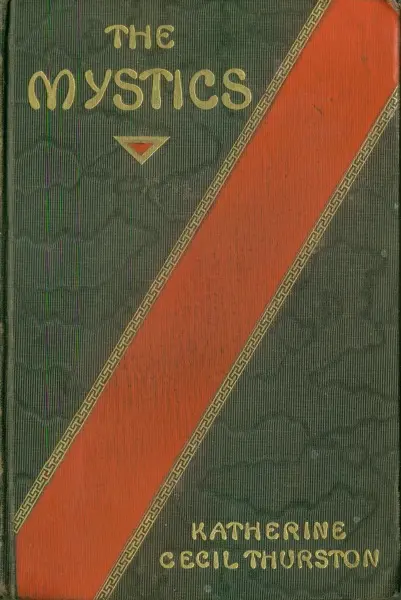
The Mystics: A Novel
Katherine Cecil Thurston
THE CLASSIC COLLECTION · 1905
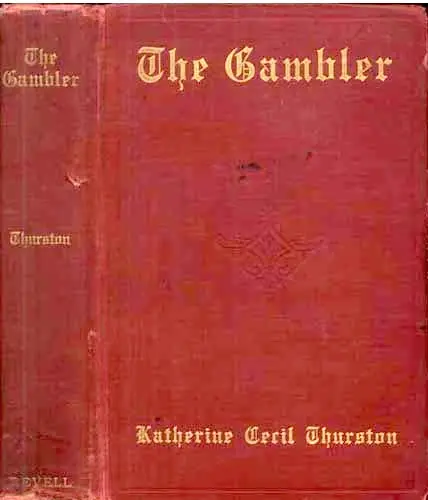
"The Gambler: A Novel" by Katherine Cecil Thurston is a work of fiction written in the early 20th century. The narrative follows James Milbanke, an English archaeologist, as he embarks on a journey to Ireland, where he is set to reconnect with an old friend, Denis Asshlin, who seems to be struggling with personal demons. As the story unfolds, themes of nostalgia, personal change, and the cultural contrasts between the English and the Irish emerge. At the start of the novel, we are introduced to Milbanke during his arrival in Ireland, where he reflects on his past and his long-standing friendship with Asshlin, who he has not seen in nearly thirty years. The journey is marked by the dreariness of a rainy landscape, evoking a sense of isolation. Once he reaches the Asshlin home, their reunion is filled with warmth but also hints at underlying tensions. Through dinner conversations, Milbanke feels a mix of nostalgia and unease about his friend’s life and his own evolving viewpoint, setting the stage for the complexities of their relationship that will develop throughout the story. As he interacts with Asshlin and his daughters, Clodagh and Nance, the unfolding drama around gambling, familial expectations, and personal struggles begins to take shape.
Introduction adapted from the source catalogue; source summaries may be automatically generated.
Free to read · English · 123,295 words · No account needed
MAKE TIME FOR A GOOD BOOK
On by default. Untick to stop anonymous reading totals. Each page counts after 10 seconds in view. How this works.
Anonymous counting is on unless you have switched it off.
"Poor child!" she murmured. "Don't talk of it! You have had a most trying time. Barny told me all about it only a week ago. But this place is really quite good," she added, in a cheerful voice; "better now than ever. They have just secured the chef from the 'Abbati' Restaurant in Venice. But, of course, you knew 'Abbati's.'"
Her quick glance passed over Clodagh's face. Then she rose and moved to the table, as two waiters entered, and dinner was announced.
Clodagh coloured, and crossed the room in her hostess's wake.
"Yes," she said, taking her seat at the table--"yes; I once dined there. It was a wonderfully fascinating place. Has it been a failure?"
Lady Frances shrugged her shoulders.
"Vanished! But tell me about yourself!" She turned to her guest with a change of manner. "You are not seriously contemplating England at this time of year?"
Clodagh smiled calmly.
"Quite seriously."
"But, my dear child, why, if one may be inquisitive?"
"Because I want to know England--to know the English."
Lady Frances's eyes narrowed very slightly; then she gave one of her
bright laughs.
"Then come back with me to the Riviera! Any English people worth studying will be found there. Change your plans! Come back with me!"
Clodagh looked up. She was uncertain whether the suggestion had been made in jest or earnest, and the smiling, searching glance of her hostess did not enlighten her. With a slight feeling of embarrassment, she broke off abruptly into another channel of talk.
"And how is Mr. Barnard?" she asked.
"Barny! Oh, optimistic as ever!"
"Then there is one amusing person left in England!"
Lady Frances laughed.
"Only temporarily. He takes his holiday next month. Last March he joined the Luards and me in Naples, and we all went on to Sicily. It was tremendous fun."
She laughed again over some recollection; and entered upon a history of her Sicilian adventures that occupied the rest of dinner.
At the termination of the meal, however, when the waiters had brought in coffee and silently retired, she dropped her reminiscent tone, and, rising from table, moved back to the divan, which was drawn pleasantly near to a bright wood fire.
"Come here, and let's be comfortable!" she said. "I always have a cigarette after dinner. I forget whether you smoke."
Clodagh smiled, as she came slowly forward.
"Not since my cousin and I used to smoke in the top branches of an apple tree in Ireland. I should be afraid to try the experiment again; I might lose an illusion. No other cigarettes could taste like those stolen ones!"
Your reading position is saved on this browser. Take it to another device with a library code. Reading pages adapt to text, rather than matching a printed edition.
Katherine Cecil Thurston
Katherine Cecil Thurston
BEHIND THE BOOK
This eBook is for the use of anyone anywhere in the United States and most other parts of the world at no cost and with almost no restrictions whatsoever. You may copy it, give it away or re-use it under the terms of the Project Gutenberg License included with this eBook or online at www.gutenberg.org. If you are not located in the United States, you will have to check the laws of the country where you are located before using this eBook. Read the source licence.
The original source file, including credits and licence, is retained by this library. Request an original-format copy at no charge. Please include the book title and Project Gutenberg identifier #33490.
KEEP YOUR CURIOSITY GOING
Coulson Kernahan

Maurice Baring
Frances Wright
Cécile Tormay

Frederic Jesup Stimson

W. H. P. (William Henry Pope) Jarvis