THE CLASSIC COLLECTION✦The childrenCLASSIC FREE BOOKS
The children
Edith Wharton
THE CLASSIC COLLECTION · 1907
"The Fruit of the Tree" by Edith Wharton is a novel written in the early 20th century. The story unfolds within the context of industrial society, focusing on the dynamics between workers and management, particularly through the lens of the main character, John Amherst, an assistant manager at the Westmore Mills. The book delves into themes of social justice, personal responsibility, and the stark realities faced by the working class, illustrated through the struggles of the injured mill worker, Dillon, and the young nurse, Justine Brent. At the start of the narrative, we are introduced to the surgical ward in the Hope Hospital where Justine Brent, a volunteer nurse, attends to Dillon, a mechanic injured in a factory accident. The atmosphere is tense, reflecting Dillon's despair as he learns the gravity of his injuries. John Amherst enters the hospital seeking information about Dillon's case, hinting at his deeper concern for the welfare of the workers at the mills. Their conversation reveals the intricate connections between hospital staff and mill management, foreshadowing a broader critique of the industrial environment and the personal stakes for both the workers and the management responsible for their safety. The opening sets the stage for a compelling exploration of societal issues through the intersecting lives of its characters.
Introduction adapted from the source catalogue; source summaries may be automatically generated.
Free to read · English · 142,685 words · No account needed
MAKE TIME FOR A GOOD BOOK
On by default. Untick to stop anonymous reading totals. Each page counts after 10 seconds in view. How this works.
Anonymous counting is on unless you have switched it off.
AT half-past six that afternoon, just as Amherst, on his return from the mills, put the key into his door at Hanaford, Mrs. Ansell, in New York, was being shown into Mr. Langhope's library.
As she entered, her friend rose from his chair by the fire, and turned on her a face so disordered by emotion that she stopped short with an exclamation of alarm.
"Henry--what has happened? Why did you send for me?"
"Because I couldn't go to you. I couldn't trust myself in the
streets--in the light of day."
"But why? What is it?--Not Cicely----?"
He struck both hands upward with a comprehensive gesture. "Cicely--everyone--the whole world!" His clenched fist came down on the table against which he was leaning. "Maria, my girl might have been saved!"
Mrs. Ansell looked at him with growing perturbation. "Saved--Bessy's
life? But how? By whom?"
"She might have been allowed to live, I mean--to recover. She was killed, Maria; that woman killed her!"
Mrs. Ansell, with another cry of bewilderment, let herself drop
helplessly into the nearest chair. "In heaven's name, Henry--what
woman?"
He seated himself opposite to her, clutching at his stick, and leaning his weight heavily on it--a white dishevelled old man. "I wonder why you ask--just to spare me?"
Their eyes met in a piercing exchange of question and answer, and Mrs. Ansell tried to bring out reasonably: "I ask in order to understand what you are saying."
"Well, then, if you insist on keeping up appearances--my daughter-in-law killed my daughter. There you have it." He laughed silently, with a tear on his reddened eye-lids.
Mrs. Ansell groaned. "Henry, you are raving--I understand less and
less."
"I don't see how I can speak more plainly. She told me so herself, in this room, not an hour ago."
"She told you? Who told you?"
"John Amherst's wife. Told me she'd killed my child. It's as easy as breathing--if you know how to use a morphia-needle."
Light seemed at last to break on his hearer. "Oh, my poor Henry--you mean--she gave too much? There was some dreadful accident?"
"There was no accident. She killed my child--killed her deliberately. Don't look at me as if I were a madman. She sat in that chair you're in when she told me."
"Justine? Has she been here today?" Mrs. Ansell paused in a painful effort to readjust her thoughts. "But why did she tell you?"
"That's simple enough. To prevent Wyant's doing it."
"Oh----" broke from his hearer, in a long sigh of fear and intelligence. Mr. Langhope looked at her with a smile of miserable exultation.
Your reading position is saved on this browser. Take it to another device with a library code. Reading pages adapt to text, rather than matching a printed edition.
Edith Wharton
Edith Wharton
Annie Eliot Trumbull & George A. (George Abiah) Hibbard & Bliss Perry & Edith Wharton & John Seymour Wood
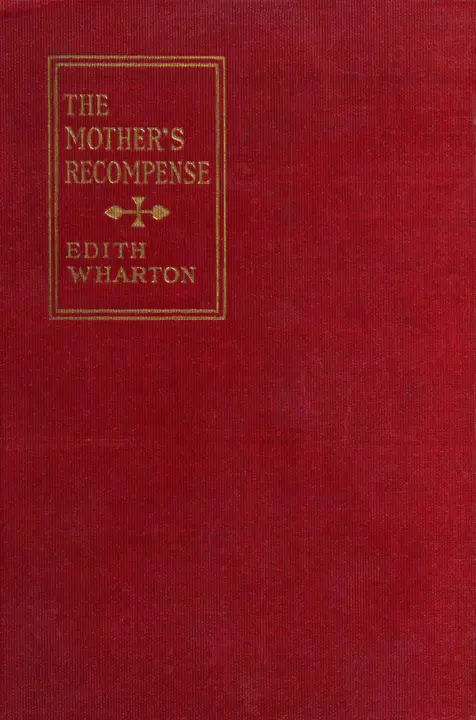
Edith Wharton
BEHIND THE BOOK
This eBook is for the use of anyone anywhere in the United States and most other parts of the world at no cost and with almost no restrictions whatsoever. You may copy it, give it away or re-use it under the terms of the Project Gutenberg License included with this eBook or online at www.gutenberg.org. If you are not located in the United States, you will have to check the laws of the country where you are located before using this eBook. Read the source licence.
The original source file, including credits and licence, is retained by this library. Request an original-format copy at no charge. Please include the book title and Project Gutenberg identifier #19191.
KEEP YOUR CURIOSITY GOING
Coulson Kernahan

Maurice Baring
Frances Wright
Cécile Tormay

Frederic Jesup Stimson

W. H. P. (William Henry Pope) Jarvis