THE CLASSIC COLLECTION✦The childrenCLASSIC FREE BOOKS
The children
Edith Wharton
THE CLASSIC COLLECTION · 1907
"The Fruit of the Tree" by Edith Wharton is a novel written in the early 20th century. The story unfolds within the context of industrial society, focusing on the dynamics between workers and management, particularly through the lens of the main character, John Amherst, an assistant manager at the Westmore Mills. The book delves into themes of social justice, personal responsibility, and the stark realities faced by the working class, illustrated through the struggles of the injured mill worker, Dillon, and the young nurse, Justine Brent. At the start of the narrative, we are introduced to the surgical ward in the Hope Hospital where Justine Brent, a volunteer nurse, attends to Dillon, a mechanic injured in a factory accident. The atmosphere is tense, reflecting Dillon's despair as he learns the gravity of his injuries. John Amherst enters the hospital seeking information about Dillon's case, hinting at his deeper concern for the welfare of the workers at the mills. Their conversation reveals the intricate connections between hospital staff and mill management, foreshadowing a broader critique of the industrial environment and the personal stakes for both the workers and the management responsible for their safety. The opening sets the stage for a compelling exploration of societal issues through the intersecting lives of its characters.
Introduction adapted from the source catalogue; source summaries may be automatically generated.
Free to read · English · 142,685 words · No account needed
MAKE TIME FOR A GOOD BOOK
On by default. Untick to stop anonymous reading totals. Each page counts after 10 seconds in view. How this works.
Anonymous counting is on unless you have switched it off.
They had been at Hanaford for about ten days when, one morning at
breakfast, Amherst uttered a sudden exclamation over a letter he was
reading.
"What is it?" she asked in a tremor.
He had grown very pale, and was pushing the hair from his forehead with the gesture habitual to him in moments of painful indecision.
"What is it?" Justine repeated, her fear growing.
"Nothing----" he began, thrusting the letter under the pile of envelopes by his plate; but she continued to look at him anxiously, till she drew his eyes to hers.
"Mr. Langhope writes that they've appointed Wyant to Saint
Christopher's," he said abruptly.
"Oh, the letter--we forgot the letter!" she cried.
"Yes--we forgot the letter."
"But how dare he----?"
Amherst said nothing, but the long silence between them seemed full of ironic answers, till she brought out, hardly above her breath: "What shall you do?"
"Write at once--tell Mr. Langhope he's not fit for the place."
"Of course----" she murmured.
He went on tearing open his other letters, and glancing at their contents. She leaned back in her chair, her cup of coffee untasted, listening to the recurrent crackle of torn paper as he tossed aside one letter after another.
Presently he rose from his seat, and as she followed him from the dining-room she noticed that his breakfast had also remained untasted. He gathered up his letters and walked toward the smoking-room; and after a moment's hesitation she joined him.
"John," she said from the threshold.
He was just seating himself at his desk, but he turned to her with an obvious effort at kindness which made the set look of his face the more marked.
She closed the door and went up to him.
"If you write that to Mr. Langhope--Dr. Wyant will--will tell him," she
said.
"Yes--we must be prepared for that."
She was silent, and Amherst flung himself down on the leather ottoman against the wall. She stood before him, clasping and unclasping her hands in speechless distress.
"What would you have me do?" he asked at length, almost irritably.
"I only thought...he told me he would keep straight...if he only had a chance," she faltered out.
Amherst lifted his head slowly, and looked at her. "You mean--I am to do
nothing? Is that it?"
She moved nearer to him with beseeching eyes. "I can't bear it.... I
can't bear that others should come between us," she broke out
passionately.
He made no answer, but she could see a look of suffering cross his face, and coming still closer, she sank down on the ottoman, laying her hand on his. "John...oh, John, spare me," she whispered.
Your reading position is saved on this browser. Take it to another device with a library code. Reading pages adapt to text, rather than matching a printed edition.
Edith Wharton
Edith Wharton
Annie Eliot Trumbull & George A. (George Abiah) Hibbard & Bliss Perry & Edith Wharton & John Seymour Wood
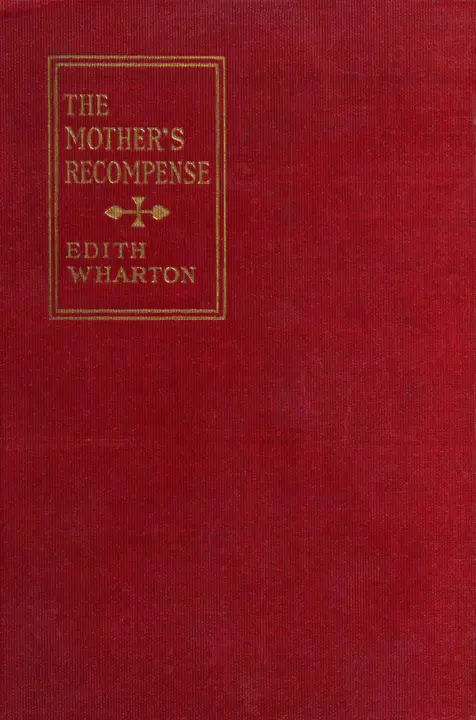
Edith Wharton
BEHIND THE BOOK
This eBook is for the use of anyone anywhere in the United States and most other parts of the world at no cost and with almost no restrictions whatsoever. You may copy it, give it away or re-use it under the terms of the Project Gutenberg License included with this eBook or online at www.gutenberg.org. If you are not located in the United States, you will have to check the laws of the country where you are located before using this eBook. Read the source licence.
The original source file, including credits and licence, is retained by this library. Request an original-format copy at no charge. Please include the book title and Project Gutenberg identifier #19191.
KEEP YOUR CURIOSITY GOING
Coulson Kernahan

Maurice Baring
Frances Wright
Cécile Tormay

Frederic Jesup Stimson

W. H. P. (William Henry Pope) Jarvis