THE CLASSIC COLLECTION✦Froth: A NovelCLASSIC FREE BOOKS
Froth: A Novel
Armando Palacio Valdés

THE CLASSIC COLLECTION · 1901
"The Fourth Estate, vol. 1" by Armando Palacio Valdés is a novel written in the late 19th century. This work primarily explores the dynamics of social class, societal expectations, and interpersonal relationships in a small town set on the Cantabrian coast. Central to the narrative are the lives of the Belinchon family and their interactions with other townsfolk, particularly the young couple Gonzalo and Cecilia, as they navigate the complexities of love and societal scrutiny. At the start of the novel, the stage is set in the town of Sarrio, where the local theatre serves as a backdrop for community happenings and social interactions. We are introduced to various characters, including the nervous Doña Paula and her daughters, Cecilia and Venturita, who are aware of the town's gossip surrounding them, particularly regarding their social standing and attire. The arrival of Gonzalo de las Cuevas, fresh from his studies in England, also adds new dynamics, as he holds an interest in Cecilia. As different characters exchange dialogues laden with subtext and social commentary, the initial chapters delve into themes of ambition, societal norms, and the contradictions rooted in class distinctions, effectively immersing the reader in the daily life of Sarrio and its inhabitants.
Introduction adapted from the source catalogue; source summaries may be automatically generated.
Free to read · English · 68,395 words · No account needed
MAKE TIME FOR A GOOD BOOK
On by default. Untick to stop anonymous reading totals. Each page counts after 10 seconds in view. How this works.
Anonymous counting is on unless you have switched it off.
Gonzalo, after talking for some time with his bride-elect, left his seat, took three or four turns up and down the room, and seated himself by the side of Venturita, with whom he was always on good terms, for they liked laughing and joking together after they had once become friendly. The girl was drawing some letters preparatory to embroidering them.
"Don't come teasing here, Gonzalo; you know how badly I draw," she said, while the look that she gave the youth was so flashing and provocative that it made him drop his eyes.
"I am not so sure of that. You don't draw badly," he replied in a low voice that slightly trembled, as he bent his face down to the paper which Venturita had on her lap.
"Pure flattery. You will acknowledge that it might be better."
"Better--better--everything in the world might be better. This is good
enough."
"You are getting quite a flatterer. I don't want you to make fun of me,
do you hear?"
"I don't make fun of anybody, much less of you," he returned, without raising his eyes from the paper, and with his voice lower every minute, and evidently agitated. Venturita kept her eyes fixed upon him with a mocking expression, in which the triumph of satisfied pride was plainly visible.
"Come, then, you draw them, Mr. Clever," she said, as she passed him the pencil and paper with gracious condescension.
The youth acceded to the suggestion, as he ventured to raise his eyes to the girl's, but he quickly dropped them as if he feared their magnetism. He took the book from her lap on to his knee, put a piece of white paper on it, and proceeded to draw.
But instead of the letters, he began to sketch, with some skill, the head of a woman; first the hair parted in two braids, then the straight, pretty forehead, then a delicate nose, a pretty, short chin joined to the throat by a soft, graceful curve. It was wonderfully like Venturita. The girl, leaning on the shoulder of her future brother, followed the movements of the pencil, and a vain smile gradually overspread her face. After drawing the head Gonzalo proceeded to delineate the figure, and the peignoir, or dressing-gown, worn by the girl was soon reproduced; but he took some time drawing minutely the silk bows with which it was fastened in front. When the picture was finished, Venturita asked him in a mischievous tone:
"Now put underneath who it is."
The young man raised his head and their smiling eyes met. Then, quickly and decisively, he wrote under the drawing:
"The one I love best in all the world."
Your reading position is saved on this browser. Take it to another device with a library code. Reading pages adapt to text, rather than matching a printed edition.
Armando Palacio Valdés

Armando Palacio Valdés
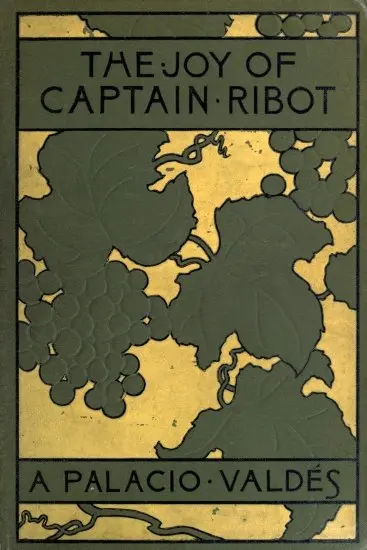
Armando Palacio Valdés
Armando Palacio Valdés
BEHIND THE BOOK
This eBook is for the use of anyone anywhere in the United States and most other parts of the world at no cost and with almost no restrictions whatsoever. You may copy it, give it away or re-use it under the terms of the Project Gutenberg License included with this eBook or online at www.gutenberg.org. If you are not located in the United States, you will have to check the laws of the country where you are located before using this eBook. Read the source licence.
The original source file, including credits and licence, is retained by this library. Request an original-format copy at no charge. Please include the book title and Project Gutenberg identifier #38393.
KEEP YOUR CURIOSITY GOING
Coulson Kernahan

Maurice Baring
Frances Wright
Cécile Tormay

Frederic Jesup Stimson

W. H. P. (William Henry Pope) Jarvis